Michael Moynihan: Using the built environment to tell the story of a city and its people
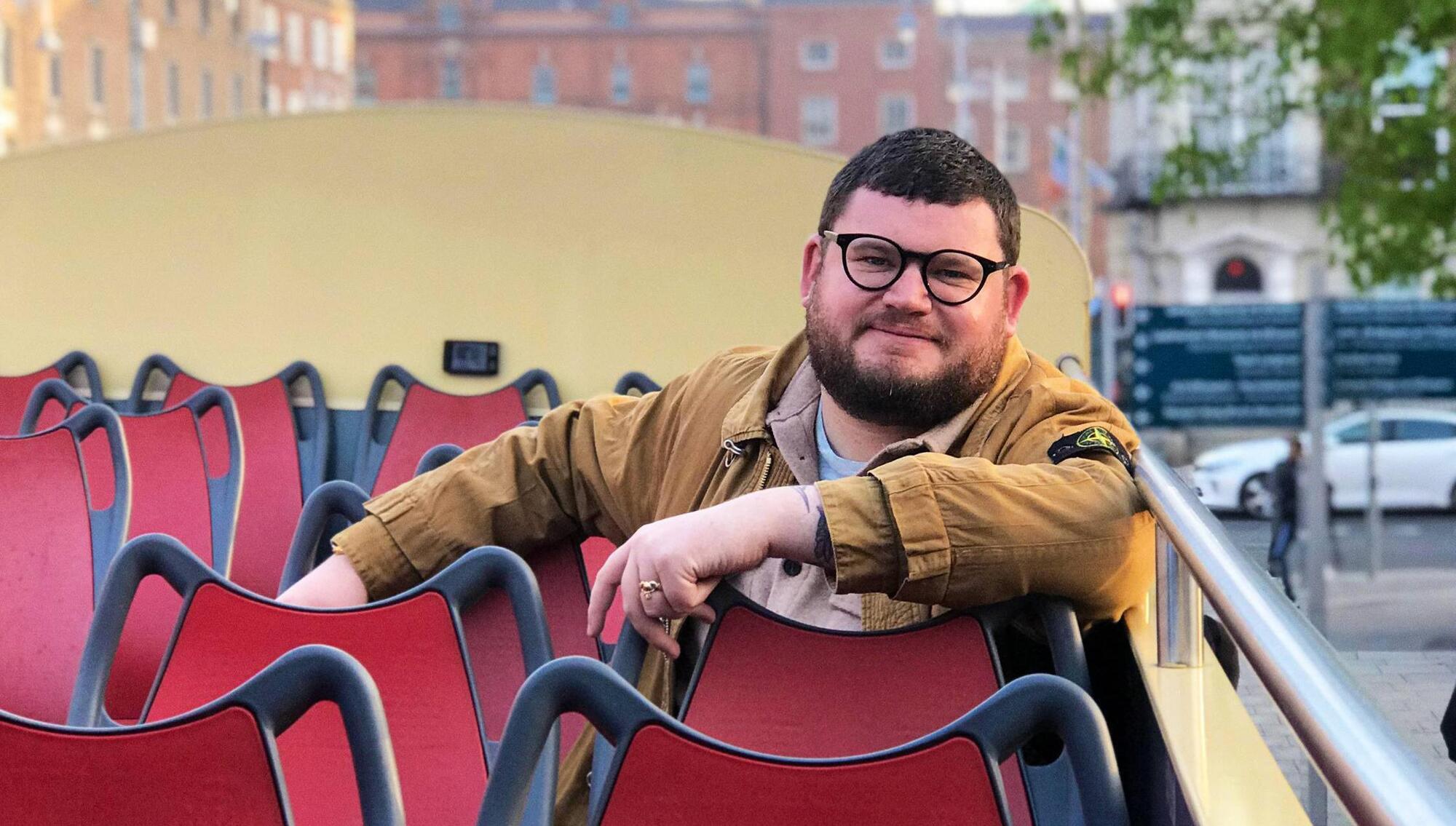
Social historian Donal Fallon has followed up on his Three Castles Burning podcast with an accompanying book, Three Castles Burning — A History of Dublin in Twelve Streets.

Social historian Donal Fallon has followed up on his Three Castles Burning podcast with an accompanying book, Three Castles Burning — A History of Dublin in Twelve Streets.

Nothing human is alien to me, says the poet. Not even matters in the capital. Regular readers of this column will appreciate that a template sourced in foreign fields can often be a fruitful starting point. Hence my keen interest in Donal Fallon’s Three Castles Burning podcast, and now the accompanying book, Three Castles Burning — A History of Dublin in Twelve Streets.

This is a combination irresistible to me, certainly, the story of a city filtered through the prism of particular streets and stories. When I tracked Donal down, though, he flipped that combination back at me.

“Every urban environment has that history,” he said of the street-oriented approach.

“I think Cork has been particularly well served there — Donal Ó Drisceoil and his work around the labour history of Cork, John Borgonovo on the War of Independence, Pat Poland on the fire brigade.

“What I’ve tried to do with Dublin is to take a geographic space and to take the built environment to tell the story of it and its people. That’s been done exceptionally well in Cork.”

HISTORY HUB

If you are interested in this article then no doubt you will enjoy exploring the various history collections and content in our history hub. Check it out HERE and happy reading

That focus on local history, social history, labour history — I admired Fallon’s insistence understanding the grand sweep of history is easier if you have a sense of the smaller details.

“It’s impossible to understand how the Easter Rising happened without understanding the class tensions in the city in 1916, and not just in Dublin but across the country. 

Or why 200,000 Irishmen fought in World War One including my own great-grandfather without a sense of the economics of the time — literally, the bread and butter

“There’s been a shift in how we approach history in the last couple of decades, and it’s interesting because it personalises history. Something as enormous as the Guinness brewery — or Beamish or Murphy’s in Cork — feels like an enormous story, but if you focus on a single worker and study their file, as I’ve done with my grandfather, you get a new perspective.

“What I’ve tried to do with Three Castles Burning is to focus on the social history of the city in the belief that it improves our understanding of the macrohistory of the nation.”

Class and human society

Focusing on the local aspect of history also helps with one of this column’s pet obsessions: class in Ireland.

“Class is definitely at the centre of trying to understand any human society, and Ernie O’Malley had a great line, saying the layers of class in Ireland were like the layers of an onion. And that’s true — tuppence ha’penny looking down on tuppence.

“I’ve done a lot of episodes on labour in the city, and one difference is people are now transient with work, staying with a company for five and six years. Go back one hundred years and people started Guinness babies, the company doctor treated them as children, they worked there all their lives ... the connection was much deeper.

“One of the things I’ve tried to do with the podcast is to give people a sense of the geography of Dublin when it comes to labour. I think it surprises people, that certain villages, or streets, were defined by particular parts of labour. For my family tree, people in the Liberties were in Guinness or in the British Army, those were the two pillars. But if you were in Stoneybatter across the Liffey you were more likely to be employed in Jameson’s.”

Stoneybatter and the Liberties are two areas that most of us reared far from Dublin would recognise. Fallon picked another spot that many readers will also know.

“Rathmines is fascinating because for a lot of people outside of Dublin it was their introduction to the city when it was mostly flatland. The generation of people going to university in the seventies, that was their introduction to Dublin.

“One of the chapters is on Rathmines Road Lower, and I picked that because it was a 19th century township — at one point it had had enough of Dublin between the canals, the pestilence, and so on. They were off.

“So they were living beyond the canals but still owned industries and businesses between the canals, but they didn’t pay rates to Dublin or feel a connection to it. They were separate.”

Now the ‘villages’ of Dublin are separate but for a different reason, one familiar to people in urban areas all over Ireland.

An issue in Dublin that’s very clear with so many build-to-rent apartment buildings is that those buildings are meant to be transient. They’re designed so that people will be there for a few years and move on, so what effect will that have on community?

“I live near The Liberties, which always had a strong sense of community, but if people can’t put down roots in the community it’s impossible to become part of that community. And people are now used to moving all the time within cities. That sense of community may be dissipating, but that’s happening in cities everywhere — and for the same reasons.”

That doesn’t detract from the stories, of course.

“There are streets like Fishamble Street — the name derives from a fish market — right next to the Civic Offices and it’s a defining street in the history of the nation, one of the first streets in the Viking settlement of Dublin. Though I know Waterford readers will be pointing to theirs as the first city in Ireland!

“But that very early history of urban areas in the country is important because it shows how long that history of urban living is. Fishamble Street isn’t maybe a name people know but it’s vitally important to the development of life on the island of Ireland.

“The same with Pearse Street, which was Great Brunswick Street, the base of the Dublin Metropolitan Police — the emergency services are another very interesting way to explore the history of a city, to know how those services tackled various challenges is a way to understand how a city works.”

Combining those, in fact, would be a productive approach, Fallon says.“You could take the twelve streets approach and apply that in Waterford or in Cork with that emergency services approach.

“It’s an approach that works and works when combined with — in Cork’s case, for instance — the Burning of Cork in 1920. Knowing the geography — the streets — makes it easier to understand how those fires spread across Cork.

“When you walk down Moore Street in Dublin you understand the Easter Rising better; when you walk around Cork you get a better idea of how the city was burnt down a hundred years ago.”

A ‘twelve streets’ of Cork? What would yours be?

Three Castles Burning — A History of Dublin in Twelve Streets is published by New Island, €15.95

Listen to the podcast at: threecastlesburning.libsyn.com

More in this section

Revoiced

Newsletter

Had a busy week? Sign up for some of the best reads from the week gone by. Selected just for you.

Cookie Policy Privacy Policy Brand Safety FAQ Help Contact Us Terms and Conditions

© Examiner Echo Group Limited