Fergus Finlay: There is the right way to introduce policy and there is the Liz Truss way
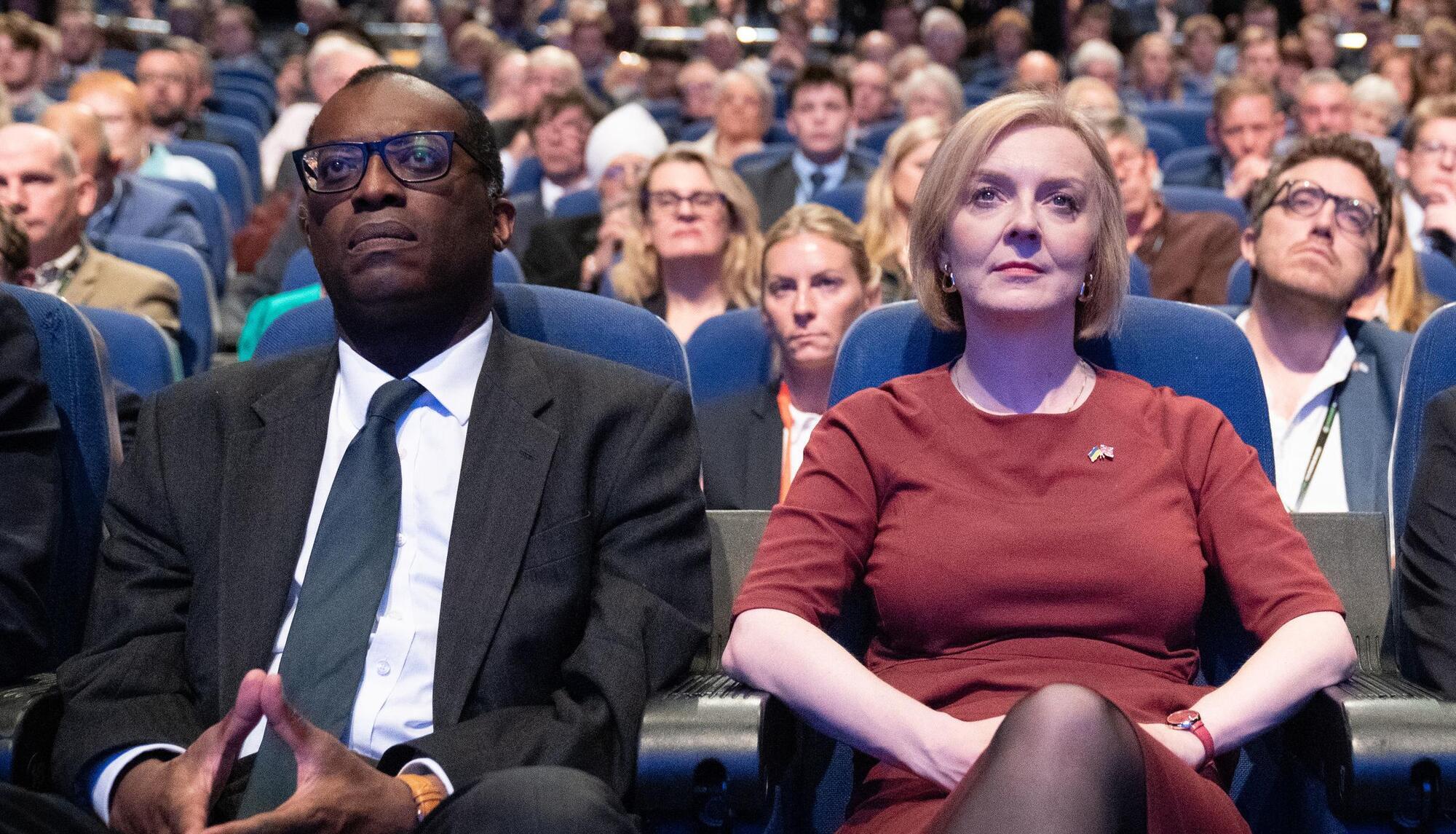
British Chancellor of the Exchequer Kwasi Kwarteng and Prime Minister Liz Truss.
I donât know what you make of the new TV series about Boris Johnson. Itâs called This England, and apparently, thereâs a sequel already in the works about Liz Truss. Itâs going to be called This England, torn to shreds.
They may not get it past the script editors though, on the grounds of believability. Take some of the minor characters for starters. Simon Clarke, for instance. Of all things, he is the âLevelling Up Ministerâ of the United Kingdom (that sounds a bit more real with capital letters). I think he might be bonkers.
Immediately after the most catastrophic mini-budget in political history, Mr Clarke told The Times of London that his boss, Liz Truss, knew in advance that her budget of last week âwouldnât be a comfortable processâ. But thank goodness, said he, sheâs both purposeful and resilient. She knows, he added, that the UK is a âfoolâs paradiseâ. And she knows too, said her helpful Minister, there would be cuts to government spending to ensure âfull alignment with a lower-tax economyâ.
Then thereâs another guy. Weâve never heard of him before though I suspect that wonât last long. His name is Dominic Johnson and the first I knew about him was a single sentence on the British Governmentâs website. That sentence said â nothing above it, below it or around it, no explanation, no elaboration, no context whatever â âDominic Johnson CBE was appointed a Minister of State jointly in the Department for International Trade and the Cabinet Office on 2 October 2022â.
Apparently, in order to serve in the Cabinet, this lad has to be appointed to the Lords â because heâs never been elected to anything. There are only three things that people know about him. One, heâs the very very rich business partner of the fragrantly loopy Jacob Rees Mogg. Two, he has donated a quarter of a mill to the Tory Party. And three, he has campaigned against the now removed cap on bankersâ bonuses.
As a big donor, heâd have been entitled to attend the cocktail party in honour of Kwazi Kwarteng, the Chancellor of the Exchequer, held on the evening Mr Kwarteng destroyed the British economy. By all accounts, Mr Kwarteng enjoyed the outing (heâs now saying he didnât really). Especially when they cheered his earlier announcement that he was going to borrow ÂŁ45 billion to reduce taxes for the richest people in Britain.
Some of the richest in Britain, it transpires, were there. Yay, they roared. Double down, old chap, they bellowed.
According to The Sunday Times, Mr Kwarteng is said to have told the guests â hedge fund managers, property developers, and other worthies, âof austerity-style budget cuts to come â while guests drank wine, champagne and cocktails and congratulated him âŠâ.
It would all make great television that, wouldnât it? But while it was all happening the British economy was imploding
It is 200 years since anyone thought you could construct a tax and welfare policy like Liz Truss and her (dwindling number of) allies. Take as many rich people as you can out of the tax net, borrow madly to do it, and then resolve to pay back the borrowing by screwing down on services and supports for the poorest peopleÂ
Itâs not just cruel and perverse, itâs economic and political lunacy.
Everyone outside their immediate circle saw that. Even the middle-aged middle-class white men who elected her a few weeks ago. You could see it in the lukewarm reception she got when she arrived at the Tory Conference â to a half-empty hall â on Sunday night.
U-turn
So the pound shop Margaret Thatcher did what her heroine would never do. She u-turned.
Within a couple of weeks of taking office, Liz Truss, her mad and bitterly divisive policies, and her nutty gang of lieutenants, were probably helping to build a coffin for the Tory Party. The sheer incompetence of this gang who canât shoot straight has hammered nails into it.
So maybe some good will come out of it then.
While all this craziness was going on over the water â so much excitement it was hard to keep up with â we were doing really boring stuff back here.
Yes, we had a budget too. We didnât borrow madly to support the rich, we used a budget surplus to support, as much as possible, people who are struggling. The government didnât get everything right, and if opinion polls are anything to go by it didnât cut a lot of ice with the public.
Mind you, I suspect if you asked people which of these islands theyâd rather be living on in the next little while, not too many people would opt for the other one
But we also found time last week, to publish Foundations for the Future. Itâs the Report of the Commission on Taxation and Social Welfare. Itâs a big yoke and itâs heavy going â exactly 501 pages â but itâs seminal and important. You simply couldnât imagine Liz Truss or her morons publishing anything like it.
The key argument of the report is that Ireland needs to raise more revenue through a broader tax base, in order to support the social policies that matter â and in order to pay for climate action. We need to find ways to become less dependent on corporate tax â they donât say so in so many words, but there is the underlying fear of a bubble that could burst.
Equitable tax base
Even if it doesnât, our population is changing rapidly (and ageing); our national debt has grown considerably because of the pandemic and now the war in Ukraine; weâre facing an immediate cost of living crisis, and the demands of climate change pose an existential threat to the future. The only way we can cope with all that into the future is a strong, equitable, and sustainable tax base.
But there is also, side by side with that, a strong set of recommendations about the need, for example, to address and eliminate child poverty by having what they call a âuniversal platformâ of child benefit alongside targeted payments for children who need more support.
Getting the balance right in all of that is an immense political challenge, and ought to involve a huge amount of community discussion. Even if you disagree with some of it, thereâs huge thought and effort gone in to trying to get it right.
In the old days, governments used to publish what were called Green Papers, to stimulate discussion on a policy area. They would then be followed by White Papers, setting out government thinking for further debate. This report should be given the status of a Green Paper, in my view â and within a year, if weâre going to get this right, there should be a White Paper setting out the âdirection of travelâ for broad tax and welfare policy into the future.
Thatâs the right way to do stuff. The worst possible way is the Liz Truss way. Crazy, cruel ideas pulled from the air and then abandoned. Actually, the more I think about it, youâre never going to be able to construct a six-part series out of Liz Trussâs career. Sheâll be lucky to get to the first ad break.
CLIMATE & SUSTAINABILITY HUB
CONNECT WITH US TODAY
Be the first to know the latest news and updates