Maeve Higgins: Amid the heat, we need to find the elusive cloud for a silver lining
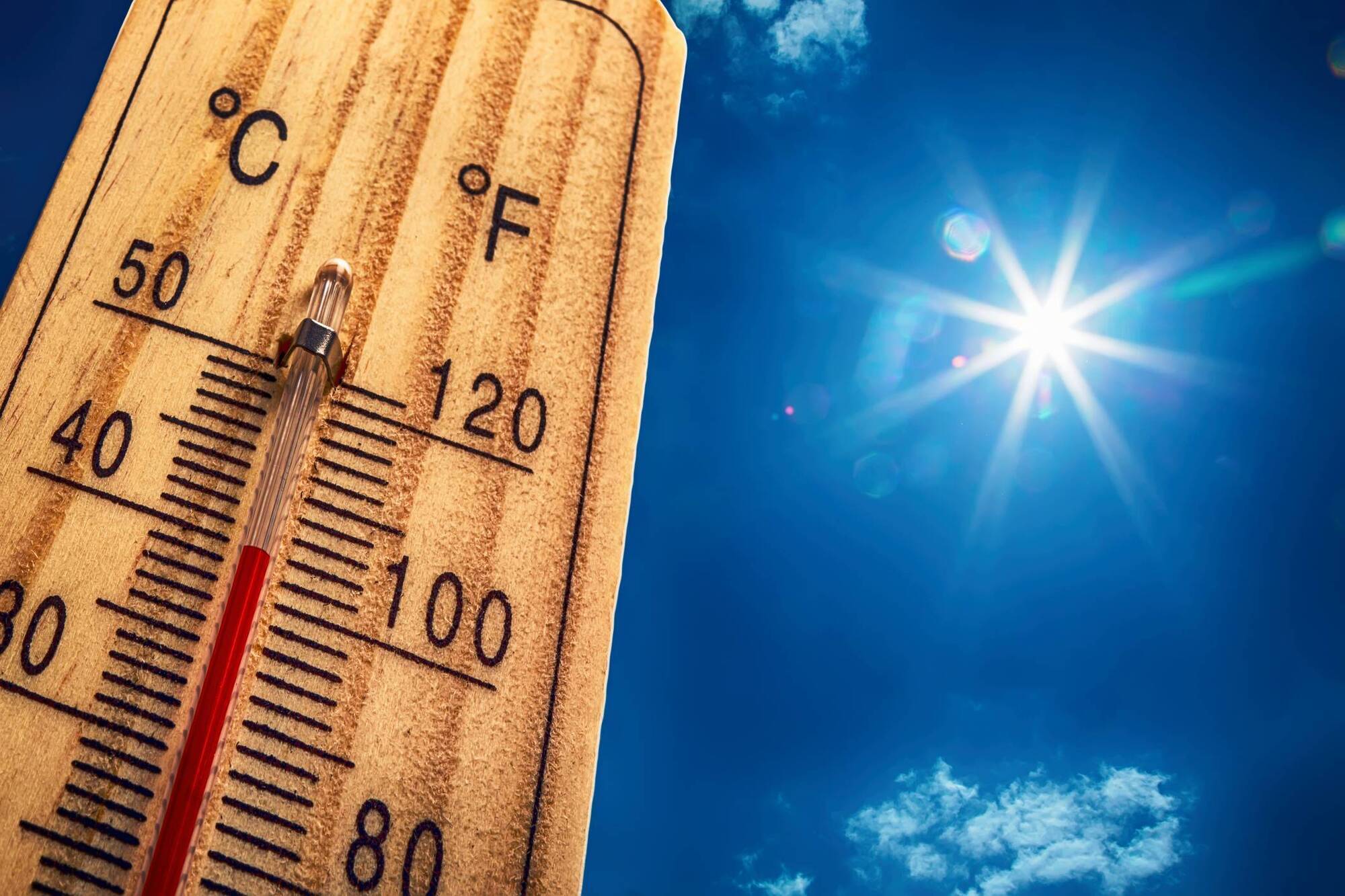

Met Éireann issued a heat advisory this week: Ireland will experience a hot spell on Sunday and early next week. Daytime temperatures will widely reach the high 20s, possibly exceeding 30 degrees in some locations. Remaining uncomfortably warm overnight too
These are the facts, understated but stark. "Uncomfortably warm" are the words that stood out to me. We smile beneath our sunglasses and swap niceties; isn't it the height of summer? Aren't we lucky to have a bit of sunshine? Isn't it gorgeous today?
Fun at the beach: But our anxiety increases as the temperatures rise. Picture: Larry Cummins
The sun's heat gets trapped by all the greenhouse gases like carbon dioxide we have released into Earth's atmosphere, which causes the whole planet — land and sea — to warm. This has brought more extreme weather, including record-breaking high temperatures worldwide. Heatwaves are fuelling massive fires raging in Spain, France, and Portugal.
And here, as Met Éireann politely said on Wednesday, it's getting "uncomfortably warm".
The climate crisis can sometimes feel abstract, but this week, as soon as we step outside, we can feel it. Along with the squinting, sweating, and sunburn, the heat takes a psychological toll. The stress we feel about the climate today, and the growing dread about deadly future scenarios can be summarised as 'eco-anxiety'.
Imperial College London's Institute of Global Health Innovation makes for some scary reading, documenting a clear relationship between increased temperatures and the number of suicides. Terrible climate events like fires, hurricanes, and heat waves directly cause trauma and depression, which you would probably expect after something that devastating.
The researchers also found that global warming exacerbates mental distress, particularly among young people, even for individuals who are not directly affected. I fall into the latter category; I have not lost my home in a flood or a fire or suffered heat stroke or an asthma attack exacerbated by poor air quality. Luckily, I'm physically secure; for now, I just have eco-anxiety.
The American Psychology Association (APA) describes eco-anxiety as "the chronic fear of environmental cataclysm that comes from observing the seemingly irrevocable impact of climate change and the associated concern for one's future and that of next generations".
It's not fun reading, but the report reassures me that I do not imagine the mental health element of this existential threat. It also shows that fear is a natural and essential response to a threat this big.
The Status of Ireland Climate 2020 report showed the country is getting warmer, with the air temperature rising by almost 1C in the last 120 years. The urgency is real, with 15 of the top 20 warmest years on record occurring since 1990.
Sea levels around the coast are rising too. Ireland's Environmental Protection Agency, Met Éireann, and the Marine Institute also showed that rainfall has increased by 6% in the 30 years leading up to 2018, compared to the previous 30 years, and the decade up to 2015 was the wettest on record.
As we continue to pump greenhouse gases into the atmosphere at a furious rate, the Intergovernmental Panel on Climate Change points to an increasingly tiny chance even to attempt to hit the target of restricting global temperature rises to 1.5℃ as set out in the Paris Agreement.
In May, she delivered a lecture at Windsor Castle that was realistic but not fatalistic, stating: "There is no more space for new fossil fuel infrastructure — existing infrastructure alone will blow the 1.5 target. Compared to their grandparents, at the current rate of predicted global warming, it is projected that a child born this year will live through seven times as many heatwaves, nearly three times as many droughts, and twice as many wildfires."
Reading that lecture in this "uncomfortably warm" week, as my eco-anxiety gets feverish again, I look to her words on transforming this anxiety into action. This centres me away from panic and towards a plan. Mary Robinson advises a three-pronged strategy that I elaborate on here.
- Make climate change personal. I see this as assessing your resources, your behaviours, and your power from a climate justice perspective. Look at the people, groups, and corporations you support or are a part of, and take ownership and responsibility. None of us are powerless.
- Get angry and get active. I see this as demanding urgent and massive action from our local and national governments by suing, striking, or finding other ways to disrupt their comfortable status quo. Finding people already doing the work and joining forces with your community will make it easier and much more fun.
- Imagine the world we are hurrying towards. Our imaginations, coupled with evidence, are what lead us to eco-anxiety. Those same imaginations can lead us to a far better, fairer, and safer world for everyone.
In the heat this week, there is no cloud to look for a silver lining, but we have to find one. Here is what I have learned about eco-anxiety; it is an emotion, and emotions can lead to action.
Fear can make you stuck, but it can also make you move. I recall that before I had the privilege of meeting and learning from Mary Robinson, I didn't know how many people were already working on solutions to the climate crisis. My eco-anxiety made me feel helpless then, but now I know that millions of us have no intention of accepting a bleak, violent and chaotic future.
I did not always understand that I had a role in averting the worst version of the climate crisis, but now I do. Today, I will not ignore or deny my eco-anxiety; I will look to it for clarity about what to do next. Many of us feel this way, so collectively, using the three steps above, we can adapt, strategise, and mitigate.
That way, we will feel less afraid. We can understand how grave the situation is while we work to make it less so. We must keep remembering to hold in our heads and hearts that a different future is possible and take the actions that will lead us there.
CLIMATE & SUSTAINABILITY HUB
CONNECT WITH US TODAY



Be the first to know the latest news and updates