Villages battle wildfires in Portugal as Ireland braces for European heatwave
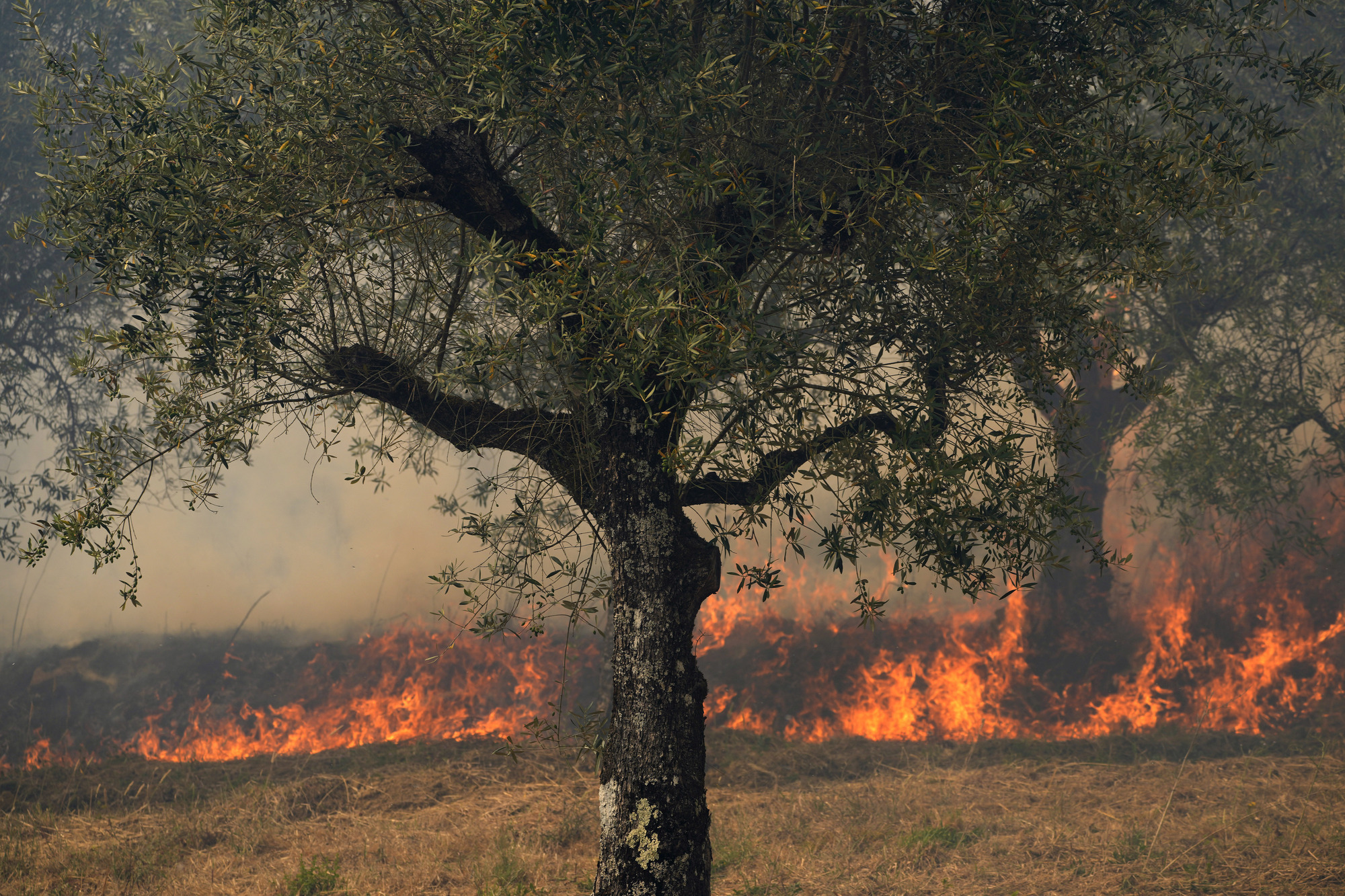
A forest fire reaches olive trees in the village of Colmeias, near Leiria, central Portugal, Wednesday, July 13, 2022. Thousands of firefighters in Portugal continue to battle fires all over the country that forced the evacuation of dozens of people from their homes. (AP Photo/Armando Franca)
More than 3,000 firefighters are battling alongside ordinary Portuguese citizens, desperate to save their homes from several wildfires that have raged across the European country — fanned by extreme temperatures and drought conditions linked to climate change.
It comes as a week-long weather advisory has been issued for Ireland, warning of temperatures of 30C or higher in parts of the country.
Our hot spell will arrive on Sunday, with Met Éireann warning of "uncomfortably warm" temperatures overnight into next week.
Dr Diarmuid Quinlan, medical director at the Irish College of General Practitioners, said there are several risks associated with hot weather that people should be aware of, including the long-term risk of skin cancer.
Speaking on RTÉ's , Dr Quinlan said it is important for people to realise that cloud cover does not prevent UV damage, and he advised people to apply sunscreen carefully.
He said cool showers, painkillers, and avoiding further sun exposure are the best methods for relieving sunburn.
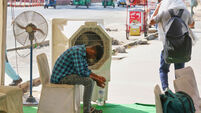
He warned that exhaustion can cause people to feel unwell and light-headed. These are common symptoms of dehydration, he said, adding that people should drink lots of water and seek shaded areas.
Thankfully, Ireland is not expected to experience blistering temperatures of over 40C like other parts of Europe.
The central region of Portugal has been particularly hard hit by a spate of blazes this week.
In the village of Bemposta, residents used garden hoses to spray down their lawns and the roofs of their houses, in the hope that they could save them from the raging wall of red flames that approached through the wooded hills late on Wednesday.

“It began spreading towards that way (the right), the wind was blowing that way towards the mountain”, said 88-year-old Antonio Carmo Pereira, while pointing to the flames on the outskirts of his village.
“I could see the view, but in a few minutes I couldn’t see anything, just smoke.
“(It is) dangerous, yes. It’s surrounding all the houses.
More than 800 firefighters fought on in the Leiria district, where Bemposta is located, on Thursday morning.
Temperatures in the interior of the Atlantic country were forecast to hit 44C during the day, as the mass of hot and dry air blown up from Africa continues to linger over the western edge of the Iberian Peninsula.
In June, 96% of Portugal was classified as being in either “extreme” or “severe” drought. The hot air and parched ground, combined with winds, has created the perfect cocktail for severe fires.
Portuguese prime minister Antonio Costa said on Thursday, that with temperatures expected to remain unusually high for the coming days, his government plans to extend a state of alert for wildfires until Sunday.
Neighbouring Spain was still combating a fire started by a lightning strike on Monday, in the west-central Las Hurdes area, that has consumed about 3,500 hectares (8,600 acres).

Temperatures in many parts of Spain have been topping the 40C mark for several days, and are expected to continue to do so through to next week.
In France, two fires raged out of control in the region around Bordeaux in south-west France for a third consecutive day, despite the efforts of 1,000 firefighters and water-dumping planes to contain them.
The fires have destroyed more than 3,850 hectares (9,500 acres) of forest and grassland in the region, the regional emergency said.
It said firefighters struggled to contain the fire because of high winds and difficulty accessing the heart of the fires.
More than 6,000 people were evacuated from campgrounds and villages in recent days.
CLIMATE & SUSTAINABILITY HUB