Clodagh Finn: Recalling the Irish suffragette who was one of Gandhi’s trusted allies
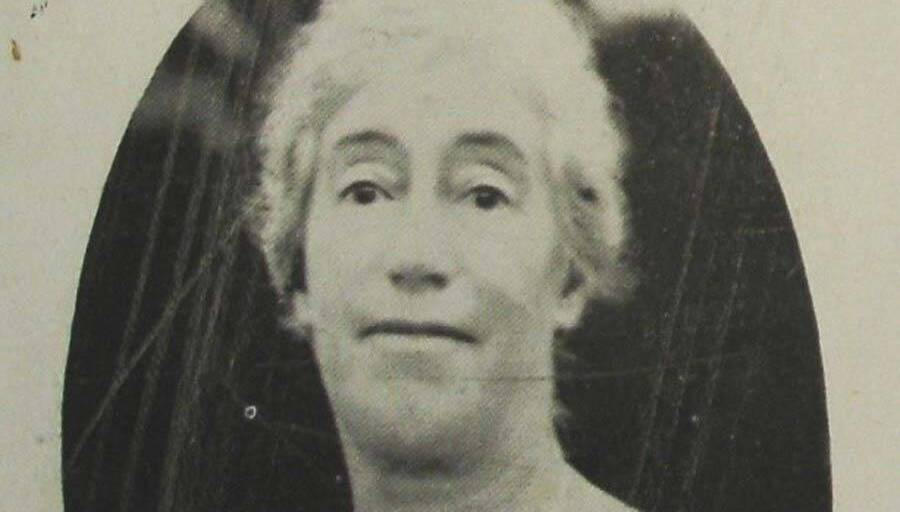
Margaret Cousins knew Gandhi and recalled sitting on the floor of his cottage early one afternoon discussing “education from all angles”.

In all of the coverage of the seismic events that took place in Ireland 100 years ago, one rather overlooked story made me sit to attention.
We heard a whisper of it during Treaty Live, RTE’s playful and thought-provoking special that rolled back a century of history, as if on casters, to bring us ‘live’ into the heart of the signing of the Anglo-Irish treaty. The ‘news’ that piqued my interest came in a dispatch from Associate Professor of History, Jyoti Atwal, who was beaming in live from the India of 1922.
“Incidentally,” she said, “I should remind you that one of Gandhi’s most trusted allies in [his] mission is an Irish suffragette, Margaret Cousins. She is at present preparing Indian women as candidates for forthcoming municipal elections.”
I was all ears.
I had lost track of Margaret Cousins after she left Ireland where she is well-remembered for founding, with Hanna Sheehy Skeffington, the Irishwomen’s Franchise League in 1908.
She was a window-breaker too, and was jailed twice; once, for a month in Holloway prison for smashing the windows at 10 Downing Street in London and a second time, also for a month, in Tullamore jail for breaking windows at Dublin Castle in 1913 to protest at the exclusion of women from the Home Rule Bill.
“That sound of breaking glass on January 28, 1913, reverberated round the world and did what we wanted. It told the world that Irish women protested against an imperfect and undemocratic Home Rule Bill,” she wrote in We Two Together, her joint memoir with her husband James ‘Jim’ Cousins.
She would later spend a year in jail in India for siding with Mahatma Gandhi in his programme of protest against a British Ordnance curbing free speech.
She knew Gandhi and recalled sitting on the floor of his cottage early one afternoon discussing “education from all angles”. She later visited him in jail and talked about a number of subjects, including the Women’s Indian Association, during “25 minutes of happy give-and-take” in the prison’s courtyard.
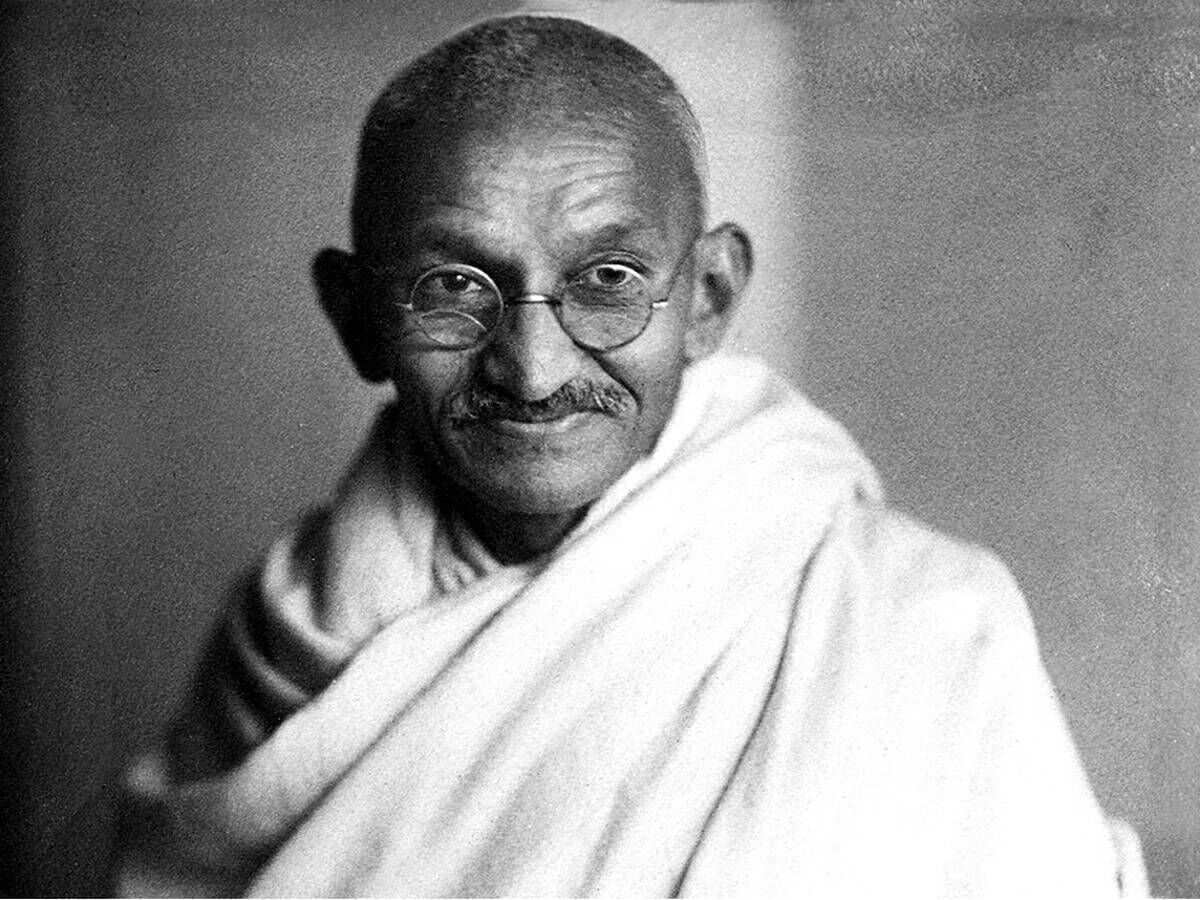
Shortly afterwards, she was arrested and jailed for defending free speech during a public protest in December 1932.
In an entertaining account, she describes getting the kind of press coverage a cinema star might envy and later shocking police officers by sitting beside the driver on the jail wagon: “I had been so meek and mild on the two-hours railway section of the pilgrimage that my escorts were not prepared for an impulse in an Irishwoman, who had been reared on the back of ponies and the front seats of country carriages, to revert to type.”
She goes on: “I was escorted to the Madras Penitentiary for two sleepless nights feeling anything but penitent.” She was later transferred to the political wing of the women’s prison at Vellore where she involved other prisoners in poetry recitals, singing, dancing and games of badminton on the make-shift court that she had installed on a patch of waste ground.
If that sounds like a ‘rest-cure’, as she put it herself, these privileges were often withdrawn by guards who thought political prisoners “too happy”. The harsh reality of prison proper was close-by, though. Two cells away, a woman condemned to death was taken out and hanged, an execution Cousins described as soul-sickening and depraved.
By then, 1932, she had already made a significant impact on public life in India. With British women’s right’s activist Annie Besant, she founded the All India Women’s Conference and the Women’s Indian Association, two organisations that survive to this day.
She had referred to “a rising in the hearts of Asian womanhood of a mighty wave of desire for freedom” in her book The Awakening of Asian Womanhood, which brings me back to Jyoti Atwal’s initial description of her training women to run for election.
One of them, social reformer and election candidate Kamaladevi Chattopadyay, even gives a vivid description of it:
Kamaladevi did not get elected, but Margaret Cousins encouraged women to continue to agitate for freedom, women’s rights and campaign against child marriage.
“In India,” Jyoti Atwal explains, “Margaret was deeply concerned about the custom of child marriage and the lack of education and freedom among the girls. In 1921, there were over 10 million girls who had been married between the ages of 10 and 15.”
It is dizzying to trace her life and work in India where she spent time as an educator, magistrate, activist, theosophist (a philosophy based on mystical insight into the nature of God), advocate of vegetarianism and writer.
At one point she even used her background in music – she graduated from the Royal Academy of Music in Dublin in 1898 – to put music to the English version of ‘Jana Gana Mana’. The original version of the Bengali song is now the national anthem of India.
In Ireland, she and her husband, poet and writer James Cousins, moved in literary and theatre circles. They knew WB Yeats, George Russell and James Joyce, who once stayed at their home in Ballsbridge, Dublin.
She was born in 1878 into a Methodist, unionist home in Boyle, Co Roscommon, the eldest of Joseph and Margaret Annie Gillespie’s 15 children.
She developed an early interest in nationalism. Jyoti Atwal, speaking to this column from New Delhi, says she thinks she was probably influenced by hearing nationalist Charles Stewart Parnell speak in her hometown in Boyle.
If it is a little disconcerting to hear an Associate Professor of History at Jawaharlal Nehru University speak with such familiarity and ease about an Irish woman, it shouldn’t be. Jyoti Atwal is an adjunct professor at the University of Limerick, too, and has been researching the life and times of Margaret Cousins since 2012.
She believes there is a lack of acknowledgement of the work Irish women did on the global stage. Margaret Cousins, she says, highlights the lack of study on the complex phenomenon of Western women’s political encounters with the East.
The focus to date has been too inward-focused, she says. While Margaret Cousin’s contribution to the Indian freedom struggle was recognised by the Indian State with a national award after independence in 1947, she is still quite marginalised there.
Jyoti Atwal hopes to change that and is fighting to gain access to Cousins’ papers at a private institute in the south of India, which has yet to open its archive. It promises to offer further fascinating insights into a woman who, in 1932, wrote of visiting “bewitching Baghdad” and speaking to the Queen of Iraq about the standing of women in that country.
Margaret was paralysed in the 1940s and had to withdrew from public life, but her legacy of women’s rights and democratic values lives on in the India of today.
Isn’t it time we made a little more of it in her home country too?


CONNECT WITH US TODAY



Be the first to know the latest news and updates