Clodagh Finn: Still a long way to go before women are heard, never mind heeded
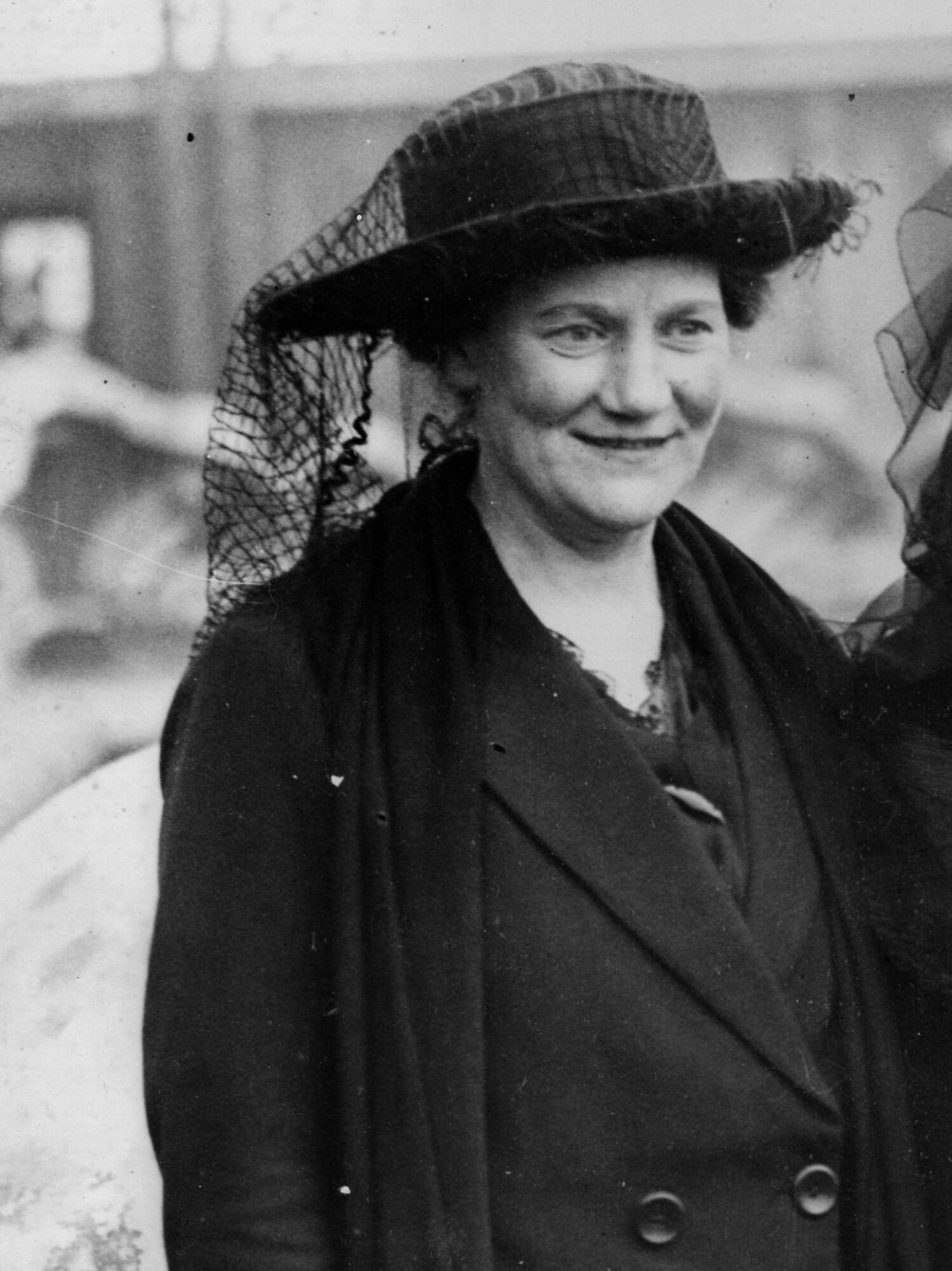
Mary MacSwiney, TD for Cork City, stood up in the second DĂĄil 100 years ago and spoke for two hours and 40 minutes to explain why she opposed the Anglo-Irish Treaty. Picture: Getty Images
It will be exactly 100 years on Tuesday since Mary MacSwiney, TD for Cork City, stood up in the second DĂĄil and spoke for two hours and 40 minutes to explain why she opposed the Anglo-Irish Treaty, which had been signed some weeks earlier.
She made no apology for it, either.
âIt is no use for you to look at your watches. Go out if you like⊠I care not, and apologise not, if I take more of your time than you are willing to give.â
If you have the time, seek it out online but beware of falling down a digital rabbit-hole reading the words of a woman who, during the divisive DĂĄil debates of a century ago, spoke with refreshing frankness against the Treaty and its implications. It doesnât matter whether you agree with her or not, you canât but admire her indomitable spirit.
You could fill this page with quotable snippets, but here are just two that capture something of her turn or phrase: âSome of you will realise what a hard and terrible fight it has been for our people to destroy the evils of shoneenism [an Irish person who adopts upper-class English airs and graces] in this country. Here under this instrument [the Treaty] you will have shoneenism rampant.â
âI love my people, every single one of them; I love the country, and I have faith in the people, but I am under no delusions about any of us. We are not a race of archangels.â
âWe are not a race of archangelsâ â what a great line. One of many, very many in a speech crafted by a woman who was considered only in terms of her relationship to her brother, Cork mayor Terence MacSwiney, who died on hunger strike in 1920. In recent years, at least, Mary MacSwiney and her contemporaries have been recognised as activists, politicians, and agents of change in their own right.
âWomen,â as Ăamon de Valera once put it, âare at once the boldest and most unmanageable revolutionaries.â Though for the longest time, that was forgotten.
When, in 1983, historian Dr Margaret Ward used the phrase âunmanageable revolutionariesâ as the title of her book, she was faced with the unenviable task of excavating â and that seems like the appropriate word â the contributions made by women to the formation of the State.
She wrote: âBuried somewhere in the abundant chronicles of Irish history was evidence to show that women were politically active, and they too warranted serious consideration by historians.â
Fellow historian Dr Mary McAuliffe quotes it in the introduction to an updated edition of Unmanageable Revolutionaries, which has just been published by Arlen House. Both women have done so much to cast a new light, indeed any light, on the women who were, to quote Dr McAuliffe, âremembered for being forgottenâ.
This week, as we recall Mary MacSwiney and her contribution to the Treaty debate â all four-and-a-half hours of it, in total â we might also remember how it was received in 1921. Her words were dismissed because they were the âdistortedâ and emotional outpourings of a grieving sister.
The five other women in the second DĂĄil were also discredited by some male members, who raised doubts about their mental stability.
As Dr Ward notes: âIt was a tactic that was resorted to on several occasions, most notably by Alec MacCabe of Sligo, who felt, disingenuously, that there might be some excuse for Mary MacSwiney because âher mind and outlook were distorted by the terrible experience she has passed throughâ.â
Youâd like to think all of that is firmly in the past, but another new book suggests otherwise. Irish Womenâs Speeches: Voices that rocked the system by Sonja Tiernan, which will be launched tonight, begins with the words: âMen donât like sopranos.â That is a comment former tĂĄnaiste and Labour leader Joan Burton made to journalist Olivia OâLeary, who quotes it in the foreword.
OâLeary continues: âIn those four words she captured a whole wall of male prejudice that still faces women from the moment they open their mouths in public. Their voices are too high, too whiny. And, if they speak louder to overcome male heckling: Their voices are too shrill.â
What follows, though, is a glorious celebration of womenâs words contained in 33 speeches that rocked the system in various ways from the 19th century to the present.
It begins with the uncompromising words of Anna Parnell â âthe landlords will be beaten with a vengeance" (1881) â and takes a fascinating course through the decades charting the words of so many, from that woman of many words, Mary MacSwiney, to actor SiobhĂĄn McKennaâs impassioned anti-apartheid speech to the UN in 1982, and Saffa Muslehâs 2016 reflection on what constitutes an Irish person.

It is great to see that the late Mamo McDonald, the pioneering âborn-againâ feminist (âI didnât start out as a feminist but I became oneâ) is also included.
In 1984, she memorably observed: âIn Kerry youâre better off to be a greyhound than a woman â at least thatâs what I was told when researching the topic of womenâs representation in Occupational Organisations.â
She was voicing her concern for women in agriculture who, she said, did not receive recognition for their work.
You would like to think that slow, steady progress has been made in that sector, although a new social media campaign run by Women in Agriculture Stakeholders Group shows that women still struggle to have their voices heard.
The same lack of progress is also painfully evident in the words spoken by Traveller activist Nan Joyce at the 10th anniversary TrĂłcaire seminar in 1983: âYou people are very concerned about the Third World. I think you should also be concerned about us; we are the fourth world. We live among rats in camps or caravans⊠Our children suffer from as many diseases as the children of the Third World.â
Her speech had âan extraordinary impactâ, to quote a newspaper report on the seminar, yet, nearly 40 years later, Travellers are still fighting to be heard. Last week, Travellers protested outside the DĂĄil to highlight the lack of political will to address inequality and the mental health crisis facing their community.
The same lack of action is clear in the poignant personal speech by Elizabeth Coppin, survivor of Irish institutional abuse, and Independent TD for Galway West Catherine Connollyâs excoriating appraisal of the shortcomings of the final report of the Commission of Investigation into Mother and Baby Homes.
In Irish Womenâs Speeches we have an absorbing account of womenâs words at least, even if there is still a way to go before they are heard, much less heeded.
All the same, it is encouraging to see a hidden past being rendered visible at last. My single hope for the year ahead is that when we talk of womenâs contributions, past and present, the adjectives âunseenâ, âunheardâ, or âunsungâ will no longer be needed to describe them.

Subscribe to access all of the Irish Examiner.
Try unlimited access from only âŹ1.50 a week
Already a subscriber? Sign in
CONNECT WITH US TODAY
Be the first to know the latest news and updates