Clodagh Finn: Time to bring the brilliant sisters of famous men into the limelight
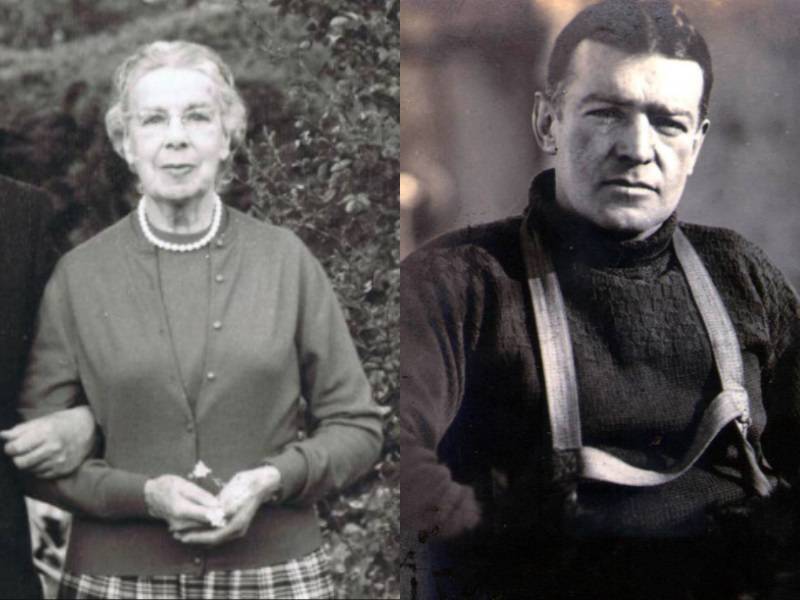
Her sister Kathleen volunteered to join brother Ernest on his final expedition, but Eleanor, above, was also a pioneer, nursing the war wounded across Europe and Canada. Picture: Courtesy of the Greene family
Last month, An Post issued a beautiful collection of stamps to celebrate eight Irish Antarctic explorers, or “ice men” as the series poetically calls them, who all played a significant role in the golden age of Antarctic exploration from the 1800s to early 1900s.
Two of them are already household names — Ernest Shackleton, Kildare, and Tom Crean, Kerry — and it is wonderful to be introduced to six others who may not be as widely known. Five are from Co Cork: Edward Bransfield, Patrick Keohane, Robert Forde and brothers Mortimer and Tim McCarthy, while the sixth is Francis Crozier from Co Down.
The stamps, designed by illustrator David Rooney, highlight the impact Irish men had on Antarctic exploration and, hopefully, they will introduce the lesser known explorers to a new generation.
There are no women among them, but there might have been at least one because, in 1921, the press reported that Ernest’s sister Kathleen had volunteered to join him on his final expedition.
That may or may not be true, says Sharon Greene, archaeologist and editor of Archaeology Ireland, who has done singular work in bringing the forgotten but pioneering sisters of Ernest Shackleton out of the shadows of history.
What is certainly true, however, is that Ernest’s younger sister made the difficult and arduous journey into the Arctic circle in the 1920s where she was employed by the Hudson Bay Company to sketch its workers. She was a celebrated portrait artist in Canada at the time, with wide-ranging commissions to paint everyone from political and business leaders to fur trappers and mill workers.
Later, she helped Walter Gilbert, an early pilot in the far north, to write his memoir Arctic Pilot.
Sad irony
There is a sad irony in knowing that Ernest Shackleton’s exploration of the southernmost tip of the world would be widely remembered while his sister’s adventuring days at the opposite pole would pass almost completely under the radar. Indeed, we might not know anything about the Shackleton women if historian Kevin Kenny had not asked Sharon Greene to see what she could uncover. The Greene family has always had an interest in the Shackleton family because Richard Greene, Sharon’s uncle, lives in the Kildare house where Ernest Shackleton was born.
Sharon’s grandmother, Juliet Greene, recalls meeting Ernest’s sister Eleanor there in 1959 when she made a last visit to the family home a year before she died. She was very impressed by this woman, then aged 79.
Yet, when Sharon Greene tried to flesh out the lives of the Shackleton women, she found there were little more than scraps of information about them.
The result is a fascinating portrait of two women who deserve much wider attention.
Like her sister, Eleanor Shackleton was a pioneer whose nursing career brought her to the UK, Canada, New York and wartime France and Salonika. After training as a midwife in Guy’s Hospital in London, she sailed to Canada in 1909 and was one of the first two nurses to work in a new children’s hospital in Winnipeg. She worked in the most difficult conditions caring for infants, most of whom died of diarrhoea and dehydration. She was forced to resign due to ill-health and exhaustion.
Sharon Greene then traces her to New York where she trained in children’s nursing. At least in her day, Eleanor’s connection to a famous brother brought her press attention. In 1913, the New York Tribune carried this report: “Miss Shackleton is a tall, athletic looking girl, with the same straightforward, yet somewhat shy manner as her brother, and with his peculiar grey Celtic eyes.”
It went on to say that the most attractive thing about this 'pleasing specimen of Irish womanhood' was her devotion to sick children.
When the First World War broke out, Eleanor joined the nursing service reserve and travelled to France. While her brother was en route to the Antarctic aboard Endurance, she was reporting for duty at a hotel-turned-military hospital in Versailles outside Paris.
Later, she and her fellow nurse and friend Elsie Fraser were moved to a station not far from the front. In a letter to a friend, they wrote: “We are only half an hour from the front. Oh! This work is terrible, but glorious. We get the poor men straight from the firing line, but in an awful condition, having been in the trenches for hours. The way they bear their pain is simply magnificent. The better they are the worse we feel.”
She was then transferred to Salonika with its freezing winters and blistering summers and contracted malaria in July 1916. She convalesced in Malta and went back to work, eventually leaving in controversy because she had campaigned for better food for her colleagues.
She returned to Canada and when the Second World War broke out, she applied to re-enlist, even though she was 60. Her request was turned down but she did help the war effort in Canada and was recognised by the UN.
“Eleanor Hope Shackleton shared more than a birthplace and initials with her old brother Ernest,” says Sharon Greene.
Family bond
Yet, she was forgotten even though biographical accounts show that Ernest was very close to all of his eight sisters. He kept in regular contact with them and once brought home a gift of three baby alligators which apparently ended up in London Zoo. (Incidentally, Ernest’s only brother Frank was implicated in the theft of the Irish Crown Jewels, but that is a story for another time!)
Like so many sisters — from Frances Dickens, the accomplished pianist sister of Charles, to Maria Anna Mozart, once a more celebrated musician than her famous brother Wolfgang Amadeus - their light was eclipsed as time wore on.
There is reason to hope though, that overlooked sisters are finally making their way back into the light. This week, a new biography from Michelle DiMeo continues the work of restoring Youghal-born Katherine Jones, one of the most influential thinkers of the 17th century, to her place alongside her more famous younger brother, Robert Boyle, father of modern chemistry.
In Belfast, there have been calls to erect a statue of Mary Ann McCracken, the social reformer and abolitionist sister of United Irishman Henry Joy McCracken.
There are so many others to celebrate. Anna and Fanny Parnell, sisters of Charles Stewart, for instance. (Anna’s book The Tale of a Great Sham transforms our understanding of the Land War.) Or Margaret Stokes, illustrator, antiquarian and sister of Celticist Dr Whitley Stokes, and Mary MacSwiney, sister of Cork’s Lord Mayor Terence.
Perhaps, in the future, An Post will consider issuing a series of stamps to celebrate the overlooked, brilliant sisters of famous men.
CONNECT WITH US TODAY
Be the first to know the latest news and updates