Michael Clifford: Neither fear nor shame for the Money Men
Michael Clifford: Neither fear nor shame for the Money Men

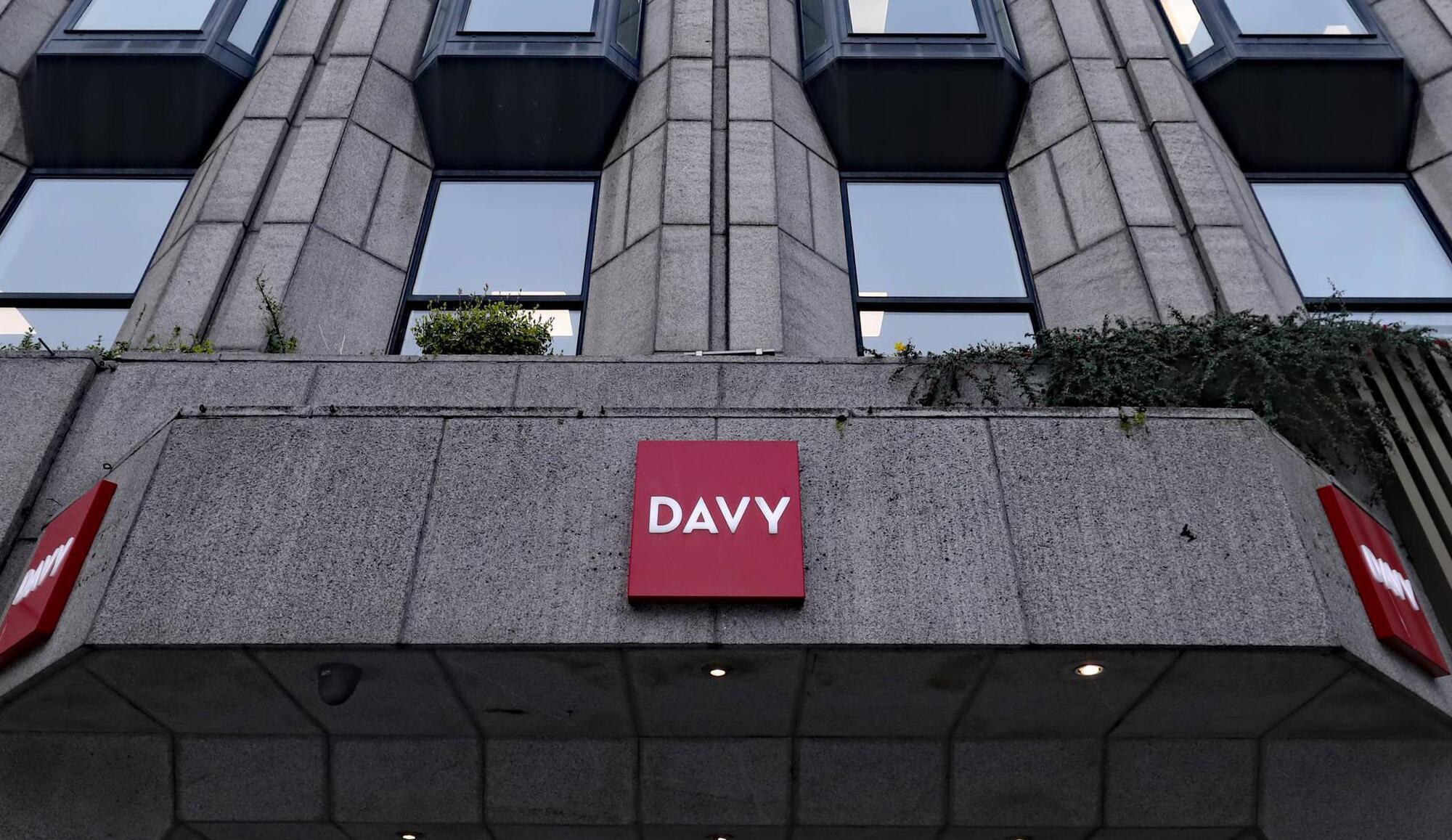
The offices of Davy Stockbrokers in Dublin. Picture: Niall Carson/PA Wire

Where was the shame? Where was the fear? Where were the women?

On 2 March, the chief executive of Davy stockbrokers’ Brian McKiernan issued a memo to the company’s 700 staff. Some minutes earlier, the Central Bank had revealed that a record €4.1m fine was to be imposed on Davy for secretly taking the other side in a bond deal in which it was acting as broker. It was a scam, involving 16, mainly senior, staff members in Davy’s, in which the seller didn’t realise that the broker was acting for itself. Just like an estate agent telling you he’ll get the best deal for your house, but he secretly buys it himself for less than the market value.

McKiernan’s memo set out that while there had been “no findings of actual conflict of interest or customer loss, there were significant shortcomings in how the transaction was conducted.” This was horse manure. Later in the day, the Central Bank forced a reissue of the memo, retracting the line “no findings of actual conflict of interest or customer loss.” 

Seven years after the execution of the scam, Mr McKiernan was still trying to minimise it. There was no shame about that in which he and the others had been involved, just heavily qualified regret.

No shame over scam

There was no shame that he was issuing this memo to colleagues, whose jobs were now loosened from any kind of security. There was no shame that this was being foisted on other colleagues who had a stake in the company. Some of those presumably borrowed big to buy their shares or perhaps remortgaged homes.

The investigation by the Central Bank into the scam certainly didn’t uncover any shame. “In permitting the transaction to proceed, Davy acted in a reckless manner,” the Bank found. Ok, everybody makes mistakes. A rush of blood to the head, even 16 heads, is possible.

But once jets had cooled, surely it might have dawned that greed had momentarily got the better of them and the thing to focus on now was reparation of some sort. Not a bit of it

 Davy, according to the Bank, “provided vague and misleading details and wilfully withheld information”. It was only when the regulator got really stuck into the investigation that it realised Davy had “presented information in such a way as to make the involvement of certain individuals appear more central to the transaction than in fact was the case.” 

After the economic collapse, there was an assumption that those who had profited most during the wild years now saw the error of their ways. 

The socialisation of bank debt; the imposition of austerity on those least equipped to bear it; the international shame of relying on the kindness of strangers to keep the country afloat; all of this, one might have thought, would have given pause to those who had prospered most when the Tiger was at a gallop.

High stakes gambling

Among the biggest winners during the days of illusory wealth were stockbrokers who dealt in contracts for difference, a high stakes gambling device once described as “the crack cocaine of the stock market”. This device made money hand over fist for brokers and was central to the collapse of Anglo Irish Bank.

One might think that all who had thus prospered on that level of gambling, which turned out to be underwritten by the public at large, would have felt chastened.

For some in the world of finance that may well have applied. For the Davy sixteen it certainly didn’t. Any manifestation of shame before the scam, and most certainly after it, was nowhere to be seen.

Neither, it appears, was fear. Even if group think prompted many in the financial community to simply brush themselves down and get back on the horse after the economic collapse, there had been changes.

Bankers went to prison. Others went bankrupt. The old certainties about impunity were shaken. 

In such a milieu, and in the absence of any innate feeling of obligation to maintain the highest standards, surely fear would have exercised restraint on anybody minded to turn a fast buck again

Not in this case. And perhaps with very good reason. As it was to turn out it took six years before the Central Bank completed its investigation. The Bank did not find any evidence of criminal offence in what had occurred. One might well ask how it can be that the actions undertaken, which included duplicity towards Davy’s client, did not come under the criminal code.

On foot of this scandal the government is now bringing forward laws to make it easier to hold individuals involved in wrongdoing to account. Now? Thirteen years after wholesale wrongdoing in the financial world in which a whole class of people simply walked away to inflated pensions, the damage done?

Where were the women?

Then there is the issue screaming out from the rooftops of Davy’s salubrious offices. Where were the women?

A notable feature of the economic collapse in 2008 was the complete absence of women from the frontline of culpability. It was as if the upper echelons of the financial and regulatory worlds were still back in the 1950s. The economist Morgan Kelly, who presciently spotted the collapse, described Irish bankers of the day as “faintly dim former rugby players”. Harsh, but in the neighbourhood of the truth.

Would a woman here and there have had a different approach to risk, recklessness, the wilful ignorance of the enormity of what was being done?

 CEO Bank of Ireland Francesca McDonagh, left, and  Ulster Bank CEO Jane Howard.
 CEO Bank of Ireland Francesca McDonagh, left, and  Ulster Bank CEO Jane Howard.

Since then, the corporate world has begun to cop on. There is still huge imbalance, but strides are being made in large financial institutions. Bank of Ireland and Ulster Bank are headed up by Francesca McDonagh and Jane Howard respectively. Efforts are being made, based on the application of belated common sense if nothing else, to ensure more women are in positions of responsibility.

Not so in the world of private finance. None of the Davy sixteen were women. The whole management structure there and in like-minded organisations has little more than a few token women in key positions.

The culture in many of these places harks back to the 1990s, the laddish days of yore when risk, machismo and thinly disguised sexism was the cocktail that spurned Money Man onto great things in a country coming of age.

Arguably, it persists in pockets of the financial world these days. And you’d have to wonder whether the presence of a woman or two when the decision to scam was being made, would have put the kybosh in the whole thing.

Interestingly, the person who headed up the Central Bank investigation into the whole affair was one Derville Roland.

So no shame, no fear, no women. Just as you were before the great fall, and just as they will, in all likelihood, be, sailing off to inflated pensions while others pick up the tab.

More in this section

Revoiced

Newsletter

Sign up to the best reads of the week from irishexaminer.com selected just for you.

Cookie Policy Privacy Policy Brand Safety FAQ Help Contact Us Terms and Conditions

© Examiner Echo Group Limited