Michael Clifford: Housing is in an even sicker state than health
Once the fog of this pandemic lifts, the urgency to tackling housing is going to return to the top of the agenda. The Government and Opposition may need to change their questionable ideologies around the issue to resolve it.
Michael Clifford: Housing is in an even sicker state than health

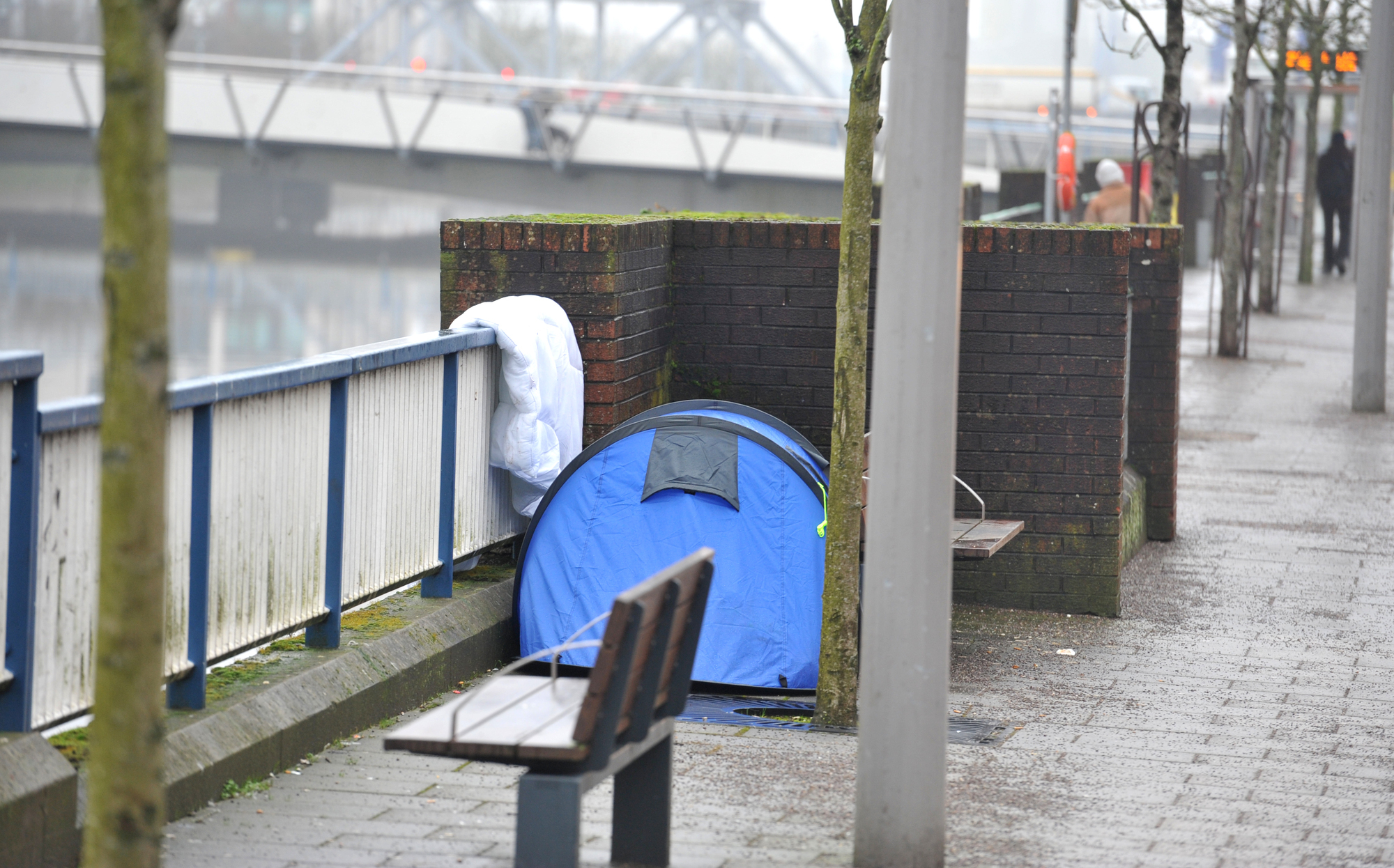
A small tent and duvet at a public seating area beside the River Lee in Cork. The societal stain of homelessness, the warehousing of children in hotel rooms, and the incapacity of a whole generation to have a home like their parents and grandparents did, is a central political preoccupation. File photo: Larry Cummins

Last Monday, in the pages of the Irish Examiner[/url], the Minister for Housing Darragh O’Brien wrote the following: “I am committed to pragmatism over ideology and delivery over dogmatism to boost housing supply and open up home ownership to a new generation.” 

Housing hasn’t gone away, you know. 

Notwithstanding the current pandemic emergency, housing remains, with climate change, the most pressing issue on the political agenda. The societal stain of homelessness, the warehousing of children in hotel rooms, and the incapacity of a whole generation to have a home like their parents and grandparents did, is a central political preoccupation.

In that context, the current minister’s proclaimed commitment to “pragmatism over ideology” is silly nonsense. In the first instance, the approach of Mr O’Brien’s party to housing has been freighted with ideology for decades.

They have been in thrall to the free market buccaneers. They, more than even Fine Gael, have promoted speculation and profiteering through the system by which land for housing is zoned. Planning where people live has been led by developers, not elected representatives nor state employees.

All of that is, to a certain extent, historic. It might be claimed that the “Galway tent” days in which developers were assigned the status of nation builders is from a different country.

Except, unfortunately, it isn’t. The current housing minister has shown himself to be as adept at doffing the cap as any of his political antecedents.

In the coming weeks, Mr O’Brien will bring to the Dáil the latest wheeze to allegedly make home ownership more accessible. The Affordable Housing scheme, which will cost €75m, involves the State taking a 30% equity stake in houses bought by first-time buyers. The purpose is to give young people a fighting chance of owning a home.

The scheme was introduced following lobbying by construction interests with the intention of getting the State to bridge the gap between what people can pay and market prices. But government officials have expressed concerns that the whole scheme will do little for prospective homebuyers and much for developers.

Documents released to Sinn Féin housing spokesperson Eoin Ó Broin illustrated the officials' repeated concerns. For instance, the then-secretary-general of the Department of Public Expenditure, Robert Watt, noted last autumn: “In the context of an affordable scheme, there is little evidence to suggest an absence of mortgage finance…the property industry want an equity scheme because it will increase prices.” 

In effect, the officials are concerned that the €75m will not go towards assisting prospective homeowners, but will instead end up directly in the pockets of developers. Despite such concerns, the minister drove on.

Mr O’Brien has also distinguished himself in his approach to co-living. In opposition, he wanted it banned. Co-living has been described as creating “the tenements of the future” but the concept is highly attractive to developers as it offers huge returns.

Once in government, the minister adopted an Augustinian approach - “ban co-living Lord, but just not yet”.

He ordered a review which reported in September. He sat on that until the following month and announced that co-living would be banned from the end of December. 

In the three-month window provided by the minister, planning permission applications for co-living developments in Dublin and Cork more than doubled. 

Thus the ban as introduced was little more than a wink to developers, who in this respect are once again designing an element of society in their best interests because their friends in government have abrogated responsibility for the public interest.

So when Mr O’Brien points a finger at his political opponents and decries “ideologues” he might require a sconce in the mirror.

Not that his opponents are completely free of questionable ideology either. Just as Fianna Fáil and Fine Gael are happy to be led by developers, it would appear that those on the left of the political spectrum believe that developers’ input should be eliminated wherever possible.

This is best expressed in the now fashionable mantra “public housing for public land”. In a perfect world, this is an entirely logical and laudable aspiration. But in the current environment, legitimate questions are being raised as to whether such an approach delivers the best result for the public in general, in terms of cost, price and particularly time.

The recent example in this respect was the collapse of a plan for 853 units of mixed development on a site in Santry, north Dublin. Council officials had put the plan together, but the councillors rejected it on the basis that it was too sweet for the developer and didn’t deliver enough public housing. 

Notably, the head of housing in Dublin city council Brendan Kenny thought the deal on the table was as good as it gets in terms of the public interest. Hopefully, the alternative approach as advocated by most political parties does deliver a better result.

This week, Sinn Féin TD Thomas Gould criticised plans for a mixed development on the site of the old St Kevin’s hospital in Shanakiel in Cork city.

“This flies in the face of what we should be doing to end the housing crises,” he said. “Public housing should be built on public land.” It might reasonably be asked, as council officials are doing, whether such an approach right now is a case of the perfect being the enemy of the good. 

Alternatively, it could be argued that if enough political will is driving the policy in vogue then all bureaucratic and resource obstacles can be surmounted.

What should not be up for discussion is that a politically unified approach would provide the best shot at solving this crisis. Lately, the differences in approach between the Civil War parties and the opposition has resulted in a turning-up of the volume on bickering and point-scoring. Housing is too important for that.

So what would be wrong in formulating an agreed approach to this crisis? In health, the SláinteCare plan is now accepted across the political spectrum as the best way forward. There are differences in emphasis, resourcing and in funding the resources required for the plan, and that is the stuff of normal politics. 

But the acceptance that health is now at a crisis point has prompted the opening up of an agreed path to the future.

Housing is arguably in an even worse state than health. 

Any cross-party plan would require compromise, and an agreed framework, from the pricing of land right through to construction costs and levies, affordability and a role for developers in the overall scheme of things.

Once the fog of this pandemic lifts, the urgency to tackling housing is going to return to the top of the agenda. The more that is agreed, the less energy spent in opposing each other, the better chance there is of going some way towards providing appropriate housing for all.

More in this section

Revoiced

Newsletter

Sign up to the best reads of the week from irishexaminer.com selected just for you.

Cookie Policy Privacy Policy Brand Safety FAQ Help Contact Us Terms and Conditions

© Examiner Echo Group Limited