To solve the housing crisis, let builders get on with the job, says developer Michael O'Flynn 
More viable zoned land, planning reform and accelerated delivery of infrastructure are all part of the solution to the crisis
To solve the housing crisis, let builders get on with the job, says developer Michael O'Flynn 

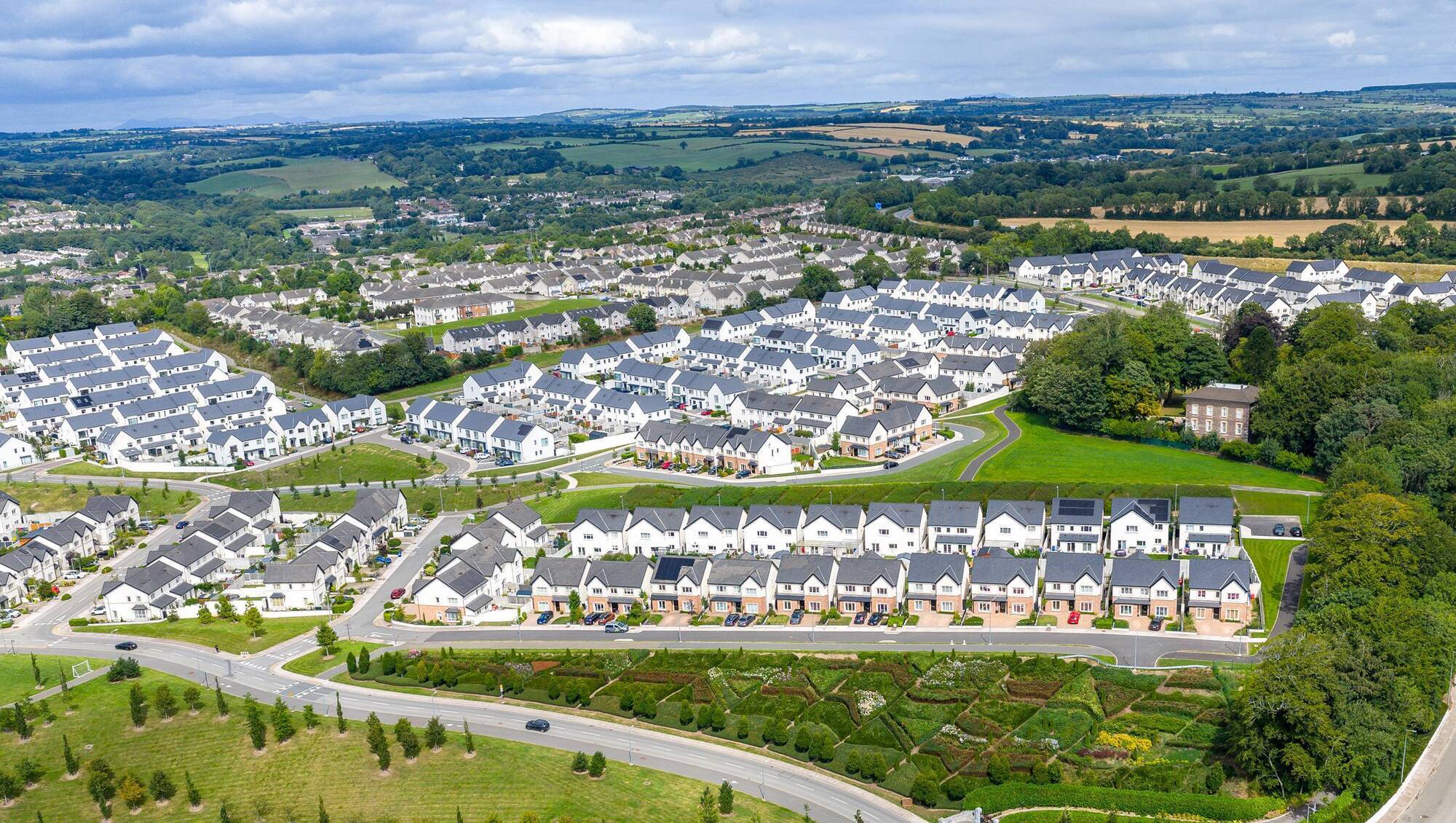
Significant upgrades to the Dunkettle Interchange have make onward commuting easier for those living in Ballinglanna, Glanmire (above), an O'Flynn Group development east of Cork city. The group's chair and CEO, Michael O'Flynn, says accelerated delivery of infrastructure is part of the solution to the housing crisis.

THE way to solve the housing crisis? Let builders build.

Michael O'Flynn, chair and CEO of the O'Flynn Group

Last month, the Government published a report called Future Forty, which looked at how Ireland may evolve — for better and worse — in the coming four decades. Written by the Department of Finance following engagement with the rest of Government and bodies like the ESRI and the Central Bank, the report states that “housing demand is expected to peak in the early 2030s, then fall gradually over time. ‘Pent-up’ demand is projected to be eliminated by 2040”, indicating a 15-year wait for the end of the housing crisis as we know it, even if house completion targets contained in the Government’s recent housing plan, Delivering Homes, Building Communities are met.

Former Finance Minister Paschal Donohoe and John McCarthy, Chief Economist in the Department of Finance at a press conference  following the publication of Future Forty: A Fiscal and Economic Outlook to 2065. Picture: RollingNews.ie

Consider that for a moment. The housing crisis is set to continue for another decade and a half even if the Government reaches its housing completion targets. One of the reasons it will take so long to deal with the national housing shortfall is that the rate at which we are aiming to build new homes is not even enough to keep up with new demand, and does little or nothing to deal with the historical deficit of homes that emerged during and following the economic crash of the late 2000s and early 2010s.

This is completely unacceptable and is something for which the country should be seeking an explanation.


To give it credit, the Government has tried to plan for a way out of the crisis. But as a developer, I know that the housing crisis will not be solved solely by plans and targets. It will not be solved by policy papers. And above all, it will not be solved by the State putting the taxpayer on the hook for the development of private homes. It is not the role of any state to deliver private housing — it is the role of the private sector, which has the capacity, experience and knowhow to deliver homes, at scale.

The solution to the housing crisis is to let builders build.

But to do that, the multiple barriers to delivery that exist for all types of housing, including social, affordable, cost rental and private housing can and must be removed by the State, acting in collaboration with our sector. This partnership ensures taxpayers money is used effectively and housing delivery ramps up — a win. A win for the country and those desperately seeking a roof over their heads that they can call their own.

These barriers are not, in my view, primarily about funding or labour. We have the workforce to build the homes Ireland needs. Funding can be secured, domestic and international, public and private — but it will only deploy where viability and policy stability exist.

It is increasingly clear that Ireland’s housing crisis is rooted in long-standing policy failures, and it is difficult to understand certain policymakers’ reluctance to acknowledge and confront inadequacies in land zoning, the planning process, and infrastructure although, hopefully, the infrastructure delivery will now change dramatically with the recent report from the Accelerating Infrastructure Taskforce. Until these structural weaknesses are acknowledged rather than defended, the shortage will continue to tighten its grip on housing delivery in Ireland. It is my firm belief that the Infrastructure Taskforce should now be connected to the Housing Activation Office as both of these groups must work in tandem. If these two groups are connected, the obstacles can be dealt with and developers will be able to meet and go beyond the targets the State has set itself.

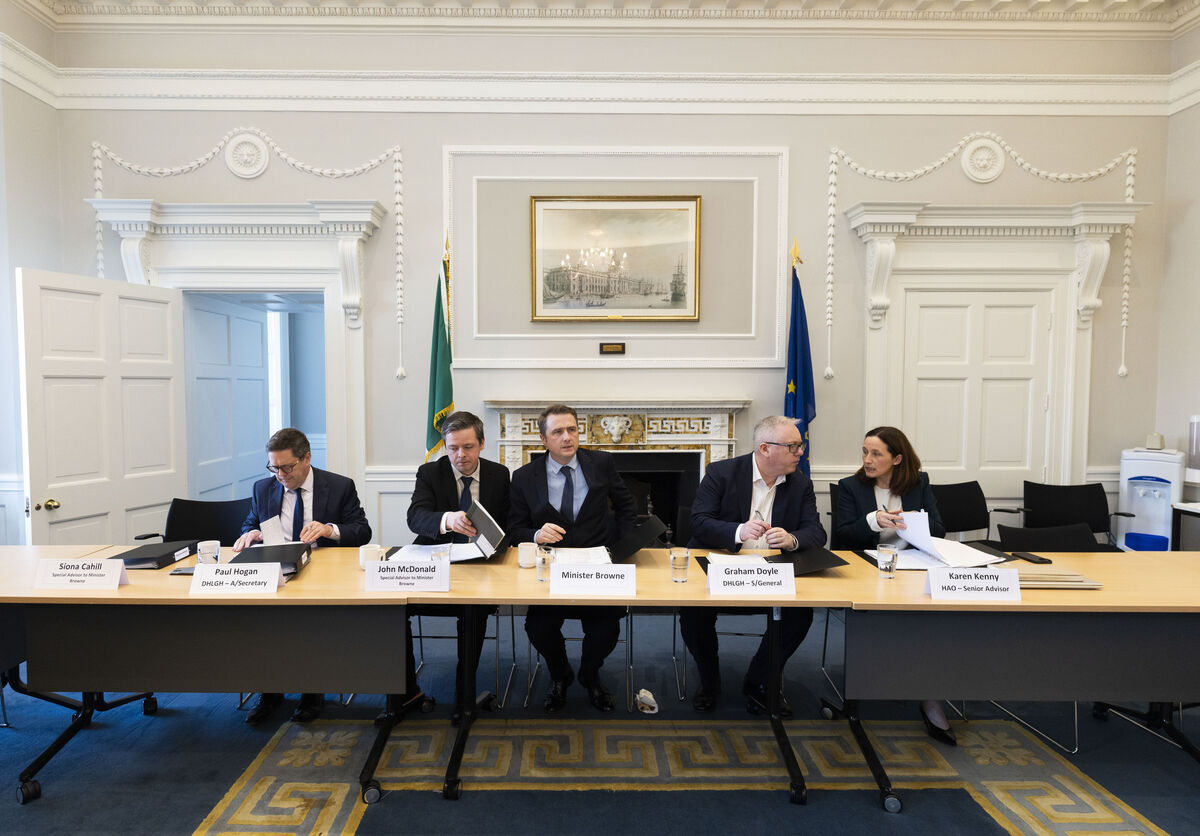
Minister for Housing James Browne conducting the inaugural meeting of new Housing Activation Industry Group to unlock infrastructure barriers in the Custom House, Dublin. Picture: Sam Boal/Collins Photos

Let us consider these three issues.

Firstly, there is not enough viable land zoned throughout the country, and especially near our cities, to build upon. We and many other developers are looking for opportunities to develop housing and it is frustrating to hear some local authorities claiming to have enough land zoned to deliver housing, when we know that it is not possible to buy land for viable development in those local authority areas. Even in cases where there is technically the requisite residential zoned land, the assessment of availability fails to take account of viability and the fact that this land is not in the correct locations to make rapid delivery possible. The Government this year instructed local authorities to amend local development plans to enable them to deliver higher house completion numbers. Let us hope the executives of our city and county councils respond positively. To be fair, a number of them are already doing so.

Secondly, the constant delays that the system of Judicial Reviews and planning objections allow for must be dealt with and it is encouraging to note that the Minister has acknowledged that change is required. Nobody is suggesting that people should not have the right to object to development and the State must do more to ensure that the necessary social and other infrastructure is put in place in tandem with development. But objections should be limited and dealt with swiftly — and if an objection is dismissed, building should commence. To be fair, the recent report of the Taskforce on Accelerating Infrastructure, was a great start. It is now up to the Government to implement its actions and to be fully aligned to the activity of the work of the Housing Activation Office.

And finally, it is absolutely vital that the supporting infrastructure for housing delivery — like electricity, gas, water connections, road improvements, schools and creches — are delivered with the greatest urgency. It was good to see in the recent housing plan from the Government, that €3.5bn in funding to build out power infrastructure, and a record €12.2 billion investment in Ireland’s water sector, has been committed. This promise must now turn into action and where housing is planned, the infrastructure must swiftly be put in place.

With these problems dealt with, real progress can be made.

While current viability challenges mean that the type of development the State wishes to encourage in certain locations is not viable without Government support, it is critical that a balance of tenure is maintained and that the State does not end up competing with and crushing the private sector. This will need sensitive handling. With the exception of social housing, the State should act not as a developer per se, but as an enabler to development, collaborating with the private sector to deliver affordable and private homes at scale.

The suggestion from some political sources — sources who should know better — that we need a state construction company are totally misguided. They have not considered the enormous cost to the taxpayers of such a move. Ireland cannot deliver the housing required without the tens of billions of euro of private funding that is needed. The State cannot fill that role. Nor can it upskill the local authorities or State bodies that would be charged with housing delivery in anything like the time needed to address the housing emergency.

There needs to be transparency and an acknowledgement of the slow pace and cost of public procurement and the cost of running state agencies charged with delivering housing. It is naive and constitutes false accounting to calculate the cost of delivery of housing by state agencies and public authorities as the cost of the land and construction only. The development contributions, and the cost of running the relevant agencies including pension costs into the future must be accounted for when comparing the cost against the cost of purchasing housing delivered by the private sector.

I was privileged to be part of the government appointed Housing Commission which had the benefit of over two years of collaborative work between the public and private sector. Everyone involved worked together and solid recommendations, which are capable of implementation, were issued. Unfortunately, the recommendations didn’t receive the approval of Government, but they are still available to be considered.

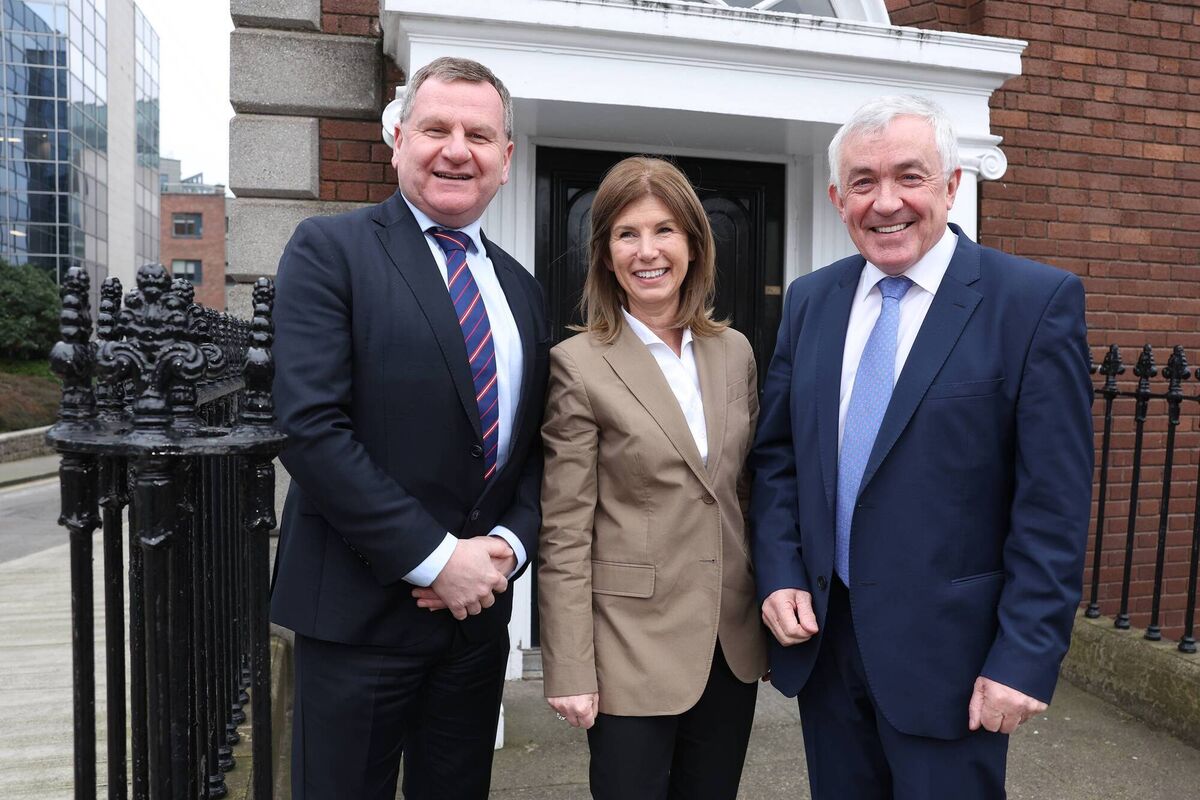
Property Industry Ireland (PII) at an event in Ibec on the Housing Commission Report. From left, Danny McCoy, CEO of Ibec, Michael O’Flynn, CEO of O’Flynn Group and Kathryn Meghen, CEO of the Royal Institute of the Architects of Ireland. Picture: Maxwells Dublin  

This is not to say that the State has always got it wrong — recent changes to apartment design requirements and the VAT treatment of apartment sales will make apartment building more viable than previously, though I would argue that the changes do not go far enough to encourage the level of building we need in this area.

The private development sector, of course, can always do more to speed up delivery and I am heartened by recent developments in MMC (modern methods of construction) — that involves off site prefabrication, and which means we can build high quality homes more effectively and efficiently than before. MMC is certainly part of the solution and for that reason, I am involved in a new MMC facility in Coachford in County Cork that supplies to our sector.

By removing the barriers to housing, and by the State working collaboratively rather than in competition with the private sector to build a mix of social, affordable and private homes, we can end the housing crisis and build communities worth living in.

We owe this to the generation of young people who are stuck. Stuck in their family homes, wanting to move out. Stuck in the private rented sector, wanting to own their own home. Stuck in a housing crisis not of their making.

For their sakes, let us now get moving and build the homes they need.

Michael O’Flynn is chair and CEO of the O’Flynn Group

More in this section

Revoiced

Newsletter

Sign up to the best reads of the week from irishexaminer.com selected just for you.

Cookie Policy Privacy Policy Brand Safety FAQ Help Contact Us Terms and Conditions

© Examiner Echo Group Limited