Finding the right route for the future of bus services
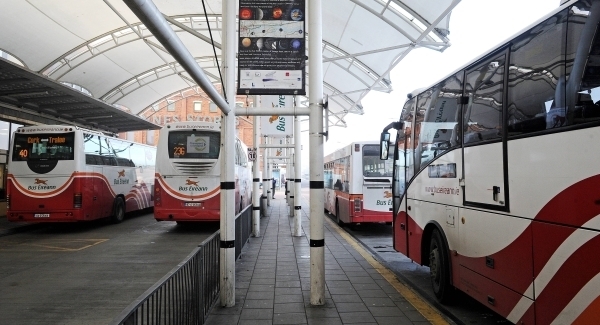
Revitalising small towns takes many things: A bus or rail service is one of them, writes Gerard Howlin.

Finding the right route for the future of bus services

At 11.15am today Ray Hernan, the acting chief executive of Bus Éireann, will appear before the Oireachtas transport committee to tell of a public company apparently facing bankruptcy and a deficit reported to be in the region of €9m.

That projection has risen exponentially over recent months. At stake, besides the company, is the essential purpose it was established to serve, namely bus transport outside of Dublin.

This morning’s reckoning contrasts sharply with the Government’s gala launch of the Action Plan for Rural Development in Ballymahon, Co Longford, less than 48 hours before.

That plan correctly identified the need for much closer co-ordination of myriad functions to sustain small communities. Revitalising small towns takes many things: A bus or rail service is one of them.

But Bus Éireann is not just a rural issue. The company provides buses in all major urban centres outside Dublin, including Cork, Limerick, Galway, and Waterford. The company may be a means to an end, but the end objective is essential not just for smaller communities, but for effectively functioning cities across the country.

In transport terms, this is a high-level, national strategic issue. But public transport is more than getting a bus from A to B. There can be no housing policy worthy of the name without an integrated transport plan.

Across Ireland, people live in housing estates an hour and a half away from work — some of that in traffic jams. Similar distances in other countries can be travelled in a fraction of the time. If we want to create greater density, even in small villages, let alone major cities, there must be proportionate transport networks, commensurate with the size of the hub.

In some very small places that might be a bus once a day to the nearest major town, but at a time that connects with other services onwards. In major cities, we need frequency and efficiency to serve major economic hubs, and greater housing density, for decades to come.

All of this is apparently obvious, but underlying policy objectives are remarkably absent from the current crisis-driven conversation.

State companies are not sacred objects. They exist, or they should exist, as utilitarian means to serve a public purpose. Sometimes that end is permanent — such as ownership of infrastructure, including airport runways, ports, roads, water, or railways.

Providing appropriate services, cost-effectively, is a matter of practical judgment, not of principle. It is highly improbable we would publicly invest in two public bus companies now if we hadn’t inherited them.

But their vested interest aside, there are incredibly important issues of public policy at stake. One is social and the other economic. In practice, they arrive for people standing at a bus stop, as a mix of both.

Bus Éireann’s losses derive from its Expressway services. It makes a profit when you correctly factor in the public subsidy on its public service obligation routes. In other words, its cost base is such that it is losing money hand over fist on commercial routes, but in big cities and rural areas where it provides what are partly social services, which must be subsidised, it does reasonably well.

These ‘social’ services are also economically vital. No modern city can function, and by extension no modern economy, without subsidised public transport. No small town can either.

Three main factors contribute to the cost of running a bus company: One is the cost of the bus, another is the cost of fuel, and the third is the cost of labour including administration. Buses and petrol cost the same to the public and private sector. A point that the committee might tease out with Mr Hernan today is the cost efficiency of his Expressway fleet, compared with its competitors.

But whatever the detail around the capital costs of the fleet, it is the terms and conditions in Bus Éireann that make its commercial operations completely uncompetitive. The €9m loss on Expressway services that could apparently be provided commercially at no cost to the exchequer is basting the bottom of a public company, at a direct cost to the public interest, of better subventing, better services, on public service routes.

I should say that I have vested interest in this discussion. I don’t drive and am entirely dependent on public transport. I compared the Bus Éireann Expressway route from Dublin City centre to Wexford with that provided by Wexford Bus, a commercial competitor. I can go with Bus Éireann today at 11.30am and arrive at 1.45pm for €8.99.

The same journey with Wexford Bus departing at 11.50am costs €17. It arrives at 2.20pm. Both buses follow nearly the same route, and serve nearly all the same stops with only minor variations.

The commercial company, I assume, makes a profit. The public one makes a massive loss, on a much higher cost base. A single fare selection doesn’t tell the full story — there are a wide variety to choose from.

Bus Éireann currently has a seat sale, for example. But as Wexford is my probable destination, it is the one of most interest to me.

Contrary to stuff said about the National Transport Authority flooding the market with licences, which is demonstrably untrue, two buses on the road to Wexford today, while Mr Hernan speaks before the committee, raises fundamental questions about who is undercutting whom. It seems taxpayers, and public transport services, are losing out simultaneously.

Trade unions, representing the vested interest of their members in the public company, want to draw the minister and the regulator into negotiations about what is the company’s own cost base.

They want more subsidy. But the subsidised routes wash their face. What they are actually looking for is cross subsidisation, where investment in existing and new public service obligation routes will be stymied because resources disappear down the opaque hole of the CIE group.

The largely redundant holding company is responsible for the property, pension, and treasury functions of the three operating companies, including Irish Rail and Dublin Bus. It should be abolished.

Each company should stand transparently on its own. If much of the Bus Éireann Expressway service is not commercially viable, then the cost base should be reduced, the routes are offered separately or in bundles to others; and ultimately, one public bus company not two, should provide services in competition with private commercial operators.

If the transport minister, Shane Ross should correctly stay out of internal negotiations within Bus Éireann, he should lead the public conversation from the front, on how he sees the future configuration of public transport. So far, he hasn’t.

If the trade unions are serious about a policy conversation that looks at the big issues, that of course is another matter.

But that separate conversation needs to be attended as equal partners by the commercial operators, local chambers of commerce and others. That of course, is precisely what they most want to avoid.

Revitalising small towns takes many things: A bus or rail service is one of them.

More in this section

Revoiced

Newsletter

Sign up to the best reads of the week from irishexaminer.com selected just for you.

Cookie Policy Privacy Policy Brand Safety FAQ Help Contact Us Terms and Conditions

© Examiner Echo Group Limited