Annual crisis at our hospitals: A&E chaos is symptomatic of indecision
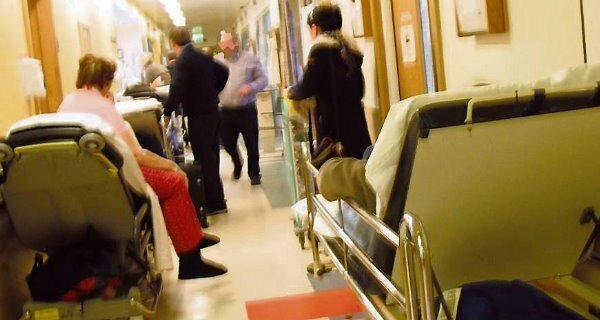
Equally, it is impossible not to have real concern for the welfare of patients stuck in a heartless limbo sustained by an entirely predictable bottleneck. However, the overriding response to this loaves-and-fishes fiasco must be a mixture of shame and frustration that this situation, essentially a job of management and the proper application of adequate resources, cannot be resolved in one of the richest countries in the world. Is our scheme of public administration, accountability and planning really so unfit for purpose that resolving this shambles is beyond us? Surely not, but this morning it seems as if we have broadened that old capitulation — “the poor will always be with us” — to include a new surrender: “The winter hospital crisis will always be with us.”
This society-wide failure stands despite the efforts of health minister after health minister, government after government, generations of health managers and clinicians and probably enough how-to-fix-it reports to fuel a good sized incinerator for the winter. Is this problem really so intractable?
Health services everywhere are struggling to satisfy growing expectations and accelerating costs. Today’s situation, unless there is substantial new funding, will deteriorate, as populations increase and the number of older people grows.
This change has been well flagged but we are not able to cope with today’s crisis much less the one predicted by demographers. Britain’s beloved NHS is in a similar bind; President-elect Trump’s plan to review Obamacare is part of the narrative. We are, it seems, at a crossroads. In truth, we have been at this crossroads for many years show no sign of working up the gumption to decide which road to take.
This week, Government reported a record tax take. The response was that this would facilitate more public spending. A considerable proportion is likely to go on pay — but will that fix public services? Surely it would be better to employ, say, 10% more nurses rather than give those trapped in today’s mayhem a 10% pay rise? Surely, extra staff would make conditions more bearable, services more efficient and end the nightmare faced by hundreds of sick people every day?
Tragically, it seems unlikely we will even have that discussion because society is so polarised around public sector pay. On one side, there is a perception that no matter how much public workers are paid, services will not improve. The benchmarking fiasco supports that view. On another, there is the perception that we can have premium, cradle-to-the-grave services, but pay low taxes. The foolish decision to reduce USC supports that view. Neither of these positions is right, but there is enough truth in each to ensure that we have a winter A&E crisis every year from here to kingdom come.
We seem unable to decide whether this should be a high-tax society with premium services or a low tax one with slapdash services. Until we have some agreement on that, and real hard-nosed reform, the winter hospital crisis — and many others — will indeed always be with us.