Are birds with bigger brains better able to avoid human hunters?
Between 1960 and 2015, almost 4,000 dead birds were brought to a Danish taxidermist to be ‘stuffed’. The law there requires that details of such victims be logged and the causes of death, if known, recorded. About 300 of the birds, of 197 species, had been shot.
Biologist Anders Møller and taxidermist Johannes Erritzøe, examined the carcasses. The shooting victims, they found, were larger on average than those dying from other causes. Bigger birds, presumably, are easier targets for hunters. Brightly coloured males, not surprisingly, were more frequently shot than duller females.

When the birds’ internal organs were examined, something unusual emerged; gun victims tended to have smaller brains, in relation to body size, than average. Taking account of age, sex, and physical condition, their brains were about 5% smaller than others. Measurements of the hearts lungs and livers, however, showed that the sizes of these organs were unrelated to cause of death.
Møller and Erritzøe concluded that a bigger brain provides ‘superior escape ability’. Birds with large brains, they estimate, were up to 30 times less likely to be shot than those with smaller ones and this was true across all species examined, whether they were traditional ‘game-birds’ or not. Writing in the journal Biology Letters, they say that bigger-brained birds are better able ‘to distinguish between dangerous humans and other human beings’.
This is not the first study to come up with curious findings regarding bird brains. In a Behavioural Ecology paper last year, Markus Öst and Kim Jaatinen of Helsinki University reported that larger-headed eider ducks bred more successfully than others; they are faster, the authors concluded, to form defensive coalitions and better able to assess the risks to their ducklings. A study, published in 2013, found that birds with larger brains had lower levels of stress hormones.
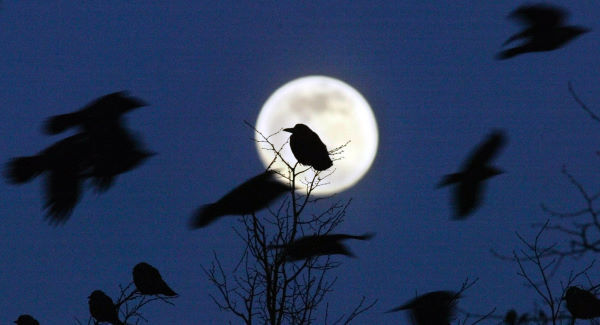
Hunting with shotguns began in the 17th Century but birds have been killed for food and feathers since prehistoric times. Ancient cave paintings attest to this. If a large brain helps a bird avoid being shot, having one would have been equally effective against the spears bows-and-arrows and traps used long ago. The selective development of brain size, therefore, has an ancient lineage. With hundreds of millions of birds shot worldwide annually, and smaller-brained individuals being selectively eliminated, bird-brains must have become progressively larger. Crows, for example, have big brains. Persecuted as pests for damaging crops over the last few millennia, their brains probably evolved to help them avoid trouble.
Is the same process at work among the mammals and fish we harvest? If so, relentless hunting may lead to the gradual development of bigger-brained quarry species generally. Hunting and fishing, through un-natural selection, could be influencing the course of evolution.
But are the Danish researchers leaping to conclusions? Wildfowlers tend to select the largest, most impressive, specimens for taxidermy, so the birds examined in Denmark were unlikely to be representative of the population as a whole. The evolution of brain size must surely depend on many influences and we should beware of one-factor theories. Flying creatures must remain as light as possible; carrying a heavy brain about comes at a price. Crows, with their exceptional problem-solving abilities, are able to shape and use tools. It seems unlikely that such skills evolved just to facilitate increased vigilance against hunters. Pigeons, not renowned for their intelligence, are just as wary of being shot as crows are.
If shooting is leading to bigger brains, then its absence should produce smaller ones. Five years ago, the hunting of curlew and snipe was banned in Europe. Møller wants the brain sizes of those dying recently to be compared with ones killed before the ban, to see if there’s a size difference.
- A. P. Møller & J. Erritzøe. Brain size and the risk of getting shot. The Royal Society Biology Letters. November 2016.