Dear Sir... Readers' Views (21/11/16)
Not all on the disability allowance are fit to work
It’s great to see the issue of low employment rates affecting people with a disability being highlighted in last Monday’s paper (Medical card fear a work barrier, Irish Examiner, November 14) but I was concerned that the article implies that all adults with disabilities on disability allowance can work — and answer surveys too.
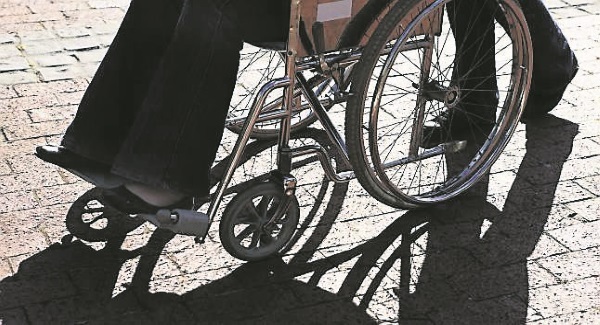
Sadly this is not the case. I would love to see my 20-year-old daughter heading off in the morning in her wheelchair to a paying job, but this is unlikely to ever happen, as she has the intellectual abilities of a two-year-old and physical disabilities so severe that she cannot even swipe an iPad.
She is non-verbal and communicates mainly by facial expressions, but I doubt that smiling and frowning would be considered a sufficiently useful contribution in the average workplace. She would also need access to a changing place with a hoist to be able to use the toilet, and how many organisations could or would provide that?
She was not included in the survey of people on Disability Allowance, but then she wouldn’t have been able to respond to the questions.
She is not alone.
There are thousands of other adults with differing disabilities and complex medical needs for whom the workplace is realistically an impossible dream. Yet the article states that: “Having a job is essential in order for those with intellectual disabilities to participate in mainstream society and take an active part in the community.”
This is unfair and worrying if the general public begin to believe that every adult with a disability should be working.
The survey was conducted by the Department of Social Protection and I would be concerned that a Fit for Work scheme is under consideration, like the UK one that is linked to thousands of deaths of people following the withdrawal of their benefits.
I’m sure my daughter would love to work if she could. But she can’t, and if all policy is to be directed towards getting people with disabilities into employment, what will become of her, and others like her? Because I believe that Government policy towards people with disabilities needs to be inclusive of all, and provide opportunities, supports and facilities for all, not just those who can access the workplace.
There are other ways to contribute to society too.
No need to ask, the M20 makes sense
So, our government has no money but, they can waste €1m to inquire about the M20 motorway from Cork to Limerick. What do they need to know? Cork is the second city of the State, Limerick third and Galway fourth. This has been known since the 1821 Census (and assumed previously). Limerick lies half-way between the other two (approximately 100km each way). The Cork to Limerick road has about 8km dual-carriageway; Limerick to Galway has 70km of motorway/dual-carriageway.
Does that make sense? Does it need investigation? Only if your boss is a Dubliner who, it appears, has not driven that road. My wife and I have, many times, as we have three grandchildren living near Galway and, within a few miles of them is being built a major new road between Athenry and Tuam.
Despite having changed having a census from every 10 years to every five years — needed for forward planning — our Government’s sense of priorities seems seriously deficient.
How to waste money.
Mise Éire
I am Éire
high on the gas of 1916
floating on the cloud of a Clontarf dream
I am Éire
word-fire flickering in
the belly of my soldier messenger
but little does he know
of the forked tongues
of dealers in the body politic
I am the Free State
part-whole
whole-part
my phantom limb in pain
an inconvenient spot on my
self-determined gain
I am the North
the Northern Ireland fix
part longing to belong
but my south
my east my west
a Britannia-Éire mix
I am Ireland
a land
a dream
a grá a place you can call home
no matter where you are.
Makeup useless on glass ceiling cracks
Hillary Clinton won 62m votes for president of the United States of America. Hillary Clinton won the popular vote yet Hillary Clinton lost the election.
Hillary Clinton is a woman who dusted herself down from a crushing defeat to give a speech for the Children’s Defence Fund to raise badly needed funds. She spoke about the need to raise children out of poverty and break the cycle and how there were children in all electoral districts in the US who lived below the poverty line. She spoke of her mother and the need to have hope especially in times of despair. Powerful stuff!
However, certain sections of the media have made the fact that she wore little or no makeup front page news. Women are judged by a completely different set of standards. If it were Donald Trump who had been defeated and making a speech a week later would he have been subjected to the same commentary? (Although to be fair perhaps The Donald may not be the best example here!)
In the same week that evidence points to a significant gender gap in pay in Ireland it is becoming more evident that women are treated differently and held up to a completely different set of ideals and standards than their male counterparts not only in Ireland but across the world.
Whatever you may think of Hillary Clinton and her politics, the fact that she remains resilient is something that should be admired.
This discussion surrounding her physical appearance which may have been deliberate will only serve to open up yet another crack in that glass ceiling for women everywhere.
And for that whatever your political persuasion we should be grateful if not for ourselves but for little girls everywhere.
Policy choices can increase tax revenue
Outlining the cuts suffered by public sector workers, Elaine Loughlin (We can’t afford to be held to ransom, Irish Examiner, November 16) notes that “Ireland’s 300,000-odd public sector employees stood by this little country in its darkest days” — and then proceeds to argue against pay restoration for those same workers. Her arguments boils down to an unsubstantiated “we can’t afford it” — but Ms Loughlin gives the game away at the end of her article, stating that: “With Fine Gael adamant that taxes would not be increased, vital services would inevitably be cut.”
Policy is about choices. If the Government continues engaging in regressive tax cuts such as those to inheritance tax, while maintaining ultra-low capital taxes and low levels of employer’s social insurance, the amount available to spend on public services will inevitably be reduced at the expense not only of workers and the general public.
It should be noted tax revenue was cut by €2.6b in the last three Budgets.
However, the Government can choose to adopt another approach — an approach rooted in fair taxation, including taxing unproductive income, and fair pay for the workers who provide the services on which we all depend.
For every euro the Government spends on public sector pay, nearly 50 cent is immediately returned to the Exchequer in income tax, PRSI, and pension contributions — never mind consumption taxes like VAT. Pay increases for low and average income earners, in the public and private sector, will end up in tills and cash registers of business up and down the country.
That will boost businesses, secure jobs and wages in the private sector, and create employment.
It’s time for the Government to start making the right policy choices, in the interests of all working people.
Look to the Dáil for real ‘mannequins’
The mannequin challenge is a new online trend which sees people uploading videos of themselves looking as though they’ve been frozen in time.
And now everyone from Adele to Destiny’s Child have been showing off their best frozen impression.
Planking was cool in 2010, we had the ice bucket challenge two years ago, and now mannequin challenge videos are sweeping the web.
However, if one wishes to see the finest example of the mannequin challenge in action, and would really like to see frozen time, then look no further then Dáil Éireann. Real live mannequins forever frozen in time.