Dear Sir... Readers' Views (28/10/16)
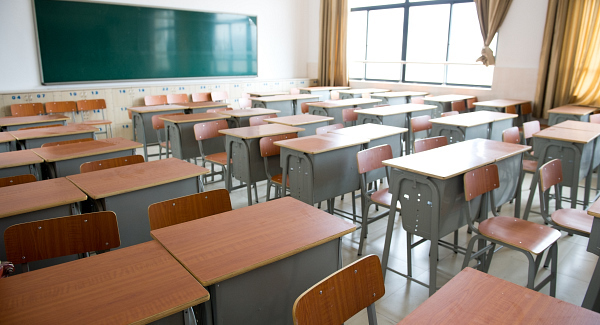
Student supervision has not been thought out
As someone who was a secondary teacher for 15 years I would like to make some points regarding the forthcoming contingency plans for substitution and supervision in our secondary schools in the case of industrial action.
First of all, some media commentators would lead one to believe that supervising a class is a simple job — the students will just be quietly sitting at their desks. Unfortunately, the reality in a lot of classrooms is different. Firstly, the students may be left with no work to complete — in this instance a 40-minute class is a very long time indeed. Even if there is work to complete the students may be disinclined especially if said class is in late afternoon, traditionally the most difficult time to supervise. Moreover, if the person supervising the class is not a qualified teacher this will soon become obvious to the students who when asked to behave and get on with their work may reply: “You’re not a real teacher anyway.” Also if it’s a double class (ie, two 40-minute periods in succession) the job becomes doubly hard.
In relation to lunchtime supervision in the schoolyard the following rules may have to be enforced: 1. Students are not allowed to leave the school premises. 2. Football is not allowed to be played in the yard. 3. Students in different year groups must stay in specified areas in the yard. In my experience, the most experienced teachers can find enforcing the above challenging so what hope is there for a non-qualified person?
Finally, in relation to the schoolyard supervision, what is the situation if a student has a serious accident in the yard? If a non-qualified person is supervising does the school insurance cover this eventuality? Also how would the parents feel if they discover that their son/daughter was supervised by a non-qualified person?
I suspect that the legal consequences for the school would be extremely serious indeed.
To conclude, it is my contention that in view of the above possible situation this matter has not been thought out as carefully as it should have been.
Pay politicians the average wage
A Leavy is correct when he says that the decision to tie politician’s salaries to public servants was made by “national agreement” (Irish Examiner, Letters, October 26). That does not make it right though and particularly given what the people of Ireland now know and have had to endure over the past eight years. Indeed linking politician’s pay to the likes of the gardái and teachers is the type of group-think that the prolific Mr Leavy likes to rail against in many of his published opinions.
Just as we had the overwhelming passing of the twenty-ninth amendment to the Constitution in 2011 on reducing salaries paid to Judges, there is no reason why we can’t have a similar referendum on salaries paid to politicians and how they are formulated and calculated with the ultimate arbitrators, the people of Ireland.
In my opinion all politicians should be paid a base salary equal to the average industrial wage at the time. Any additional amounts, let’s call it commission, should be tied to macroeconomic indicators such as economic growth and the consumer price index but also to policy formation and execution during their time in office, whether that is in Government or opposition. Attendance and behaviour at Parliament linked to remuneration would also be paramount in creating a more egalitarian democracy and reducing the type of kindergarten behaviour that we see so often in the Dáil and which is the scourge of national parliaments in the Western world.
First step is to sever the link between public sector pay and that of politicians. Put that proposition to the people by way of referendum and let them decide if “national agreement” as currently understood is just that. Yes or no.
Squeezing people to the last drop
If any government at all became genuinely interested in looking after the people they extort taxes from, we would not need hundreds of charities to keep the country going.
It has got so bad recently that I started wondering when they would start asking us for our blood. And then what do I see on posters all around south Wicklow. ‘Please give blood’. What next? ‘Please lend us your brains.’
Junior ministers could bunk in bar
Junior ministers are furious that they are being left to fork out up to €200 a night for hotels in Dublin, while backbench TDs get an overnight allowance. I can solve that unpleasant predicament for our poor ministers.
Turn Dáil Éireann into a night time bed and breakfast for sleepy hard pressed ministers. Throw a few bunk beds on the floor of the Dáil Éireann bar. That way a poor minister can drown his sorrows, and collapse into bed. The Ceann Comhairle can come into chamber about noon, and give the gong an almighty rattle to rouse the sleeping beauties. Whilst Ethel brews extra — strong Irish Coffees in the canteen to get them perky, for another hard day’s slog.
And this can be freebie from the taxpayer to minister. Cheers.
Still of sound mind after cancer drug
Regarding Jessica Casey’s report ‘Alzheimer’s prostrate cancer therapy link’ (Irish Examiner, October 14): If it is of some consolation to some worried reader I am receiving the said “Zolandex” hormone-treatment for prostrate cancer, for 17 years now. I was 87 on the date of Jessica’s report, and thank God I am still of sound mind and limb.
Fellows, just remain positive.
No end in sight for housing crisis
Many of those who bought houses during the boom were starting families and of these many are in arrears. Scores of thousands could yet become homeless through defaulting on their mortgages.
Many of those people that rose early to drive tots to creches and join commutes are now homeless.
That affronts human dignity.
These people were dispossessed, so too were their children. So many who invested hard-won money into homes were betrayed.
Our economic infrastructure seems geared to enable exploiters, many of who whinged in the downturn.
Our system would seem to effectively reward the wealthy whilst citizens on low incomes are left feeling bereft and abused and their children can see and experience all of this.
Do private developer/builders and auctioneers earnestly strive to avoid the pricing of the boom?
Children in homeless provision, in private housing and in social housing all deserve equal rights in common.
Do our legislators and elected representatives vindicate their common human rights?
We should treat all children of the State equally.
Moral courage needed, not Dutch
Isn’t it strange that the recent budget slapped 50 cent on every packet of cigarettes, while not adding a penny to the price of drink? It was easy to target a minority while not laying a glove on the vast majority.
Alcohol is the main drug of choice in this country. Too many people abuse our primary liquid asset. It would be better to tax drink than to tax water.
The Government complains that it has no money to pay the guards or the teachers. Yet, while the country is going elephants, they missed the obvious one in the room. Could it be that publicans hold the real power in the Dáil? Maybe we should call them “the Publican Party”. It is enough to drive the nation to drink. Come back, Father Mathew. Binge-drinking Ireland needs an Apostle of Temperance now more than ever. Let us replace Dutch courage with moral courage.
Article insensitive to Christians
I write in response to the appallingly insensitive article which appeared in your paper on Monday, Oct 24, P 5, by that actor person. Have you any idea at all of how grossly offensive these comments are to people of Christian belief like myself? Why you felt need to print this kind of stuff is beyond me. Then again the sure way to popularity and getting oneself a public platform in the Ireland of 2016 is to insult God and the Christian religion. Your paper once was a byword for moral values and decency, sadly no longer.
This relates to a news story reporting on Rory Cowan’s comments on his relationship with God following his mother’s dementia diagnosis.
CONNECT WITH US TODAY



Be the first to know the latest news and updates











