Install solar panels in all new houses - Achieving energy security
Some of this energy is generated at nuclear plants in Britain, allowing some of us to mix virtue and hypocrisy in a peculiarly Irish way just as we do on neutrality. We are happy to enjoy the security and prosperity made possible by Europe’s energy and peace, but take what we imagine is the high moral ground by refusing to even discuss building a nuclear plant or that we might have a moral obligation to help defend that peace.
In the 38 years since Christy Moore topped the Carnsore bill , there have been three significant incidents at the world’s 444 nuclear plants. As of May, 63 nuclear plants were under construction in 15 countries. Since then Britain decided to build one at Hinckley Point where 7% of Britain’s energy will be generated. Some of it may even be exported to Ireland.
Two years ago renewable energy contributed 7.8% of Ireland’s final energy demand, almost halfway towards the 16% obligation agreed under the EU’s Renewable Energy Directive (RED). Nearly half of renewable energy came from wind — 47% — or bioenergy at 42%. The balance came from hydro, geothermal or solar. The very low return from hydro suggests it is time to look at the movement gathering pace around the world, especially in America, dedicated to restoring rivers by removing pointless hydro schemes.
These figures for renewables are an improvement but lag behind some countries. America used renewable energy sources to generate about 13% of the electricity they produced last year. Remember, the Irish figure is just 7.8%. There may be some consolation in the fact that we have barely tapped the potential for renewable energy. The prospect of being able, when technology allows, to build sea-based wind farms all along our coast is reassuring too.
Those figures deal with the issue on a grand scale but yesterday, in Cork, an example of what can be achieved on a smaller, possibly more practical setting, was seen. A local group — Blackpool Community Centre — installed solar panels on its inner city building and expects to cut its electricity bill by 40%. Environment Minister Denis Naughten visited energy saving — and pollution reducing — projects across Cork yesterday. These are entirely positive projects but we should do a lot more and make energy saving and cutting energy imports — and energy-production generated carbon emissions — something like a national crusade.
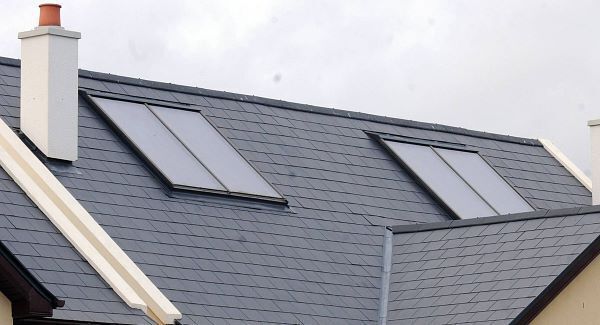
We need to build around 25,000 houses a year to meet demand. That is a pretty challenging figure but, in the context of the climate change and energy security, modest enough. Would it be too much to hope that, say, solar energy panels be made obligatory in these houses, thereby killing two birds with one stone? Over to you ministers Naughten and Coveney — let’s have some long-term, joined up planning even if that means facing down the powerful lobbies who would argue that this kind of measure is too expensive.

CONNECT WITH US TODAY



Be the first to know the latest news and updates











