Destroying the world around us - A changing picture for our wildlife
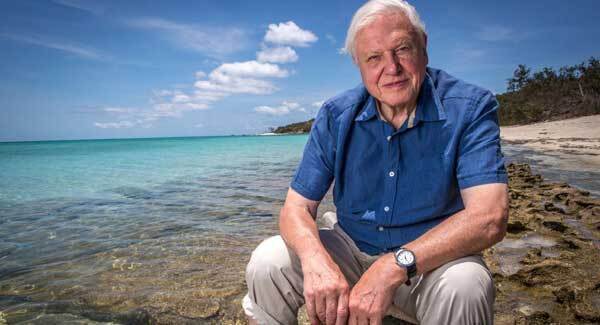
IF, in 1926, the year David Attenborough was born, you wanted to see a tiger more than likely you’d have to go to a zoo, a museum, or maybe the local Big House.
Destroying the world around us - A changing picture for our wildlife

Only one of those options might present you with a living albeit a confined tiger.

The other two might have offered work by, say, Rowland Ward of Picadilly, one of those grand taxidermy houses whose work now seems a mortician’s glass-eyed requiem to a different world.

The son of the Big House, during a tour of duty with the hussars at Champawat, made famous by the man eaters’ hunter and conservationist Jim Corbett, might have shot tigers and had one mounted as a memento of his polo-playing, halcyon posting to Uttarakhand — one Irish house still has three full sized lions (stuffed) in a huge glass case tucked away in an alcove beside a tremendous fireplace.

Then came television, the platform Attenborough needed, and shaped, to dedicate his life to trying to get us to understand and appreciate the world around so we might cherish and protect it all the more.

He, and even if in a lower key, the French champion of the oceans, Jacques Cousteau, could be described as the most successful evangelists of the last half century.

They, through their work, love and moral clarity, changed utterly how we regard the natural world. They changed our view of it from one of exploitation to one of responsibility.

They were not alone — Jim Corbett, Roderick Haig-Brown, Wilfred Thesiger and, today, Thomas McGuane and John Gierach — through their writing led a kind of contemporary pantheism.

In Ireland Éamon de Buitléar and AA Luce were among the first to carry that flag, one carried today by filmmaker Colin Stafford-Johnson and writers Michael Viney and Richard Collins.

Yet, despite all of that education, all of that hymn singing, the world’s wildlife is in an ever more perilous position.

Scientists tell us that we are on the verge of another great age of extinction.

Habitat disappears or is rendered sterile at a spectacular rate through our voracious demands for ever more land to sustain our meat diet or climate change.

We may call seal pups, fox cubs, or kangaroo joeys “babies” but that silly, empty sentimentality is seldom matched by the kind of meaningful action, the kind of activism that might actually make this world a better place for animals — striped, furred, feathered, or scaled.

How many of us eat farmed salmon indifferent to the fact that salmon farming, as it is today, is one of the greatest threats to wild salmon?

Maybe we imagine that because we can see otters or gorillas on television, happy and secure and with their saucer-eyed “babies”, that we imagine that all is well?

Maybe Attenborough and his collaborators have been too successful, maybe their work has lulled us into a false sense of plenty and permanence.

Attenborough was 90 last May and unless we radically improve our attitude to the other species we share this small planet with it is certain that any child born that month, should they live to be 90, will see a very different set of ‘Wildlife Photographer of the Year’ pictures — we publish some of them today — in 2106.

And, as our new Nobel laureate for literature warns — “it’s later than you think”.

x

More in this section

Revoiced

Newsletter

Had a busy week? Sign up for some of the best reads from the week gone by. Selected just for you.

Cookie Policy Privacy Policy Brand Safety FAQ Help Contact Us Terms and Conditions

© Examiner Echo Group Limited