Timeless truth: Poetry and nature go hand in hand
The lapidary line of the tubercular John Keats is almost a cliché — “Season of mists and mellow fruitfulness,” writes Damien Enright.

Timeless truth: Poetry and nature go hand in hand

Everybody has heard it, but no line better describes the view outside my window on these autumn mornings, with mist hanging over the fields and the bay.

Poetry is not a ‘fairy’ thing, as some of the machismo men in my class at school would have it. It was cause for suspicion if one liked it at all. I found it entertaining: in fact, of all the stuff I learned, only poetry and geography seized my imagination.

Poetry has gained muscle in my lifetime, Seamus Heaney being a prime example of a muscular poet, writing about digging and bringing in turf — Patrick Kavanagh, the same, and many others: Robert Frost, in New England, building stone walls; Roger McGough, in old England, writing about snuffin’ it at 91 in a barber’s chair when rival gangsters with hamfisted tommyguns burst in and give him a short back and insides; Wilfred Owen graphically recreating the horrors of the First World War battlefields in verse; Rafteri heading off for Mayo in the spring, as would any modern-day troubadour, only it would more likely be Spain or India and points east.

There are countless other poets of a non-wishy-washy nature: in fact, it’s hard to find the ‘fairy’ ones my macho pals derided in their ignorance. I liked verse, in English and Irish, and made no apologies for it.

I taught it for years in London and, consequently have lines (I emphasise ‘lines’ i.e snatches) for every occasion hanging about in my head.

Poetry is often about nature, draws images or metaphors from nature, and anyone who likes it ends up with apt or marvellous lines rooted in their brains — misty mornings, summer evenings, rain drops on gate bars, or winter days, there is always a line for nature, and lines useful for courting too.

Of a romantic night, under a star-filled sky, tell a girl “Sit Jessica (or Maureen, Mabel or Maria). Look how the floor of heaven is thick inlaid with patines of bright gold” and she’ll be so gobsmacked at the pearls pouring from your untutored gob that you’re half way there already, or so I found. However, this is no teenager’s guide to romancing, from an old rake. It was looking out my window early this morning that made me think seasonal poetry would be fine meat for a column.

William Shakespeare, the country boy that migrated to London to make his fortune, used the imagery of his Warwickshire childhood in almost every poem and play.

Springtime put a spring in his stride, “When daffodils begin to peer, With heigh! the doxy over the dale,/ Why, then comes in the sweet o’ the year;/ For the red blood reigns in the winter’s pale.” (Here, the ‘doxy’ is a young girl, one supposes).

For him, “Summer’s lease hath all too short a date” and autumn was the season when “. . . yellow leaves, or none, or few, do hang/ Upon those boughs which shake against the cold,/ Bare ruined choirs, where late the sweet birds sang.”

In Winter “. . . icicles hang by the wall,/ And Dick the shepherd blows his nail,/ And Tom bears logs into the hall,/ And milk comes frozen home in pail.” Meanwhile, “. . . greasy Joan doth keel the pot.”

It’s a fly-on-the-wall account of a country house in the hard winters of his time. Unfairly, perhaps, while Dick is out on the snowfields calling his sheep and Tom is abroad, bringing in logs, poor Joan scours the pot in a greasy kitchen. But at least she’s warm, one supposes.

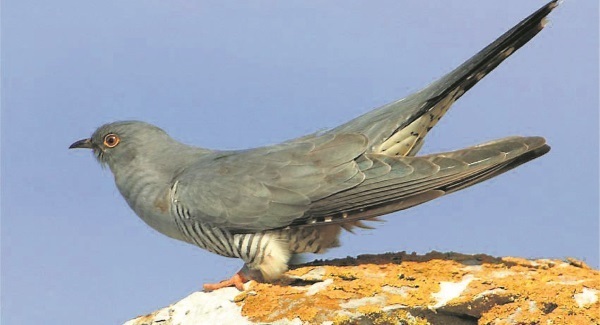
Thomas Hardy was an everyman’s nature poet. Of spring, he wrote: “This is the weather the cuckoo likes, /And so do I; /When showers betumble the chestnut spikes,/ And nestlings fly;/ And the little brown nightingale bills his best,/And they sit outside at ‘The Traveller’s Rest,’ /And maids come forth sprig-muslin drest, /And citizens dream of the south and west, /And so do I.”

And so, indeed, did our own Anthony Rafteri who, blind as he was, felt the spring coming and wrote, or sang: “Anois teacht an earraigh/ beidh an lĂĄ ag dul chun sĂ­neadh,/ Is tar Ă©is na fĂ©il BrĂ­de/ ardĂłidh mĂ© mo sheol. (Now, comes the spring/the days will be lengthening/ and after St Bridget’s/ I’ll raise up my sail); “Go Coillte MĂĄch rachaidh/ Go ndĂ©anfadh cuairt mhĂ­osa ann/ I bhfogas dhĂĄ mhĂ­le/ Do BhĂ©al an Átha MhĂłir” (To Coilltemach I’ll go /to spend a month’s visit there,/ in the nearness of two miles/ to Ballinamore)

More in this section

Revoiced

Newsletter

Sign up to the best reads of the week from irishexaminer.com selected just for you.

Cookie Policy Privacy Policy Brand Safety FAQ Help Contact Us Terms and Conditions

© Examiner Echo Group Limited