Prosperity is in part an inside job but we lack political will to reform
Brexit i s the greatest political challenge since the Emergency. The first thing to do in the coming week, is pass a budget that does no harm, writes Gerard Howlin.
Prosperity is in part an inside job but we lack political will to reform

THERE is much lamentation among people marching that they were too young to vote in the referendum on the 8th Amendment to the Constitution in 1983. It is a greater pity so few remember the 48-hour rule introduced in 1987 by Ray MacSharry. He brought in a regulation, to staunch cross-border shopping, that you had to be in Northern Ireland for 48 hours before you could import duty-free into the Republic. It was a desperate measure, in a desperate situation. It was also deemed illegal under EU law. It is, however, a foretaste of things to come. In part, they have already arrived.

In 1982, the relative strength of sterling meant that an Irish punt was worth only a modest 80 pence in Britain. In 1988 a weaker sterling meant the punt could buy 85 pence across the Irish Sea, and across the border in Northern Ireland. Jonesborough, Co Armagh became a shopping paradise for cavalcades of buses from the Republic. All along the border, small towns in Northern Ireland, their petrol stations and supermarkets, became a Mecca for shoppers carrying their punts into the United Kingdom.

In a then gravely weak Irish economy, the effect, especially in border counties, was devastating. MacSharry in Sligo, saw that clearly and close to home. It is odd, how the 8th Amendment is forever remembered, but MacSharry’s 48-hour rule is nearly totally forgotten. It is the 48-hour rule that is pertinent. Unlike the 8th amendment which is a matter entirely within our control, the underlying issues which prompted the 48-hour rule then, are in the context of Brexit now, largely or perhaps entirely beyond our effective influence.

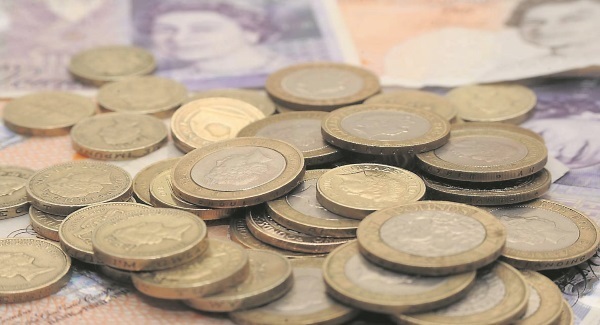
The euro was worth 88 pence sterling yesterday and possibly still climbing. Frankly, I would have a better chance of picking the winner of the Grand National than accurately predicting future currency movements. It’s the baccarat of the international money markets, only for the very rich and improvident. However, those who profess to know are predicting sterling to weaken further, and perhaps even parity to arrive. We were there before in 1995 and 1996. It is only one year ago since the euro was worth a modest, but highly competitive, 73 pence. The economic effects are already being felt. As Ibec’s Danny McCoy said on Monday, those hardest hit are small- and medium-sized indigenous Irish enterprises.

The strategic issue now is how we balance short-term necessity, with longer-term strategic goals as a country, within our limited capacity to effectively influence either. The greatest lesson, is that when we — a small country on the edge in every sense — pool our sovereignty effectively, we are at our most powerful and inferential. In the hundred years since the proclamation of the Republic, Ireland unquestionably enjoyed greater influence within the European Union, than without.

The only prolonged period of prosperity we have enjoyed is in the two decades from the late 1980s to the economic crash. Unfashionable as it is to say, though much was lost, most of our wealth was maintained. A narrative of a small country ignored or rode roughshod over by larger neighbours has just enough big- power politics in it to be credible. What it lacks is an accurate sense of how exactly, one small country, did enjoy a measure of influence and prosperity and critically how we might, on the periphery of events, exercise some influence again.

“When elephants fight, it is the grass that suffers” is a truism. And the elephants are fighting now. Brexit is the greatest diplomatic challenge since we joined the then EEC. It is the greatest political challenge since the Emergency.

The first thing to do in the coming week, is pass a budget that does no harm, and would thereby further reduce our room for manoeuvre. Any reduction of the tax base, as distinct from cutting rates, clearly reduces the capacity of the State at a critical moment. It would be reckless now, and would impact on services immediately in a context where we cannot know, but must fear, that our exports including tourism will be less competitive in the very important British market. Flippant spending ideas, like restoring town councils, pioneered by Labour and latched onto by Fianna Fáil should be binned.

Looking ahead to 2019 when the property tax freeze is over, we need to be a country with a functioning property tax and water charge regime that collects. Major long-term economic reforms such as the auto-enrolment of all employees in pension schemes should finally become a reality. Auto- enrolment of private sectors workers should be extended on the same basis to all new entrants to the public service.

Their employer, the State, should make a decent contribution. But the bottomless pit of unfunded public sector pensions must end. Education should be an absolute spending priority. Third-level, a critical benchmark of economic capacity and social opportunity must be funded by a combination of fees and loans. Any party that hasn’t a serious plan to do so, can’t be taken seriously, which for now seems to be all.

It is only by widening the tax base, that ultimately it will be possible to reduce tax rates, to make Irish jobs more competitive. We need to do this now, exactly at the moment when the economy will come under enormous external competitive pressures from currents exchange rates and potentially tariffs as well.

There is a vision for a leaner, more agile and competitive economy that is one essential strand for an Ireland that can better survive and maybe even eventually prosper, in some measure. It is having the measure of things that is essential. Bellicose bar-room notions about what is actually possible for a small country, serve nobody. It does, however, serve up excuses as to why we cannot or will not do, what we should do, now.

Ireland in the 1980s was still a very poor place. That lack of memory is the real pity for so many who are not old enough to remember. The fear is that the deprivation they missed by accident of birth could be instead visited on them in their old age, or sooner. There is no Irish entitlement to the levels of prosperity we enjoyed previously, and absolutely no certainty of ‘restoration’ for anybody.

The Irish model of the past 40 years was to ride the two horses together. Politically, we anchored in the European project and the largesse that brought. Economically, we were based in a North Atlantic Anglosphere. It was by trading deftly, politically and economically, that we momentarily prospered, and enjoyed influence. Now that confluence of our vital interests no longer coincide. Because we are small and peripheral, we are only a blade of grass beneath trampling elephants. Precisely because our interests are slight, in the greater context, there is hope. But only if we can fend effectively for ourselves at home and play a careful hand abroad.

More in this section

Revoiced

Newsletter

Sign up to the best reads of the week from irishexaminer.com selected just for you.

Cookie Policy Privacy Policy Brand Safety FAQ Help Contact Us Terms and Conditions

© Examiner Echo Group Limited