Back gardens boast wildlife in suburban England
The garden has matured over a century but is undeniably suburban, with streets, albeit leafy, on two sides. Yet, it has much more visible nature than my own garden edging on a wilderness with ancient trees, a stream and a field that borders an old estate where nature has been left to its own devices for 50 years.
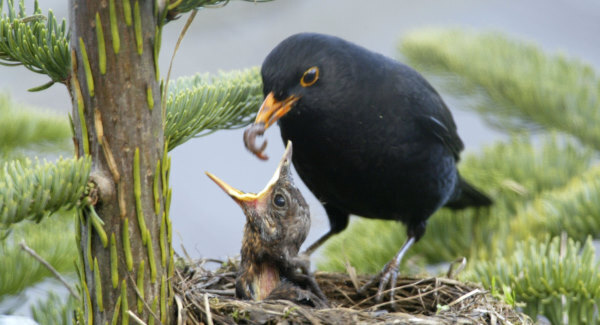
On the parts of the lawn that has not yet been colonised by the encroaching trees and robust bushes, woodpigeons wobbled about, picking over the grass, blackbirds hopped, magpies strode about or sat in the foliage rattling like machine guns, lovable-looking grey squirrels bounced about or sat on their hind legs nibbling berries. And under the back porchlight at night, big-eared wood mice could be seen feasting on grains of fishy rice fallen from the giant paella pan in which my son had earlier cooked dinner for 18 of us, assembled for the annual family reunion.
The garden is a wildlife haven. In spring, a fox raised a litter under a shed at the remote end, and fox cubs could be seen chasing one another’s tails and playing hide and seek on the grass. The Altrincham Enrights tolerate and encourage the sharing of assets with fellow creatures, although the liberal licence extended to the vegetation may need revision. Soon, there will be no lawn, and the greenery will have become an impenetrable mass in which the wildlife may be heard but rarely seen.
My son and his wife are environmental scientists rather than naturalists and their science, the overseeing and auditing of energy resources and use by large companies, national water boards and so on, does not allow them much time for gardening.
However, they vow that they will hack it all back “when they can get around to it...”, or hire a professional to put a stop to its gallop.
Meanwhile, it is a wonderful, old world place.
When the fox family had vacated the undershed bunker, a young fox took up residence. As the days passed, it began to look raddled and then was observed to be suffering from virulent mange. Humanitarian concern prompted my son to consult a veterinarian surgeon to ask if there was a mange medicine that could be left out for it to eat.
The vet recommended a homeopathic potion, drops to be put on thick cuts of white sliced pan and honey, these left along the garden edges, which would be the usual fox route. My son, who before taking up environmental science had trained in medicine at a leading UK teaching hospital, has always dismissed homeopathy as a nonsense in which a drop of medicine is diluted thousands of times — a teaspoon in an ocean — before being administered to gullible or desperate patients brainwashed by the claptrap that it will cure their condition.
If it works — and it sometimes does —it is because of the placebo effect in which the patient believes so strongly in its magical powers that they psychologically cure themselves. Many trials of placebos have concluded that belief alone can cure.
Homeopathy has various high- profile adherents (the late Queen Mother, who perhaps further diluted her drops with a drop of gin?) and is favoured by those who entertain justified circumspection about allopathic drugs and drug companies.
However, however, my son followed the vet’s instructions, the mumbo-jumbo of sliced white bread, honey, etcetera.
A few weeks later, he was jaw-dropped, but happy, to see the fox perking up. Within months, it had grown a new, shiny coat.
Now, as he says, does the fact that the fox was not moved by faith or phycology prove that the homeopathic remedy worked? Not necessarily: the cure could have happened anyway. Well-fed on bread and honey, the animal recovered the strength to slough off the infection.
I have since read up on mange in foxes. The UK National Fox Welfare Society website displays letters from people who claim to have cured mange in foxes with homeopathic Arsenicum album and sulphur 30c. And, apparently, the drug ivermectin which, coincidently, I mentioned last week as a threat to the environmentally important dung beetle, is also effective.
Meanwhile, indoors rivaled outdoors in the Manchester Museum of Art where a painting of a solitary silver birch in the Highlands Collection was, I thought, as beautiful as any birch I’d ever seen in the wild.

CONNECT WITH US TODAY



Be the first to know the latest news and updates