Olympic doping controversy - Refusal to ban Russians a cop-out
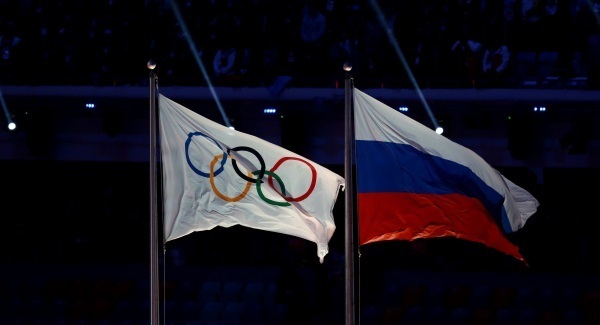
The world governing body’s ruling 15-member executive board met yesterday via teleconference and decided that responsibility for ruling on the eligibility of Russian competitors remains with the international federations.
This means that the IOC has deemed it prudent to leave decisions on individual athletes’ participation with the international bodies governing their particular sport. This is a nonesense as those organisations have neither the capacity nor the inclination to decide which athletes should be included and which should not.
Indeed, those organisations that do have the capacity have not exactly covered themselves in glory. The World Anti- Doping Agency (WADA), which is tasked with rooting out the use of illicit substances in sport, failed miserably during the Winter Games in Sochi. At one stage during the Games in 2014 they actually praised the Russian testing mechanism, blithely unware that the Russians were running a doping factory inside the official testing site.
Orchestrated by Russia’s Ministry of Sport, secret service agents were employed to pass contaminated urine through a mouse hole at the Winter Olympics.
The extent of what was happening only emerged when whistleblower Yuliya Stepanova, an 800m runner, and her husband Vitaly, a former official in the Russian Anti-Doping Agency, helped to uncover what was going on not just in the Winter Games but also during the 2012 London Olympics.
The information they gathered formed the basis for the World Anti-Doping Agency (WADA) Independent Commission investigation which found evidence of a state-sponsored programme, and that led to a Russian ban being imposed by the International Association of Athletics Federations.
The extent of the Russian corruption is reminiscent of what was happening among East German athletes in the 1970s and early 1980s and looks equally sinister. The modus operandi of the East Germans was not just to ensure that their competitors tested clean but to force them to take performance enhancing drugs in the first place.
Many East Germans — and presumably Russians — did not want to take such sustances for a variety of reasons but they were left in no doubt that unless they did, they would not be allowed compete. Many of these drugs are toxic and can have long-lasting health implications for the athletes involved. What the IOC has done is a huge disservice to all concerned. It makes a mockery of the three core values of the Olympics: excellence, friendship, and respect.
There is nothing excellent about doping, the opposite, in fact. Failing to deal with it fosters division rather than friendship among nations and, respect — the moral imperative of the Olympic Movement — is sacrificed to expediency.
CONNECT WITH US TODAY



Be the first to know the latest news and updates