Seanad elections - So much for the promises of reform
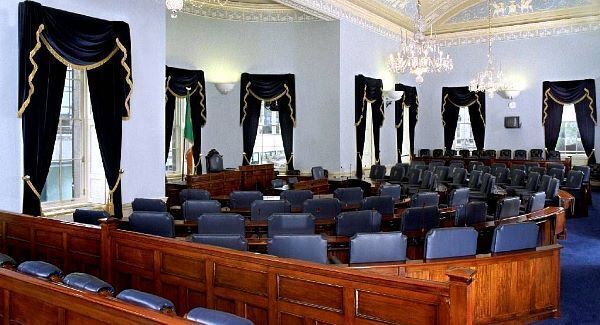
The option of remaking the institution, or the Upper House as some of its semi-fossilised grandees insist, was not offered.
In hindsight that refusal to propose remaking the Seanad was honest as the idea of institutional reform or the commitment to it, was and remains entirely illusory.
Despite the fact that this lazy and more or less anti-democratic proposal was a centrepiece of a programme of political reform promised by the coalition, and despite the Government energetically advocating abolition, the 33rd amendment to the Constitution was narrowly rejected.
The vote was tight — 52% against abolition, 48% for — but the fact that only 39% of the electorate bothered to vote at all showed how relevant, how very well regarded, the Upper House is.
However, that 39% slice of the electorate is a multiple of the number of people in a position to elect 49 senators to the next Seanad.
Voting is underway and the Taoiseach, acting or otherwise, will in time nominate another 11 senators.
Once again an entirely unrepresentative, elitist, insular process is underway and it will celebrate the very worst kind of croneyism.
That this anachronism is sustained in its present form to, nominally at least, serve our democracy is the kind of let-them-eat-cake dismissal of the common good that would not be tolerated in any other sphere of public life.
There was, however, a passing nod to the possibility that the institution might be remade to make it relevant and more worthwhile.
In December 2014 that old reliable “an expert working group” was assembled to examine the options for reform within the current constitutional provisions.
Led by former senator Maurice Manning it published a report last April which, like many of its predecessors, suggested a broader suffrage and that the one-person, one-vote principle should replace current arrangements.
It also argued that emigrants and residents of Northern Ireland be allowed a vote in Seanad elections. Like its predecessors the Manning report is, like some senators too, gathering dust in a quiet corner of Leinster House and is unlikely to be implemented.
Tragically for the credibility of our body politic the assessment that calling “an expert working group” to arms was no more than a cynical exercise in winding down the clock on reform rings too true.
The subtext to this never-ending ballyhoo is that as all sorts of combinations try to work out how to form the next government, the entire power-broking race is accompanied by a familiar, discredited libretto championing political, particularly Dáil, reform.
Fianna Fáil, as if they arrived on the last bus from Mars, want “real change”.
Fine Gael, as if they had been on Mars for the last five years, agree wholeheartedly. Explaining to someone from Mars how those aspirations contrast so sharply with the reality would be more than difficult.
The Seanad is not the only institution crying out for reform — nearly every crisis facing this society is rooted in our inability and reluctance to embrace positive change. And how might we change that?