Does it take a starman to remind us of our place on planet Earth?
IâVE watched Mick Rockâs 1972 video for David Bowieâs âSpace Oddityâ so many times Iâm in my own tin can now, far above the world.
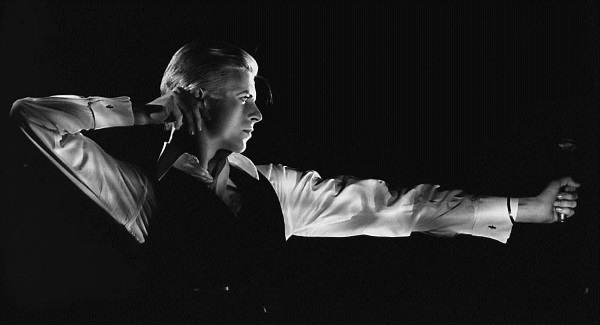
Bowie delivers the words straight to camera apart from the moment when Major Tom blasts into space when his arm lifts like a dancerâs. His hair is red and heâs wearing eye-shadow and platforms, visual cues which question Major Tomâs entire project â as do his sadly un-American teeth. But his delivery is deadpan. He leaves us to draw our own conclusions.
We tend to draw different ones. For me the story is a tragedy. Major Tom is an astronaut who dies a terrible death when he steps out of his tin can far above the world. He loves his wife very much but she will never see him again.
The horror is compounded by the fact that this is a scientifically planned experiment which tempts a man to risk his life for the sake of fame and glory. The most tell-tale line is surely, âThe papers want to know what shirt you wear.â
Major Tom trusts his spaceship, just like the domineering computer is trusted in Kubrickâs film 2001: A Space Odyssey which inspired the song. But Bowieâs song is much simpler and much more powerful than Kubrickâs film. He makes Tom an average geezer who loves his wife, a fragile human being in the hands of commercial forces he doesnât understand.
Iâm a child of punk and New Age and growing up I saw Bowie as a glam rocker. But when I started reading about the serious plans which are currently being made to send humans to Mars, âSpace Oddityâ played over in my head until I put it on a loop on my computer.
Perhaps the most chilling of these plans is the commercially-funded Mars One in which the astronauts never return to Earth. I find it astonishing that this project can be calmly planned for 2025 when it would likely lead to the death of at least the first four astronauts as the world looks on.
An MIT-based experiment calculated that the first astronaut would suffocate within 68 days in the âhabitationsâ which they would build because of the difficulty of maintaining the correct atmospheric conditions.
But even if the entire project went according to plan, the four would still be dead to the world from blast-off, present to their loved ones only as voices or images on the internet.
With âSpace Oddityâ playing in the background I spent hours trawling through the video testimonies of the different candidates for the trip. There was the guy in the US who said he lived in a van anyway so the shuttle wouldnât be anything new.
There was the woman who said the journey would be better than being stuck in traffic at home. But the scariest clip by far was the one presented by a woman as the last video home from a dying team which still thinks the sacrifice was worth it.
Freud said we canât believe in our own death because we can only imagine it as if we witnessed it; science writer Oliver Morton says this is how death and Mars are alike.
Supporters of colonising Mars canât really imagine living there and so they always picture it as a glorious event in the past recorded by the people of the future. âI want to be part of The History,â as one hopeful Mars One applicant says.
But the sacrifice of human life is never worth it, even if it goes down in The History. If the dead astronaut with the bejewelled skull in Bowieâs âBlack Starâ video means anything itâs donât worship death. In the words of UN secretary general Ban Ki Moon, âThere is no Planet B.â All our effort should be focussed on cherishing human life on this small planet.

This is not really about space travel. The most high-profile proponent of life on Mars, Robert Zubrin, makes that very clear in his manifesto, âThe Case for Mars.â Zubrin says Americans need a new frontier to conquer because America is losing the âvigourâ which defined it.
He says we can never have peace on this planet unless we see the riches of the universe as unlimited because âOnly in a universe of unlimited resources can all men be brothersâ.
Tell that to the Aztecs. They didnât experience much brotherhood in a world which seemed to have unlimited resources. But although Colombusâs conquest of the New World is the constant prototype for the conquest of Mars, the comparison is bonkers. Mars is, on average, 140m miles (225m kilometres) away, while Major Tom only travelled 100,000 miles. It is freezing.
Sand storms can last for weeks or months, sometimes enveloping the whole planet. Thatâs leaving aside the main issue: Mars has no air we can breathe.
The Mars lobby speaks of Mars as a possible alternative home for humanity if, as Richard Branson says, âsomething dreadful happensâ to human life on Earth. The âsomethingâ which is mentioned rarely or not at all is climate change, probably because tackling it would limit the very kind of economic growth these guys espouse.
Global warming is rarely mentioned even in the context of terraforming Mars by releasing greenhouse gases on the planet to induce enough global warming to make it habitable. Happy families are pictured wandering through their Martian idyll with their oxygen masks on.
Is that where Bowieâs âgirl with the mousey hairâ pictured herself in âLife on Marsâ? Human life on this planet may seem a âGod-awful small affairâ but itâs all we have.
âSpace Oddityâ came out the same year that man walked on the Moon. The pictures of the blue and green planet taken from the moon are traditionally credited with giving birth to the environmental movement.
But the writer Naomi Klein argues the opposite, seeing it as the moment we started to distance ourselves from the challenges of our home planet. And it was the âvigourâ brought to the world economy by the space race which ushered in the era of capitalism which has come close to destroying our prospects on planet Earth.
Bowieâs is a voice raised for humanity against Planet B mentality. This planet is to be cherished and the stars are the mystery of the night sky. It doesnât surprise me too much to find he had a spiritual life and to see his Muslim wife Iman Abdulmajid tweeting last week, âThe struggle is real but so is God.â
Rise #imandaily pic.twitter.com/pkR1L1zXJ0
— Iman Abdulmajid (@The_Real_IMAN) January 10, 2016
And I applaud the 600-year-old church in Utrecht which played âSpace Oddityâ on its bells.
Bowie was too much of an artist to make political speeches. But pass me my platforms and my blue eye-shadow because Iâm voting with Mr Stardust for life on planet Earth.
Major Tom is an astronaut who dies a terrible death when he steps out of his tin can far above the world