Wren boys on the march at Christmas
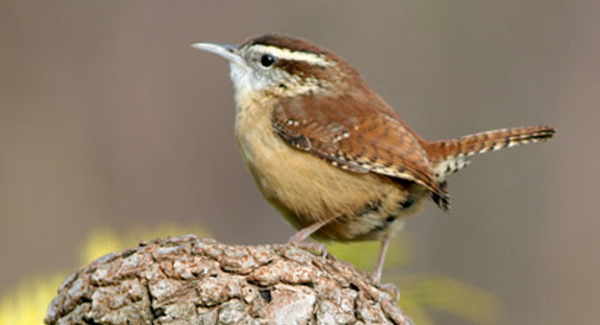
IN the days coming up to Christmas, wrenboy groups are again preparing for a time-honoured, St Stephen’s Day tradition in which the eponymous little bird was once the centrepiece. 
Wren boys on the march at Christmas

The custom of hunting and killing the ‘wran’ is remembered in song and story. Groups would, long ago, display on a holly bush a wren they had killed, going from house to house playing music and collecting money for festivities, later.

Thankfully, this inoffensive bird is no longer killed. However, wrenboys still go out on December 26, with the tradition remaining vibrant in areas such as the north Kerry/west Limerick region and in Dingle, where several, colourfully-costumed local groups parade on the day. The Dingle parade is nowadays a tourist attraction of sorts, watched by hundreds of visitors to the town.

The spurious reasons for killing the wren were rooted in mythology. A belief one time was that the wren betrayed the early Christian martyr, St Stephen, by flapping its wings to let his pursuers know where he was hiding. It has also been accused, among other things, of warning Cromwell’s troops of a surprise attack by Irish rebels. Nowadays, nobody gives any credence to such myths.

For a bird so tiny — the second smallest in Ireland behind the goldcrest — the wren can be heard loud and clear and is one of our more widely distributed birds, being found almost everywhere, according to Birdwatch Ireland. The population runs to millions: there are probably more wrens than people in Ireland.

You’ll find it in gardens, but it’s not always easily seen as it steps around and under bushes, trees and other growth looking for food. Perhaps, the wren’s best distinguishing mark is its tail, which is generally in a cocked position, as well as a powerful voice which can be heard chattering and sending out musical notes from the centre of a thick bush. You’ll probably hear the wren before you see it.

It has a fat, round body and its head, back and wings are of a chestnut colour. Its breast and belly are of a paler, buff hue. It tends to keep away from food on bird tables and its diet consists mainly of small insects. Mild winters in recent years have favoured the bird which can suffer severely in cold weather, because it’s so small, with exceptionally high death levels resulting. However, the population can recover after a few years.

The wren’s scientific name, Troglodytes, means cave-dweller, which more than likely derives from the cave-like, domed nests it builds and its habit of staying hidden in the undergrowth. One of our best-known ballads, ‘The Boys of Barr Sraide’, by the Kerry poet, Sigerson Clifford, will again be sung lustily at Christmas. It praises the boys who beat the Black and Tans and who, in Clifford’s words, were also lads who “hunted for the wran’’.

More in this section

Revoiced

Newsletter

Sign up to the best reads of the week from irishexaminer.com selected just for you.

Cookie Policy Privacy Policy Brand Safety FAQ Help Contact Us Terms and Conditions

© Examiner Echo Group Limited