There's an irruption of black snake millipedes from the Canary Islands to West Cork
DID WE bring the infamous black snake millipedes to the Canary Islands, from Ireland, asks Damien Enright
There's an irruption of black snake millipedes from the Canary Islands to West Cork

In recent years, we have become accustomed to seeing them seasonally swarming up the exterior walls of our home in west Cork. Now, they are doing the same thing on a friend’s house in upland La Gomera. Until a few years ago, he had never seen one before. However, happily, we are not responsible for the invasion.

The millipede Tachypodoiulus niger is, in fact, a long-term member of the Canarian fauna. However, my pal, in his mid fifties and a keen amateur naturalist, swears he never saw a snake millipede until he visited us in west Cork. When, sometime later, he saw marching columns of them on his house walls, he had cause to wonder.

They are now regular, if not entirely welcome, fauna at his weekend house on “Las orillas del bosque” above the valley where we live. “Las orillas del bosque” literally translates as “the forest shores”, a euphonic and poetic name, and an accurate one too.

In the forests that stretch over the ‘cap’ of the island — the cloud-capped plateau surrounding the extinct volcano of Garajonay — laurels and heathers grow to 15m (50ft) tall. However, those growing nearer to the valley rims gradually lessen in height and become bushes as they near the escarpments. Thus, they can legitimately be compared to green surf edging a green sea.

My friend’s house and and fields of vines and potatoes are 1,000m (3,280 ft) above the valley. The climate up there, at the edge of the cloud forest, is damper than that associated with the beaches and banana plantations of the Canary Isles. The evening temperatures are ‘mild Irish’ from September onward and, despite the procession of warming potions, one dons a jacket when the sun goes down.

From December, through January and February, the fire in the big wood stove is blazing. Nevertheless, our friend and his German wife — who, resident on the island for over thirty years, could be said to be acclimatised — favour fresh air and keep the door from the balcony to the living room open. The food, wine, feisty guitars and hearty voices cause the blood to circulate faster, and one enjoys the night air which is chilly but not cold.

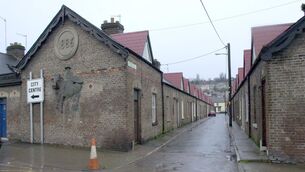
I was surprised to see the millipedes, and that they were perfect replicas of those that climb the walls of our west Cork home and the walls of Mr Michael Viney’s house in Co Mayo, as reported by him in newspaper column. Where millipedes swarmed over our premises in their hundreds, Mr Viney and I both initially wondered where had they been all our lives? The sudden irruption alarmed us, as it did my Gomero friend. Legions of unfamiliar creatures were crawling up our exterior walls (I wondered if our home was an ancient millipede migration route) was unnerving. Would they never stop? However, in the last few years, numbers have decreased while they are now increasing exponentially in upland Gomera.

A Malaysian friend who has lived here for decades thinks the island is becoming more tropical; he refers to the recent increased rainfall and humidity. Perhaps this increased humidity has brought the creatures out of the damp, shady paces where they feed on leaf litter in a sudden surge — an irruption — of numbers. Slim and shiny, and up to 5cm long, with 40 cylindrical body segments, they should not be grasped with bare fingers as they exude a foul-smelling fluid. Otherwise, they seem harmless, although unwelcome indoors. I have read that they have inundated homes in wet weather.

How they arrived on this remote oceanic island is anybody’s guess. Perhaps they reached Fuerteventura, the nearest island to the African coast, when it erupted from the sea bed 23 million years ago, and then floated on plants and forest debris to Lanzarote and down the Canary Islands Seamount Province to Gran Canaria, Tenerife, La Gomera, La Palma and Hierro. They had plenty of time. Gomera (volcano extinct) is 11 million years old, but El Hierro, the youngest island, is a mere pup, just 1.1 millions years old and still rumbling.

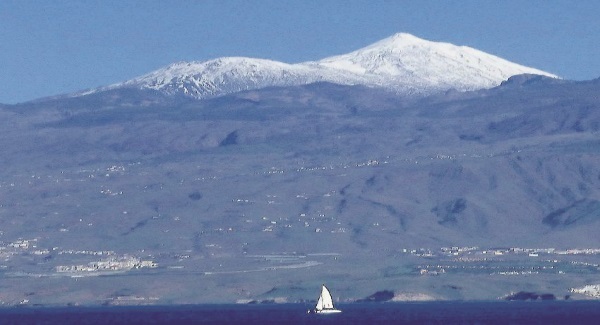
The waters around the western islands are deeper than the seamounts are high. The coast at La Palma falls away, almost abruptly, to depths of 4,000m, while Tenerife’s Mount Teide rises to 3,718m, the highest volcano in Europe. From Gomera, Teide is an inspiring sight; and on these clear days, we also see the highlands of La Palma and El Hierro above the sea clouds. They are all wondrous isles.

x

More in this section

Revoiced

Newsletter

Had a busy week? Sign up for some of the best reads from the week gone by. Selected just for you.

Cookie Policy Privacy Policy Brand Safety FAQ Help Contact Us Terms and Conditions

© Examiner Echo Group Limited