Uncoiling secret lives of snakes
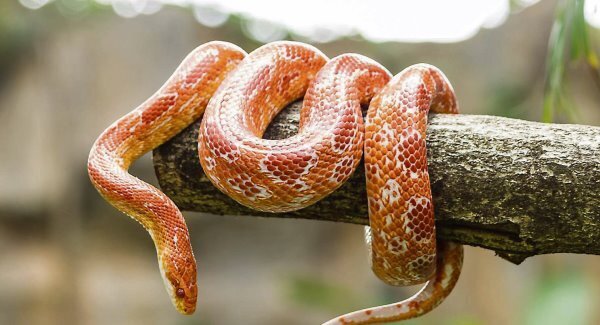
Nor is the New Testament kind to snakes; ‘ye brood of vipers, how can ye escape the damnation of hell’ etc. Serpents were denied Irish citizenship; St Patrick signed their deportation order. Even Shakespeare did some snake-bashing; ‘how sharper than a serpent’s tooth it is to have a thankless child’. Why did God create such unwelcome creatures and when did he do so? Were the serpent’s ancestors land or sea based? Yale University scientists are trying to answer these questions.
Snakes are found on all continents except Antarctica. They can’t generate their body-heat the way we do, so they rely on the sun for warmth. Sea serpents live in the warm waters of the Indian and Pacific oceans. Adders are among the few reptiles able to survive inside the Arctic Circle.
Snake head-bones have extra joints, enabling large prey items to be tackled. Unable to chew, some snakes inject venom into their victims so that digestion is already under way by the time the prey is swallowed.
Most of the 3,400 living species, however, are non-venomous. Incidentally, it’s no use talking loudly to warn off snakes hiding in the grass; they’re deaf. When moulting, the skin is shed like a sock, revealing a new one underneath. Nor have snakes got eyelids. Their forebears, at some stage, lived in darkness, perhaps underground. Protruding limbs got in the way and eyes were of no use. New ones evolved in due course.
Until recently, the snake fossil-record was sparse. Specimens were few, damaged or incomplete. In the last decade, however, important finds have been made. They include fossils from families previously unknown to science. Herpetologists Daniel Field and Alison Hsiang compared these with species alive today. They examined the DNA of 73 modern snakes and lizards, some of them extinct, to reveal their evolutionary history and ‘generate the first analytical reconstruction of the common ancestor of snakes’.
Serpent eyes resemble those of fish. The recent analysis suggests, however, that snakes first appeared on land rather than in the sea; the earliest known species were terrestrial. All of today’s snakes, the researchers believe, had a common ancestor in the southern hemisphere about 100 million years ago. It, in turn, had evolved from a creature that lived around 28 million years previously on a super-continent which included the regions known today as Eurasia and North America. Dinosaurs ruled the roost, birds had evolved, while small rodent-like mammals kept a low profile. The Adam and Eve of the snake tribe probably lived in warm wet ‘forests’, although the ‘trees’ of that remote time were rather different from those of today.
The early snakes had lost the forelimbs of their lizard-like ancestors but they still had tiny hind ones complete with toes.
They couldn’t swallow creatures larger than themselves; creepy-crawlies, small birds and mammals may have been their prey. The ability of some modern snakes to coil themselves around victims, smothering them to death, had yet to evolve. Nor had the flexible jawsdeveloped.
The great catastrophe, which killed off the dinosaurs 65 million years ago, seems to have benefited snakes; their range and diversity increased following it.
The little mammals exploited the niches left empty by the demise of so many reptiles. So did the snakes.
Around 50 million years ago, they began hunting by day, colder conditions probably forcing them to do so. Around 85% of surviving snake families originated at this time. Climate change threatens many creatures today but, ironically, it may have been a blessing in disguise for snakes long ago.
- Allison Hsiang et al. The origin of snakes: Revealing the ecology, behaviour and evolutionary history of early snakes using genomics, phenomics, and the fossil record. BMC Evolutionary Biology. May 2015.