Keeping tabs on our birds
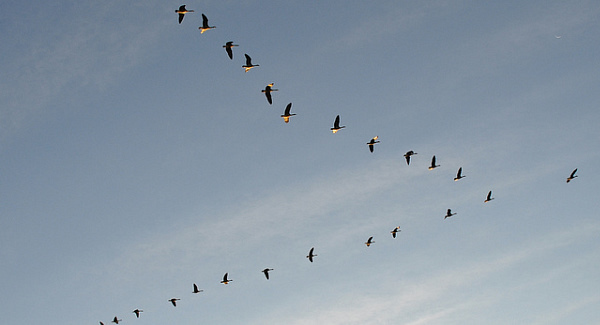

Millions arrive for the winter but breed elsewhere. Ninety-one species are “endemic”, meaning they are found nowhere else. Eastern Europe, the Mediterranean, the Caucasus, and Black Sea regions, are the most species rich.
International treaties protect birds and their habitats. Parks and reserves have been established, monitoring schemes initiated, and public awareness campaigns organised. But have these measures been effective?
The European Red List of Birds, compiled by BirdLife International and funded by the European Commission, has just appeared. The work of hundreds of experts from the 51 states between Greenland and the Urals, it’s a comprehensive health-check of our avifauna. The status of each species is assessed using extinction risk criteria devised by the International Union for the Protection of Nature.
Micheál O’Briain, 1977 Irish Young Scientist of the Year, is deputy head of the commission’s Nature Unit. In a foreword to the list, he notes that over half of Europe’s bird species are secure, 13% are threatened, and six per cent near threatened. Around two per cent of species are critically endangered. The status of a further 114 species could not be determined due to shortages of reliable data.
The news isn’t all bad. The fortunes of the Spanish imperial eagle have improved. It is now classified as vulnerable rather than endangered. Zino’s petrel, endemic to the island of Madeira, and the Azores bullfinch are considered to be endangered rather than critically endangered as they were a decade ago. The Dalmation pelican, ferruginous duck, and great bustard are now in the least concern category.
“Biological resource use” and “agriculture and aquaculture” present the biggest threats to our birds. Biological resource use includes illegal hunting and the persecution of vulnerable raptors, a major problem, affecting 42 threatened species. Farming practices, changes in land use, habitat destruction, effluent discharges, and poisoning by pesticides are major causes of bird population decline. Climate change, severe weather events, pollution, and invasive species are taking an increasing toll on our birds.
Russia has 38 threatened bird species while Turkey has 35. Spain has 26, Portugal 22, and France 21. Of the 162 species regularly nesting or wintering in Ireland, 16 (9.9%) are threatened in the continent as a whole. “Norway, parts of the United Kingdom, and Republic of Ireland have high numbers of threatened species, mainly marine birds,” the report notes.
Seven bird species, formerly in the least concern category, are now considered to be threatened. Four of them are familiar Irish ones: The kingfisher, oystercatcher, meadow pipit, and lapwing. The kingfisher, a scarce and rather elusive resident of our rivers and streams, seems to be holding its own in Ireland.
It does not migrate, so changes elsewhere don’t impact on the population here. Nor is much change evident in our oystercatcher numbers.
However, according to the recently published Bird Atlas, declines in the Irish meadow pipit population “are consistent with a 66% decrease across Europe since 1980”.
Our lapwings, too, are in trouble. According to the Atlas, their current range is less than half that recorded in the 1968-72 Atlas survey.
This is our third most widespread wintering wader; huge numbers arrive here from Britain and mainland Europe.
“In Ireland there has been a modest 12% range contraction, though with no clear spatial pattern,” the Atlas authors note.
“The proportion of threatened species in this assessment is comparable to that in the previous assessment a decade age. Bird species continue to decline… much more needs to be done to save threatened European bird species from extinction,” the Red List concludes.

CONNECT WITH US TODAY



Be the first to know the latest news and updates