Recipe ideas for a family reunion weekend
NOWADAYS, in our busy lives, years can flash by in a hectic blur. Suddenly we realise that we haven’t seen or sometimes heard from favourite cousins or even aunts and uncles for years.

Recipe ideas for a family reunion weekend

This came home to me recently when one of my grandsons went to boarding school and found himself sharing a room with a cousin whom he had never met — now they are firm friends.

This was a wakeup call — could some of the younger generation pass each other in the street without realising they were related?

So a few weekends ago, we had a wonderful family reunion weekend.

I invited my immediate family of course — siblings, their spouses and their children, uncles, aunts, first, second and third cousins and some, as the saying goes, ‘once removed’. We had a whale of a time.

People started to arrive on Saturday from as far away as Bermuda and Dubai and of course from all over Ireland and the UK.

We’d arranged for a children’s tea for the U10s followed by a treasure hunt.

We gave everyone a name badge so they could identify each other or at least attempt to at a glance — at least a quarter of people at the reception didn’t know each other.

The welcome reception was lively and convivial, when we went in to dinner, everyone was instructed by ‘bossy me’ to sit beside someone they’d never met before or at least hadn’t seen for ages. It was so fun, not an awkward second.

A few weeks earlier we’d asked people to rummage round in boxes in the attic for old photos, many responded and so we had an intriguing collection pinned up on a long noticeboard in the hallway.

We had a stack of pencils so people could identify their younger selves or siblings, relatives or neighbours.

The party also prompted several families to speed up work on the family tree, something we tend to be totally disinterested in until we get a bit older.

My children were intrigued to learn about my O’Connell and Tynan ancestors and the colourful clan from whom they have descended.

People chatted until after midnight, the youngsters bonded and went to the local.

On Sunday, there was an option to see our tiny Jersey herd being milked, feed the calves and pigs, feed the hens and collect the eggs.

From 10am onwards we had a breakfast brunch, not a rasher or a cornflake in sight but lots of homemade muesli and granola, a compote of new seasons’ rhubarb, bowls of steaming Macroom oatmeal with soft brown sugar and Jersey cream, labneh with saffron and pistachio, thick unctuous yoghurt and honey, homemade brown soda bread and spotted dog as well as brown yeast bread and crusty sourdough loaves, Jersey butter and lots of homemade jams, marmalade and local honey.

Then there was a beautiful board of Irish farmhouse cheeses, a dish of freshly pulled radishes from the garden and some artisan meats — a simple feast.

Our second son-in-law Philip cooked breakfast pizzas in the wood-burning oven with those lovely fresh eggs the children had collected earlier.

After breakfast we organised a nature hunt for the children. By late afternoon, after copious cups of tea and scones, everyone was saying reluctant goodbyes and resolving to keep in touch.

Why not plan a family get together soon. Here are some of the dishes we ate together.

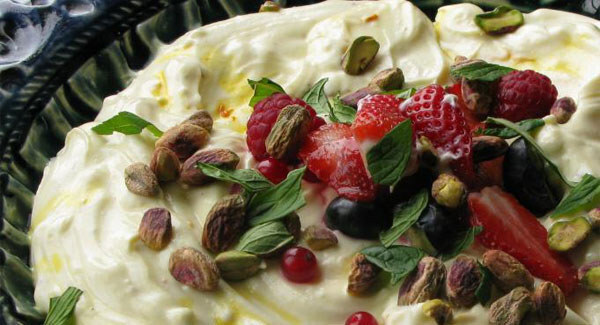
Srikhand

Serves 8-10

2kg (4½lb) thick homemade yoghurt or Greek yoghurt

A generous pinch of saffron strands

1 tbsp warm water

¼ tsp roughly crushed green cardamom seeds

225g (8oz) caster sugar

2 tbsp coarsely chopped pistachio nuts

Equipment:

Muslin

Put a square of muslin into a bowl. Pour in the yoghurt, tie the ends and allow to drip overnight (save the whey to make soda bread).

Transfer the dripped yoghurt into a clean bowl. Infuse the saffron in a tablespoon of warm water in a small bowl. Stir every last drop into the yoghurt.

Remove the seeds from the cardamom pods. Crush lightly, add to the yoghurt with the caster sugar, mix well. Turn into a serving dish. Chill.

Sprinkle the top with roughly chopped pistachio nuts and serve. Delicious on its own but also memorable with summer berries.

Pea and Coriander Soup

This utterly delicious soup has a perky zing with the addition of fresh chilli.

Serves 6 approximately

1lb (450g) peas (good quality frozen are fine)

2 ozs (50g) butter

5 ozs (150g) onion, finely chopped

2 cloves garlic, peeled and chopped

1 green chilli, deseeded and finely chopped

1½ pints (900ml) home-made chicken stock

2 tbsp approx chopped fresh coriander

Salt, freshly ground pepper and sugar

Garnish

Softly whipped cream

Fresh coriander leaves

Bring the chicken stock to the boil. Melt the butter on a gentle heat add the onion, garlic and chilli.

Season with salt and freshly ground pepper and sweat for 3-4 minutes. Add the peas and cover with the hot stock.

Bring to the boil and simmer for 5-8 minutes. Add the coriander and liquidise. Season with salt, freshly ground pepper and a pinch of sugar, which enhances the flavour even further.

Serve with a swirl of softly whipped cream and a few fresh coriander leaves sprinkled over the top.

A Selection of Devilled Eggs

Devilled eggs are having their moment in the spotlight once again. The Green Table in Chelsea Market in New York recently served a selection of four on its lunch menu as the star item.

Makes 8

4 free range eggs

2-3 tbsp homemade mayonnaise

½ tsp finely chopped chives

Salt and freshly ground pepper to taste

Lower the eggs gently into boiling salted water, bring the water back to the boil and hardboil the eggs for 10 minutes, drain and put immediately into a bowl of cold water. (Eggs with a black ring around the yolk have been overcooked).

When cold, shell, slice in half lengthways. Sieve the yolks, mix the sieved egg yolk with mayonnaise, add chopped chives and salt and pepper to taste.

Fill into a piping bag and pipe into the whites.

Garnish with a sprig of parsley or chervil and serve on a bed of wild watercress leaves.

Country Relish Eggs

As above, add 1 tbsp of sieved Ballymaloe Country Relish to the sieved egg yolk with the mayonnaise. Season well and taste for seasoning. Decorate with a sliver of gherkin and a cheeky chive.

Kalamata Eggs

As above but add four black Kalamata olives stoned and finely chopped to the sieved egg. Continue as above. Decorate with a sliver of olive and a sprig of chervil.

Anchovy Eggs

As above, add 2 – 4 finely mashed anchovies and 2 tsp of finely chopped parsley to sieved yolk and proceed as above. Garnish with a sprig of fennel and a fennel flower if available.

Wasabi Eggs

Add ½ tsp of wasabi puree to the sieved egg yolk with the mayonnaise, taste and correct the seasoning. Garnish with wild garlic or chive flowers in season.

To Serve:

Choose rectangular plates if available. Arrange a few wild watercress leaves on the plate and top with four devilled eggs of different flavours. Garnish each and serve with brown yeast bread.

Spotted Dog

During my childhood, many people in the country were poor, and their daily staple would have been wholemeal bread. White flour was more expensive than brown so white soda bread was considered to be more luxurious — a treat for special occasions.

At times of the year when work was harder, such as at harvest or threshing, or maybe on a Sunday when visitors were expected, the woman of the house would add a bit of sugar and a fistful of dried fruit and an egg to the white bread to make it a bit more special.

Nowadays, this does not seem such a big deal but back then any money that the woman of the house got from selling her eggs was considered to be her ‘pin money,’ used for little luxuries such as hatpins.

Putting an egg into the bread was one egg less that she could sell, so it actually represented much more than it would for us today.

This bread was called spotted dog, and when it was still warm, she’d wrap it in a tea towel and bring it out to the fields with hot sweetened tea in whiskey bottles wrapped in newspaper or cloth to insulate them.

The farmworkers would put down their tools and sit with their backs to the haystacks. She’d cut the bread into thick slices and slather on yellow country butter.

My memories of sitting down with them are still really vivid. We sometimes make ‘spotted puppies’ which are the same bread, shaped into six rolls and baked for 20minutes.

Makes 1 loaf

450g (1lb) plain white flour, preferably unbleached

1 level tsp bicarbonate of soda

1 level tsp salt

2 tsp sugar

75g (3oz) sultanas (or more if you’d like)

1 organic egg

About 350—425ml (12-14fl oz) buttermilk

Preheat the oven to 220C/425F/gas mark 7.

In a large mixing bowl, sieve in the flour and bicarbonate of soda; then add the salt, sugar and sultanas.

Mix well by lifting the flour and fruit up in to your hands and then letting them fall back into the bowl through your fingers. This adds more air and therefore more lightness to your finished bread.

Now make a well in the centre of the flour mixture. Break the egg into the base of a measuring jug and add the buttermilk to the 425ml (14fl oz) line (the egg is part of the liquid measurement). Pour most of this milk and egg mixture into the flour.

Using one hand with the fingers open and stiff, mix in a full circle drawing in the flour mixture from the sides of the bowl, adding more milk if necessary. The dough should be softish, but not too wet and sticky.

The trick with spotted dog like all soda breads, is not to over-mix the dough.

Mix it as quickly and gently as possible, thus keeping it light and airy. When the dough all comes together, turn it out onto a well-floured work surface.

Wash and dry your hands. With floured fingers, roll the dough lightly for a few seconds — just enough to tidy it up. Then pat the dough into a round about 6cm (2½ inches) deep.

Transfer to a baking tray dusted lightly with flour. Use a sharp knife to cut a deep cross on it, letting the cuts go over the sides of the bread. Prick with a knife at the four triangles.

Place into the oven and immediately reduce the temperature to 200C/400F/gas mark 6. Cook for 35-40 minutes.

If you are in doubt about the bread being cooked, tap the bottom: if it is cooked it will sound hollow.

This bread is cooked at a lower temperature than soda bread because the egg browns faster at a higher heat.

Serve freshly baked, cut into thick slices and smeared with butter and jam. Spotted dog is also really good eaten with cheddar cheese.

More in this section

Revoiced

Newsletter

Sign up to the best reads of the week from irishexaminer.com selected just for you.

Cookie Policy Privacy Policy Brand Safety FAQ Help Contact Us Terms and Conditions

© Examiner Echo Group Limited