An imminent centre-left political party with an all-star lineout
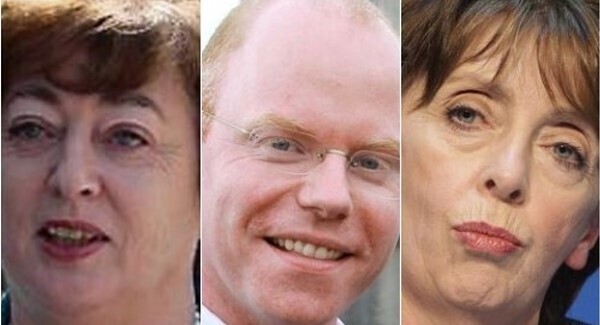

FROM historic inertia to apparent instability, the party political edifice, undermined by economic collapse, is more fluid than at any time since the foundation of the State.
Stories have abounded for days of the apparent launch of a new party. Centre-left in orientation and centred on three Independent TDs Catherine Murphy, Stephen Donnelly and Róisín Shortall, if the lore is true it will be joined by senators Katherine Zappone and Jillian Van Turnout.
My understanding is that the offering is not oven-ready. It may come, but preparation is required. The bus is still at the terminus, and not all the passengers are on board yet.
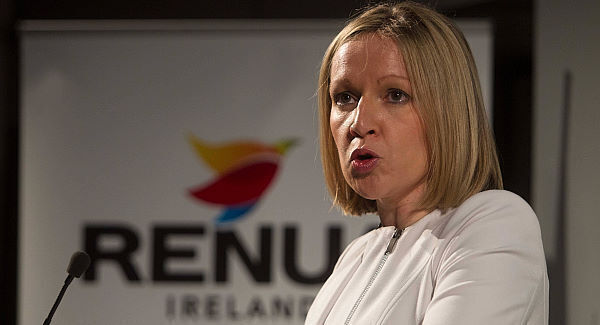
On paper, it is a good-looking lineout, and far stronger than Lucinda Creighton’s Renua. The fact Ms Creighton has to be applied to Renua as a prefix underlines its problem. It looks like a one-woman band, with others in tow. TDs Billy Timmons and Terence Flanagan, who accompanied her out of Fine Gael, haven’t made a national impact. Renua’s problem is, its offering is unclear, and apart from Ms Creighton, most of its personnel are nearly unknown.
In contrast, the new virtual party is an all-star lineout. Each one of the five names associated with it are top shelf. Ms Murphy, Mr Donnelly, and Ms Shortall all have a viable chance of re-election to the Dáil. Each has profile and traction. Ms Zappone and Ms Van Turnout have depth in their respective fields and Ms Zappone is teeing up for a Dáil run in Dublin South West. Her contribution to the successful marriage equality campaign was highly personalised. She was as prominent as the cause — a point not lost on the broader marriage equality movement. Opportunism and principle are not irreconcilable, however. And pursuit of her principles coincide with a reasonable opportunity of a Dáil seat.
Labour’s Pat Rabbitte must decide in the coming weeks if he is going to run again for Labour in the same constituency. If he does, his re-election is not certain. If he doesn’t, the gap in the ditch is greater for Ms Zappone. Ms Van Turnout has no apparent opening in Dublin-Rathdown. This is a three-seater, with Independent TD Shane Ross in situ, and probably in pole position. Other incumbents include Fine Gael’s Olivia Mitchell and Alan Shatter as well as Labour cabinet minister Alex White. Fianna Fáil senator Mary White is also contending. If Ms Van Turnout’s Dáil chances are slim there, her credibility as a children’s rights campaigner are strong. Overall it’s a lineout with ballast, and name recognition.
For both Renua and this still putative, unnamed party new recruits, money and ideas are the mix to determine success. Senator Averil Power, formerly of Fianna Fáil, would be a likely target for the new party in Dublin Bay North. Were she willing, she would face off against Renua TD Terence Flanagan. Money, however, is another matter. The lesson of the tribunals is that in politics, money and its unaccountability is a toxic mix. Regrettably, the lesson was misapplied. While unquestionably every cent should be transparently accounted for, personal donation limits on one hand, and relatively lavish state funding for incumbents on the other means that if you are in, you win. Try set up a new party, however, and you have none of the enormous advantages of incumbency and all of the disadvantages of having to scrape together, large numbers of small donations. It’s grossly unfair, and acts as a protective moat around the status quo just at the moment, when there is a real appetite for fundamental change.
The scale of that change is enormous. In November 1982 the then intact two-and-a-half-party system of Fianna Fáil, Fine Gael, and Labour secured 93.8% of the vote. In the meltdown of 2011, the same parties got 72.9%, albeit with a massive swing away from Fianna Fáil, to Fine Gael and Labour. The last RedC poll put the three combined at 57% while Independents stood at 19%. Times have changed.
The positioning of the new offering as “centre-left” makes sense. That’s about where the lost tribe of Fianna Fáil voters are ideologically. It is a positioning that provides a possible home, if coherently articulated by credible people, not only for them, but also for those disaffected from Labour. Sinn Féin continues to make steady progress, and has a formidable network of councillors and candidates on the ground. But for many it, the anti-Austerity Alliance and People Before Profit are a step too far. They provide for protest, but fail to articulate aspiration. There is no longer a working class in any real sense. We are all middle-class or determined to get there. The rest of our population is by any name, effectively an underclass, for whom aspiration seems more a taunt than a practical plan.
The field is increasingly crowded. The obstacles to entry are far higher than perceived. Mr Ross is attempting to herd an alliance of Independents into a credible offering. And what are the new ideas? It boils down to money; our money. Power will bring responsibility. The Government promises a package of budgetary €1.5bn next year. The ESRI and the Economic Advisory Council say it’s too much. Maybe, but it isn’t a fraction of what’s required to meet increasing public demand. The first question for any new party is simple. How much do you propose to spend, and who do you intend to take it from?
READ MORE: New centre-left party ‘will target Coalition policies’
VISIT THE VIEWPOINTS HOME PAGE
CONNECT WITH US TODAY



Be the first to know the latest news and updates