The art of war exists in nature

Around 2% of Irish mute swans die in fights. As spring approaches, mature males, known as ‘cobs’, stake out ‘territories’ on ponds, lakes and rivers. Each one keeps rivals at bay so that his ‘pen’, and their cygnets, will have the resources to see them through to autumn.

The art of war exists in nature

When challenged, a cob may fight. Violence, however, can result in injury or death, so it’s avoided if at all possible.

Manoeuvres, propaganda and the calculations of military intelligence, help quarrelling nations avoid disastrous wars. It’s the same for swans.

Posturing with puffed-out feathers, rival cobs get the measure of each other along the disputed borders of their demesnes. If an opponent appears stronger, a swan will back off, but when the contenders seem equally matched and valuable real estate is at stake, battle may be joined.

Feathers fly until a warrior turns and leaves the field. Occasionally, the gladiators will ‘fight to the death’.

DISCOVER MORE CONTENT LIKE THIS

‘Discretion may be the better part of valour’ for creatures the size of swans. You’d hardly expect humble insects to have such a sophisticated approach to love and war. However, according to a paper just published in the Science of Nature journal, you’d be wrong!

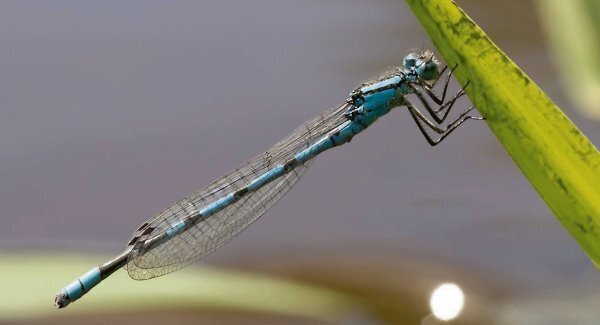
Damselflies, the smaller relatives of dragonflies, are found in every continent except Antarctica. We have 11 species in Ireland.

They are easy to recognise; whereas dragonflies perch with their four huge wings spreadeagled horizontally, damselflies hold theirs vertically, or at least steeply, in the air.

Aggressive hunters, they prey on flies and midges around the edges of ponds and streams. Rhainer Guillermo-Ferreira and his team studied their behaviour along a stream in Sao Paulo state, Brazil, filming the brightly coloured males as they competed for territories and females.

Chasing biting and fighting squander valuable energy; it’s in a prospecting male’s interests to size up a rival before confronting him. Insects have tiny brains which control only a limited set of functions.

Indeed a decapitated individual may live for several days. Surely, damselfly behaviour is entirely robotic without a ‘mental’ component? Guillermo-Ferreira found, on the contrary, warfare in their world is a complex and sophisticated business.

A damselfly begins life in the water; an egg takes weeks, even months, to hatch. The larva sheds its skin repeatedly, growing new ones as it develops. Then comes the ‘emergence’; the year-old insect climbs up a reed stem, leaving the water.

The skin splits from head to toe, the wings unfold and the newly formed adult flies off. During the next few days or weeks, the beautifully attired damselfly must mate, pass its genes on to the next generation and die.

The huge transparent wings, with their patches of colour, are not just for flying; damselflies also use them to communicate. Guillermo-Ferreira’s damsels have bright red wing-spots and these seem to determine rank in society.

Those with less transparent wings and the most prominent red patches rule the roost, chasing off their duller, less well-endowed, brethren. By manipulating wing colouration, the researchers were able to confirm this.

When on the show-house circuit, a damselfly must estimate the strength of any potential challenger for his chosen property and decide on the appropriate strategy in confronting him. A strong male will attack and drive off a weaker one directly.

However, if the two are more equally matched, calculation and risk assessment come into play. A contender might try to out-manoeuvre the opponent in a fancy aerobatics contest; such a non-contact approach greatly reduces the risk of serious injury.

Alternatively, the antagonists embark on an extended ‘war of attrition’, attempting to wear each other down. It’s an exhaustive strategy; neither side can claim outright victory. When he defeated a Roman army in 280BC, King Pyhrrus remarked that ‘another victory like this will utterly undo me’.

The winning damselfly might concur!

  • Guillermo-Ferriera et al. Variable assessment of wing colouration in aerial contests of the red-winged damselfly. The Science of Nature — Naturwissenschaften. 2015.

READ MORE RICHARD COLLINS: Pipi scoops bat of the year title

x

More in this section

Revoiced

Newsletter

Had a busy week? Sign up for some of the best reads from the week gone by. Selected just for you.

Cookie Policy Privacy Policy Brand Safety FAQ Help Contact Us Terms and Conditions

© Examiner Echo Group Limited