Extremism challenges our pluralism - Religious intolerance
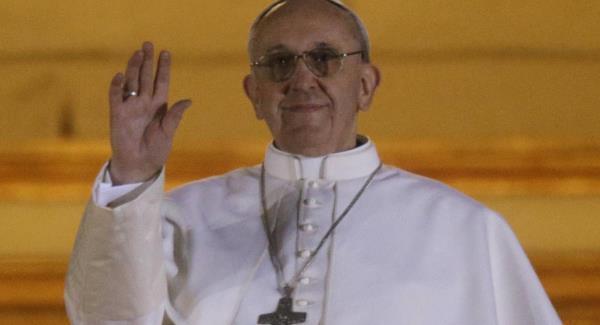
Preaching to 50,000 people in a rain-sodden St Peter’s Square, the pontiff made an appeal for peace in Syria, Iraq, the Holy Land, and other regions caught in the terrible grip of war. He made particular reference to the 150 or so students massacred at Garissa University in Kenya last week, where al-Shabaab terrorists asked students whether they were Christian or Muslim and murdered those who said they were Christian.
Religious persecution, an irrational, animal hatred, is an age-old human weakness but it does seem that, as the West becomes ever more committed to pluralism, and the tolerance and protection that enshrines, those who believe in the absolute, unquestioned primacy of their own theocracy become more intolerant of those who do not share their beliefs.
As the West insists on the primacy of laws enacted by democratically elected governments religious zealots demand that society must be shaped and governed by religious decree or at least the current interpretation of what they regard as sacred, divine-given texts.
Those two positions, no matter how attractive it might be to pretend otherwise, are philosopically and practically irreconcilable. Recognising that reality may be the first step in working out how these incendiary contradictions can fit in an idea as fluid and as important as a united society.
That process has already begun in various and possibly dangerous ways. This weekend protests against Islamic extremism in 16 centres in Australia echoed Pegida marches in Germany and Austria. Anti-Islamic sentiment may be expressed by voting for Ukip in Britain’s general election in a few weeks. That all of those protests were strongly opposed just confirms the complexity of the situation.
Extreme Muslims, and it is always important to recognise that this is only a tiny minority of Muslims, have responded with attacks that left thousands dead in New York, London, Paris, Madrid, and other western cities. Thousands of young Muslims, born and educated in the West, have left to join Isis, an organisation that seems incomprehensibly barbaric. It is ironic and dangerous though that the very tolerance western pluralism insists on is the conduit that allows those who hate the practice of tolerance to become part of western societies. Just as with free speech there is a price for being inclusive.
If religious persecution is unacceptable, and it is, then those of no religion should not be persecuted or disadvantaged for their beliefs either. Unfortunately, our education system does not reflect that principle and efforts to have school patronage better reflect Ireland today seem to have run into the sand. This cannot be allowed happen.
Modern societies are instinctively non-confrontational on matters of religion, race, sexuality, and nationality but it may be time — sadly — to ask if that position is one we can trust to withstand the violence of those who feel obliged to attack and kill those who do not share their own bizarre beliefs.