Roaming deer can be pests
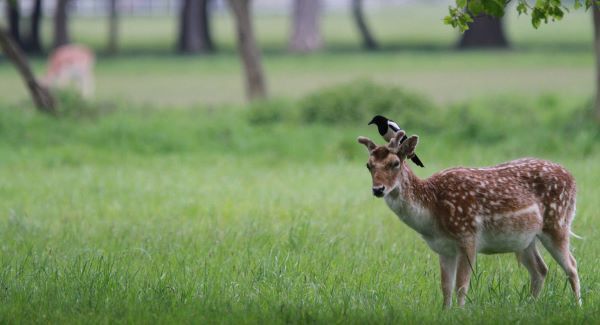
I had a lot of sympathy for her. I’m a great advocate for encouraging wildlife in the garden but deer I wouldn’t wish on anyone.
They are both grazing and browsing animals with a preference for browsing. This means eating your trees and shrubs and their tough palates seem to be impervious to thorns and spines because they relish things like roses and holly. In addition, their sharp hooves can cause a lot of damage to lawns and flower and vegetable beds when the ground is soft.
The problem normally occurs in winter when deer are hungry. They also have a tendency to move down from upland areas into sheltered valleys when the weather is cold and this brings them closer to houses and gardens. Most Irish deer, particularly in areas where they’re hunted, are nocturnal. They lie up during the day in woodland, scrub or forestry plantations and come out to feed at night. The darkness makes it hard for the garden owner to spot their stealthy incursions.
The trouble is that once they get a taste for the rich pickings in a garden it’s not easy to keep them out. They are masters of the high jump and a deer fence, if it’s to be effective against the larger species, needs to be at least 2.5 metres in height.
This makes it very expensive and normally rather unsightly in a garden context. In addition the fence has to be carefully maintained because hungry deer will patrol along it looking for any hole they can squeeze through.
The drastic reaction of shooting the deer is not only inhumane, it’s also impractical under most circumstances. Deer can only be legally shot using a high-powered rifle above a certain calibre. It’s unsafe to use this sort of rifle near people’s homes and the whole business is very strictly regulated and licensed.
There are some simpler solutions. Most dogs will chase deer and this can be a very effective deterrent. And some gardeners in north America have reported success using transparent nylon fishing line strung between trees or posts.
Apparently the deer won’t jump it because they can’t see it. The technique is to use nylon monofilament with a breaking strain of 15kg to 20kg and string it about a metre above the ground. You use two or three strands a metre apart horizontally so if the deer gets through the first one it encounters the next and feels trapped. It then, apparently, retreats.
This is similar to the technique that some Irish gardeners use to keep herons out of fish ponds. If you want to give it a go bear in mind most Irish deer species are larger than their north American counterparts.
CONNECT WITH US TODAY



Be the first to know the latest news and updates