Brussels Briefing - A weekly round-up of the most interesting news from Europe
Galway-born economist Declan Costello has a difficult job to perform officially heading the troika to Greece for the European Commission.
He is busy trying to match up the new Greek government’s requirements with those of its creditors, and conclude a new deal within days if possible.
Since last May he oversaw the economies of nine member states that included Greece, Cyprus, Spain, the Netherlands, Austria and Germany.
He has played a pivotal role in the development of the euro including the details of the stability and growth pact and more recently has been working on the relationship between structural reforms and raising growth levels.
The new Greek government has agreed with its voters that they will not deal with the hated troika. But since the experts are the troika, they have to find a new name.
A multi-billion euro high-speed train line between the French city of Lyon and Turin in Italy, being part funded by the EU, is being investigated for massive fraud.
The aim was to greatly increase the amount of freight that could be moved between the two cities and carry passengers from one to the other in just two hours.
But with little other than studies completed at a cost of €450 million, the EU’s anti-fraud office, OLAF, has decided to investigate after Green Party MEPs delivered proof of shady goings-on.
Already costs have increased way above what was planned as at least two of the companies involved are suspected of having Mafia links.
Co-president of the Greens, Italian MEP Monica Frasoni said the project is probably not needed at all. and may need to be shut down
What is the most important element that goes to make up the European identity? That was one of a host of questions the EU’s surveyors asked representatives of citizens in all 28 member states recently.
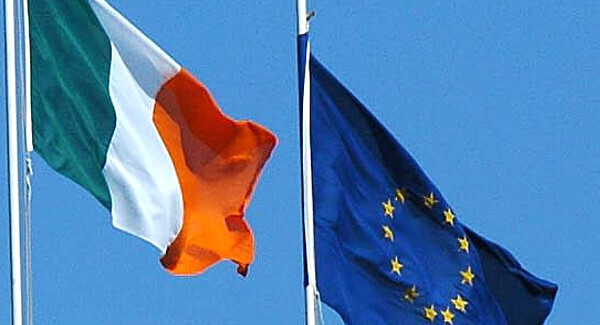
The (Irish-designed) flag? The rousing anthem? Culture? Freedom and Democracy? European industries? The motto “unity in diversity”? Geography? History?
For most of Irish people, it was one thing: the euro.
Parents appear to be believe that their children can be trusted to use the internet, unsupervised, from the age of eight.
MEP Deirdre Clune, quoting a Microsoft survey, warns, however, that parents need to be careful in an era when under 10-year-olds appear to be the main target for child sex abusers online.
The Government is introducing legislation to make grooming a young person for sexual exploitation a criminal offence, including through text messaging and online.
But with 50,000 new child abuse images being put on line each year, and the majority of them featuring children less than 10 years of age, there is a lot of do.
The European Commission is studying how and if member states are implementing the laws designed to tackle this.
Anybody who lives outside France but makes money from their property in France is subject to a tax or levy of 15.5%.
The money goes to finance the French social security system.
However, a doughty Dutchman with French property is challenging this, pointing out that under EU social security rules he can only be asked to pay towards one such system. And he is paying his tax in the Netherlands where he lives.
The European Court is considering his case and doubtless he and lots of other French property owners will be watching with interest when they rule next week.
The European Parliament has strongly condemned the flogging of blogger and human rights activist Raif Badawi and called on Saudi Arabia to release him and his lawyer immediately.
They consider him to be a prisoner of conscience, condemned for exercising his right to freedom of expression. The MEPs called on the country to respect the UN Convention against torture. His website to encourage social, political and religious debate was considered an insult to Islam.
Saudi has much the same punishments as the Islamic State for crimes including the death penalty for blasphemy, homosexuality, theft and murder and death by stoning for adultery. They have executed around 21 people, many by public beheading, in the past few weeks.
Human Rights Without Frontiers points out that Saudi Arabia was elected a member of the UN Human Rights Council for three years in November 2013.
Threats to freeze EU structural funds to member states that break budget rules is preposterous, the Committee of the Regions has declared.
The structural fund is the EU biggest source of investment funding being trotted out at the moment as a boost to the much-needed growth in the union.
But at the same time it is being used as a stick to beat errant states. The Committee of the Regions points out this does not make much sense on any front.
Cutting the funds would mean cutting off all kinds of projects they are paying for, breaking contracts, involving lots of form- filling and penalising whole regions.
Promises to create a real lobbyists’ register that reflects accurately the activities of anyone influencing EU rules is proving difficult.
Various improvements have been made to the register operated jointly by the European Commission and the European Parliament — with the omission of the Council representing member states that remains as “an observer”.
Promises by the Juncker Commission to make the register mandatory — that lobbyists not registered would not get to meet anybody of influence — have been proving illusive.
And while Commission vice president Frans Timmermans has now promised the MEPs that they will go for a mandatory list as demanded by ombudsman Emil O’Reilly among others — transparency groups are warning that the lobbying around the terms is already intense.
Boris Johnson is to renounce his US citizenship, removing a potential obstacle to becoming British prime minister.
The London mayor has dual nationality as he was born in New York — but has now revealed he wants to hand back his American passport.
“The reason I’m thinking I probably will want to make a change is that my commitment is, and always has been, to Britain,” he told the Sunday Times during a tour in the US. “It’s an accident of birth that has left me with this thing. I’ve got to find a way of sorting it out.”
Mr Johnson — who is running for parliament in Uxbridge and South Ruislip — said he would approach US ambassador Matthew Barzun about the change. “It is a laborious business. They don’t make it easy for you,” he added.Constitutional experts believe dual nationality would not present any technical barrier to Mr Johnson becoming prime minister, but he would be likely to face questions about his loyalties.Aides said the mayor’s priority was to avoid paying more to the US tax authorities, after he was recently forced to settle a large capital gains tax bill.












