Now may be time to act cautiously
Future of farming

Now may be time to act cautiously

Farming remains the economic and emotional heartbeat of most of rural Ireland. The economy’s wellbeing is inextricably linked to the sector’s fortunes so its performance is more a national interest than a sectoral one.

Tens of thousands of families cling to holdings, not all of them marginal, that would be unsustainable without Government support or an off-farm income. This doggedness reminds us that the deep, sometimes unfathomable emotions that drove John B Keane’s Bull McCabe to behave so obsessively, are still very real players even in the Google and Facebook Ireland of 2014. This cultural creedo is reflected in the fact that so very little farmland changes ownership, maybe something less than 2% each year. Irish land prices, often touching €12,000 an acre, are among the very highest in Europe and suggest something more than commercial pragmatism. Protests over beef prices and warnings about an expected bonanza in the milk market not materialising may indicate that those prices levels are a result of something more than business ambition.

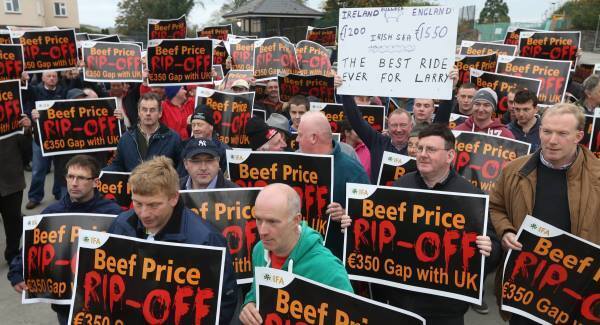
Beef producers have mounted a campaign to try to get a better price for their animals, arguing that they get something in the region of €350 less per animal than their counterparts across the Irish Sea. They feel trapped and have begun a series of protests at meat processing factories to try to get a better return. They feel unequal partners in their relationship with beef processors and probably with some justification. Like so many workers in so many fields, they are paying the price for a ratio between supply and demand that puts primary suppliers of produce or labour at a considerable disadvantage. Too much beef, milk, or too many unemployed people looking for jobs, only means one thing — lower costs for those who buy produce or labour.

The ongoing decline of what might be called the traditional supermarket and the rise of “discount” retailers will probably add to that price dilemma for beef and milk producers.

Milk producers were warned last week that next April’s long-awaited abolition of milk quotas is not a guarantee of a spectacular jump in incomes and that any investment aimed at increasing production still represents a real risk and could have disastrous consequences if things go wrong. This warning from Teagasc was intended to bring a note of caution to a conversation that has occasionally veered towards the fantastic. Another sobering assessment was offered by the Irish Dairy Board, which warned that a significant fall in milk prices is a very real possibility.

The level of expectation among dairy farmers can be seen in the fact that Ireland is already facing a record €80m fine for exceeding its milk quota this year. Many farmers have increased production ahead of April and Department of Agriculture figures suggest that milk supply is 6.93% over-quota. This could mean a €4,600 super levy bill for each of Ireland’s 17,500 dairy farmers. How tragic it would be if farmers did not apply the hard lessons of the property crash to their own business. Doing that may not solve their difficulties but it certianly would not exacerbate them.

x

More in this section

Revoiced

Newsletter

Had a busy week? Sign up for some of the best reads from the week gone by. Selected just for you.

Cookie Policy Privacy Policy Brand Safety FAQ Help Contact Us Terms and Conditions

© Examiner Echo Group Limited










