Equality in politics - No excuse for dearth of women
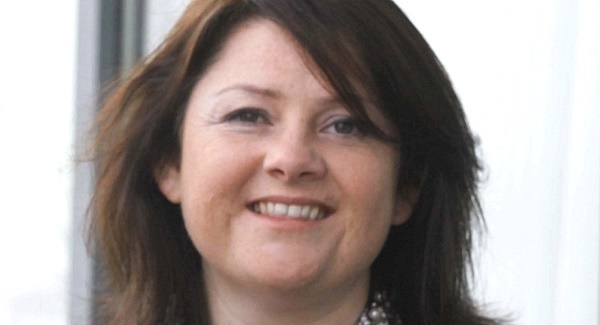
She, along with Niamh Gallagher, is founder of Women for Election, a non-profit, non-partisan organisation whose vision is of an Ireland with balanced participation of women and men in political life.
Their mission is to ensure an equal playing field for both sexes and, in particular, to inspire and equip women to succeed in politics in Ireland. They deserve our support and admiration.
They have an uphill battle, though. Despite the fact that it was an Irishwoman who became the first woman elected to the British House of Commons, the active participation of women in Irish politics is abysmal.
The charge was lead by Constance Gore-Booth, the Countess Markiewicz, who won a Commons seat for the constituency of Dublin St Patrick’s as one of 73 Sinn Féin MPs elected in December 1918.
Constance did not take her seat and, along with the other Sinn Féin members elected, formed the first Dáil Éireann. She was also the first woman in Europe to hold a cabinet position, as Minister of Labour of the Irish Free State. It is ironic, therefore, that Ireland now stands a lowly 88th in the international league table of women in politics, the same as South Korea, below Morocco and Libya and just ahead of Mongolia.
As we approach International Women’s Day next Saturday, perhaps it is time to reflect on where we are and where we wish to be in terms of equal opportunity for women in politics. Our poor record of female participation is despite the fact that, unique among western democracies, Ireland elected two women in succession as President — Mary Robinson and Mary McAleese. Both — in their own way — did us proud.
So, why is it that, while we celebrate female presidents we seem reluctant to elect, or even select as candidates, a greater number of women as local representatives or members of the Dáil?
As the website womenforelection.ie records, since the foundation of the State, just 91 women have been elected and the Dáil has never been less than 85% male. In the 2011 general election, only 86 of 566 candidates were women (15%) and 25 of 166 of those elected were women (also 15%). Looking ahead, the number of female candidates for the May local elections remains pitifully low, with a clear urban/rural divide. Women candidates are most concentrated in Leinster (27.8%), followed by Connacht (23.6%) and Ulster (18.8%). Munster has the least with 16.7%. Dublin has one of the highest number countrywide — 34.9%. Galway has 29.4% female representation, and Cork 21.4%.
That is hardly anything to shout about. In a report published yesterday, the National Women’s Council says women have not been properly integrated into the Oireachtas and this has had a negative impact on society. It is not as if women have not proven their political skills. The world’s two most powerful women are Germany’s Chancellor Angela Merkel and Brazil’s President Dilma Rouseff. Some of our best parliamentary performers in Ireland are women.
Why not a woman Taoiseach? Why not indeed, but that may not be enough. Even Nordic nations such as Denmark, where the leaders of its three main political parties are women, still struggle for full female representation.
We started the process of political equality almost 100 years ago. History demands that we finish it.











