Kenny should apologise for hounding abuse victims
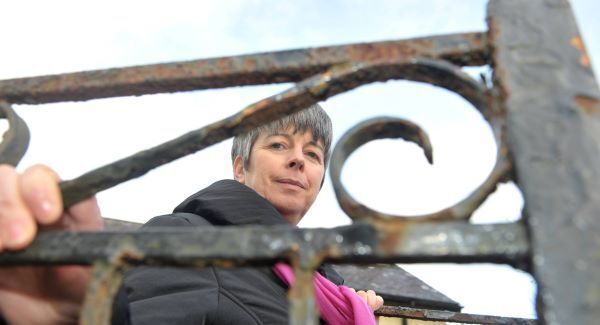

Ms O’Keeffe, one of 21 girls abused at a Cork school in the 1970s, had to fight successive Irish governments at home and abroad for a decade and a half to achieve justice.
After winning her landmark case at the European Court of Human Rights, she said: “The worst of all is that it takes an eight-year-old girl 15-and-a-half years to get this result; it’s simply not good enough.
“The State sought to suggest here that it didn’t have a liability. I think it’s a fallacy of a defence.”
At the launch of a new child and family agency, Mr Kenny said: “I would like to say to Louise O’Keeffe that I apologise for what happened to her in the location she was in and the horrendous experience she had to go through.”
Ms O’Keeffe graciously accepted the Taoiseach’s apology in the hope it would herald a new approach to abuse victims, but his remarks throw up a number of new questions.
Unfortunately, Mr Kenny was in no mood to answer them as he swept past journalists after making the apology.
Mr Kenny does not like answering questions, and when he does grant the press a few words, he often deliberately answers a totally different question to the one posed in a crude attempt to talk down the clock and escape the encounter with the pretence of accountability hanging in the air.
Having said that, Mr Kenny does seem to be genuine when it comes to issues such as this, and other instances like the plight of the Magdalene survivors, and we must take his remorse at face value — even if, as usual, it comes too late.
If he is so sorry at what happened to Ms O’Keeffe, and particularly at where it happened — on school property — why, as head of government, did he continue to fight this abuse victim through the courts for three years, adding to her suffering and turmoil in the process?
It is unclear whether this was a personal or state apology as Mr Kenny never stopped to explain.
We assume it was a personal one as a state apology would normally require Cabinet approval. And if it was a personal apology would Mr Kenny still have made it if the judgment had gone the other way?
Unlikely, we suspect, even though the facts of the abuse would have remained unaltered.
So, what colouring does that put on the apology, and why does it take the European court to show Mr Kenny the difference between right and wrong in such a clear-cut case?
Successive governments, including Mr Kenny’s, wanted Ms O’Keeffe to lose her fight, shut up, go quietly away, stop making a fuss, and deal with the wounds of abuse on her own.
As Ms O’Keeffe said: “I was an eight-year-old child, abused. A complaint had been made, it wasn’t acted on. If it had been acted on, I would have had a safe childhood. Wrong was done. I think hands should have been held up.”
But why should the State accept responsibility for its neglect after being warned about what was happening in its own school system?
Taxpayers’ money is there to be squandered on the cosy cartel of outside consultants and gold-plated pensions for ex-ministers, not to help abuse victims.
To this end, when in Dec 2008 the Supreme Court ruled against Ms O’Keeffe’s claim that the State had a liability for her abuse at school, the Government moved in heavily on other paedophile victims to scare them off taking similar legal action.
Following the Supreme Court ruling, two-thirds of sex abuse victims in schools who had cases like Ms O’Keeffe’s pending against the education department withdrew them after being warned of the financial consequences of continuing by the State.
Between Dec 2008 and June 2009, when Ms O’Keeffe lodged proceedings in the European Court of Human Rights, the 135 claimants in similar cases were sent letters by the State Claims Agency (SCA) which abuse survivors’ group One In Four described as “threatening and bullying”.
The heavy-handedness was certainly successful from the State’s point of view as the SCA, which deals with litigation against government departments, now has just 45 of those cases still open in the courts.
Mr Kenny had little choice but to address the case of Ms O’Keeffe while launching the new Child and Family Agency, which he promised would not be “just another agency going through the motions” but mark a “once in a lifetime chance” to reform child protection in a country that has such a shameful record of official neglect.
However, the fact that hundreds of social worker vacancies remain unfilled due to the HSE jobs freeze and funding cuts does not bode well.
Nor does the appalling tally that just 30% of posts for the child and mental health services have been staffed.
Latest figures, for the end of last September, show that 413 children had been waiting for more than a year for a first appointment with mental health services.
Ms O’Keeffe said she would not have pursued the State through the courts if only an apology for her suffering had been offered earlier.
For all the threats meted out by four, cross-party governments, a simple acknowledgement of the pain caused by past neglect would have sufficed.
But the State machine presided over by Bertie Ahern, Brian Cowen, and Mr Kenny was too concerned about compensation to understand the value of compassion.
Mr Kenny must now finally address the unanswered questions and apologise for that hounding and bullying of abuse victims by the State.
And while he’s at it, Mr Kenny can also say sorry for not having the backbone to call off the fight against Ms O’Keeffe during his three long years in power.
CONNECT WITH US TODAY



Be the first to know the latest news and updates