Accountability - Culture of secrecy still too strong
They are bulwarks designed to offer individuals the support or security often needed when a David feels compelled to confront a government Goliath. They are also designed to help foster efficient, open, and honest administration.
Though these developments are considerable advances, neither the Ombudsman nor the FoI enjoy a remit powerful enough to hold all publicly-funded organisations to account. Swathes of public life sail on, secure in the knowledge that they will not be inconvenienced by silly modern notions such as public scrutiny or accountability. Of course, it would be inappropriate to shine a light in every corner of Government, but the battle about where to draw the right-to-know line continues. That debate is also a pretty good indication of the kind of society we have, whether it is as open as it should be or more repressed than it ought to be.
These developments have of course changed how organisations, politicians, civil servants, or anyone operating under the eye of the Ombudsman or FoI communicates. A lot of business once conducted through traceable memos is now whispered in corridors, hence no paper trail, hence no accountability.
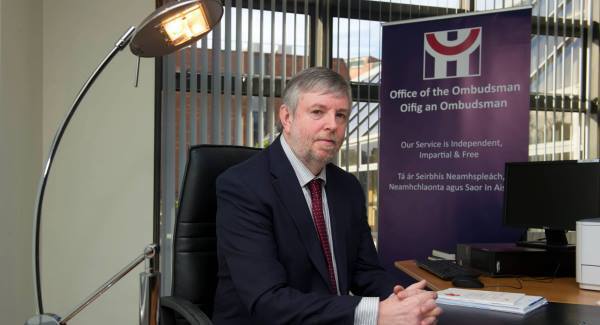
In his first interview since his appointment, Ombudsman Peter Tyndall points to where he thinks our system might be improved. He uses lessons learned during his five years as Public Services Ombudsman for Wales and suggests our system is less effective than it might be.
It hardly needs to be restated, but our disdain for the idea of accountability has cost us — and will cost our children — very dearly. Therefore, any person as deeply embedded in our establishment and who points to ways we might deepen accountability should be encouraged. It will be informative to see how Government, especially Reform Minister Brendan Howlin, respond to Mr Tyndall’s proposals. It is inconceivable, given the electorate’s support for deep reform, that Mr Tyndall would not be supported. That his concerns echo disappointments expressed by the Garda Síochána Ombudsman Commission, over how their work was stymied by less than co-operative gardaí, just strengthens his argument.
There is hardly a pressing issue that might not be made less threatening if we did not tolerate and subscribe to a culture of something approaching secrecy: The furore over €50m for Irish Water consultants; the fears provoked by EirGrid’s incredible pylon plans; proposals for massive windfarms to enrich developers but make little or no contribution to the communities they might despoil; Nama and the incessant rumours surrounding it; and executives’ pay at charities. These might all be less shrill if pertinent information was more easily accessed. This was recognised yesterday by Minister of State Fergus O’Dowd when he said all decisions taken by Irish Water, including those around its establishment, should come under the remit of the FoI.
At a moment when public trust in corporations — State, commercial, or religious — is lower than ever, we need, as Mr Tyndall has suggested, to strengthen the legislation that stands between individuals and the great forces that increasingly dominate our lives.


CONNECT WITH US TODAY



Be the first to know the latest news and updates