Christy O'Connor: This week Limerick hit their standards and metrics
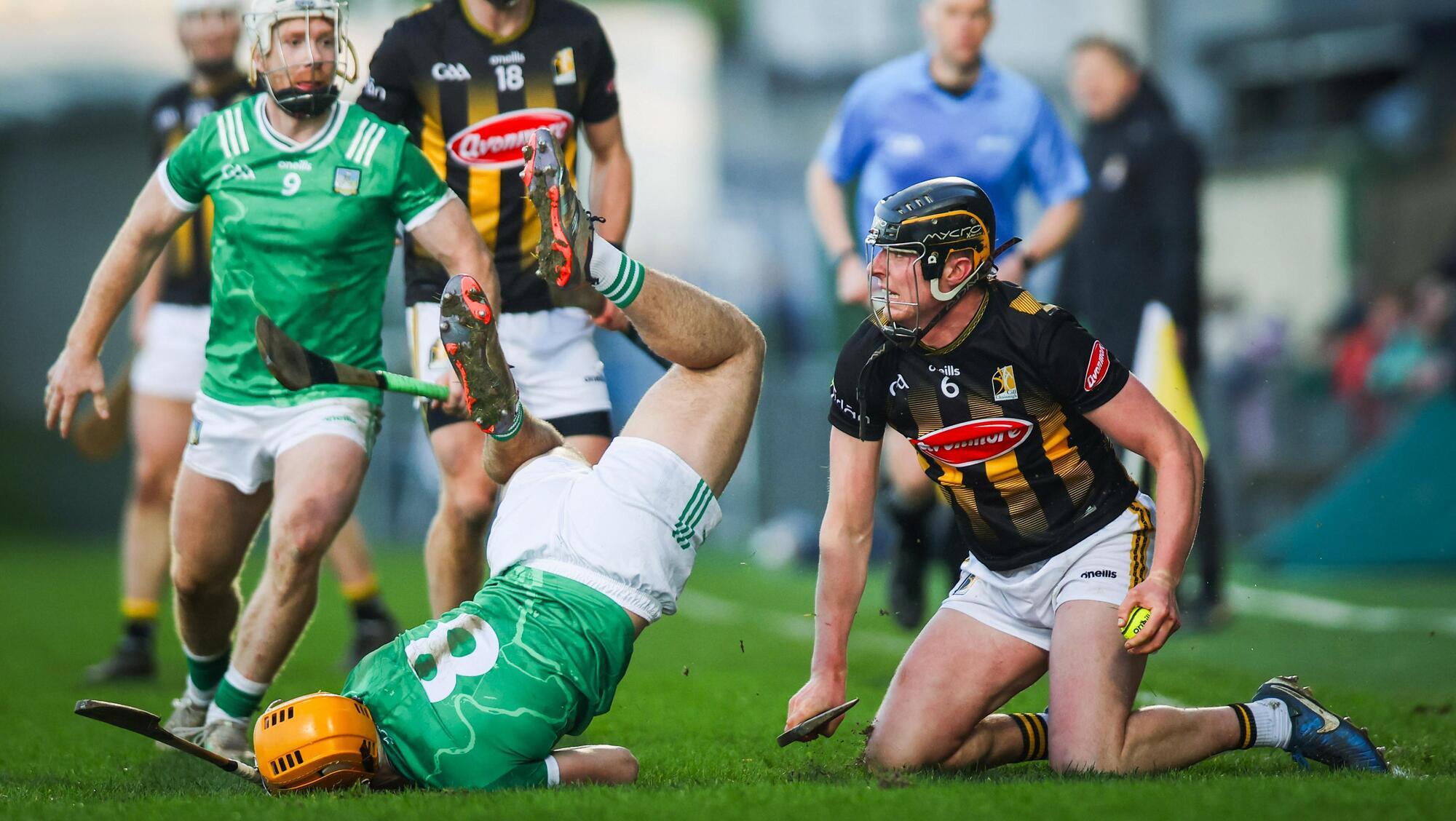
Limerick's Adam English and Darragh Corcoran of Kilkenny. Pic: ©INPHO/Tom Maher

Stephen Donnelly was in behind Diarmaid Byrnes because Byrnes was conscious of Cathal Beirne in front of him, while William O’Donoghue had briefly drifted to his left with Eoin Cody. Yet as soon as Aidan Tallis dropped the puckout down on top of Donnelly, Byrnes backtracked to get under the sliotar, while O’Donoghue sprinted to get onto the break, or to be of assistance to Byrnes if he needed it.
Except Donnelly did what neither Limerick player expected. As soon as the Kilkenny man made a brilliant catch, O’Donoghue was in nomansland. Donnelly clipped the ball into Cody who soloed to the 13-metre line before drilling the ball past Nickie Quaid.
Cody had got away from O’Donoghue numerous times, but that was the only time in the match that the Limerick centre-back lost Cody behind him. The outcome was inevitable when Cody got into the clear, but the battle between Cody and O’Donoghue neatly underlined the modern conundrum between a sitting centre-back and a drifting centre-forward - and how Limerick always trust their system in that scenario.
Cody had more possessions than any other Kilkenny player (23). As well as scoring 1-5 from play, he had three wides and dropped another shot short. He was also fouled for a converted free. Cody could have potentially ended with 1-10 from play. And still, O’Donoghue was one of Limerick’s most effective players.
From 24 possessions, O’Donoghue repeatedly cut out multiple Kilkenny attacks and also managed to provide assists for 0-4. Take out Cody’s goal and Limerick will always be happy with those comparative numbers in their system.
Limerick always judge themselves by consistently hitting, or surpassing, certain metrics. They didn’t meet those standards last week against Waterford but they did yesterday. It was a solid afternoon’s work in how they operate in their system. And a clear example of how much they still trust it.
Limerick mined 0-12 from their own restart, and 0-10 from turnovers, with five of those scores generated from turning over Kilkenny players in the tackle. And the longer the game went on, the more Limerick’s tackling and workload intensified.
Both halves were also instructive in how Limerick tweaked their style. In the first half, Limerick only won four of the ten long deliveries played into their full-forward line. Six of those balls were played into Aaron Gillane but he only had two possessions in that opening half. Limerick’s other inside forward, Hugh Flanagan, also only had two possessions in that half.
Rory Garrett was outstanding in the first 35 minutes. Mikey Carey was also doing well on Gillane but Limerick were much more patient and attacked from far deeper in the third quarter. And Peter Casey’s influence was steadily increasing.
Limerick only played seven long balls into their full-forward line after the break but the deliveries were more measured from higher up the field. The movement and separation was also far better inside. Limerick translated that possession into 1-3, which would have been 2-3 if Tallis hadn’t saved Byrnes’ late penalty.
Kilkenny did generate far too many scores (2-12) from Tallis’s puckout for Limerick’s liking. Still, this was a solid afternoon’s work for John Kiely’s side. And another endorsement of the trust in their system.
On the last day of June in 2013, Wexford just about survived one of the biggest scares of that championship when late scores from Jack Guiney and Ciarán Kenny edged the home side past Carlow by two points.
Carlow could have stolen the match if a James Doyle ground shot hadn’t grazed the outside of the post, but the whole afternoon was a slog for Wexford. Carlow were ahead by four points at half-time and were still in the ascendancy until a 58th minute goal from David Redmond gave Wexford the platform to grind out the win.
After nearly beating Dublin in the drawn Leinster quarter-final – and Dublin went on to win Leinster – Wexford’s form hadn’t exactly collapsed with that performance against Carlow because they took Clare to extra-time in their next match. And Clare went on to win the All-Ireland.
Carlow have always struggled to beat Wexford but that was the closest they had ever come to beating their neighbours in the championship. Yet Carlow had never gone into a game against Wexford as fancied as they were on Saturday evening.
In their 19 previous meetings at senior level, 11 of which had come in the league, the only game that Carlow had won came in the 2010 league, when they were victorious in Dr Cullen Park by three points. Richie Coady, who played wing-back that afternoon, is still part of the panel, having already made 191 competitive appearances for his county.
Saturday was the counties' tenth competitive meeting on Wexford soil, and seventh in Wexford Park, but Carlow were chasing a first away win. It looked on the cards in the third quarter when Marty Kavanagh pushed the away side in front with a monstrous free.
Carlow had all the momentum but Wexford hauled Lee Chin off the bench in the 49th minute and his introduction helped to turn the tide. Quickfire points from Chin, Tomás Kinsella and Jack Redmond pushed Wexford back in front by 1-21 to 1-19 and they drove on for the remainder of the fourth quarter, with Wexford outscoring their opponents by 1-10 to 0-2 in the last 15 minutes.
Having just scraped past Antrim and Down in their opening two matches – which was why Carlow were quietly fancied – this was a big win for Wexford. Being doubted added fuel to their fire but the way they burned off their opponents late on was also Wexford’s way of issuing Carlow with a sharp history lesson around this fixture.
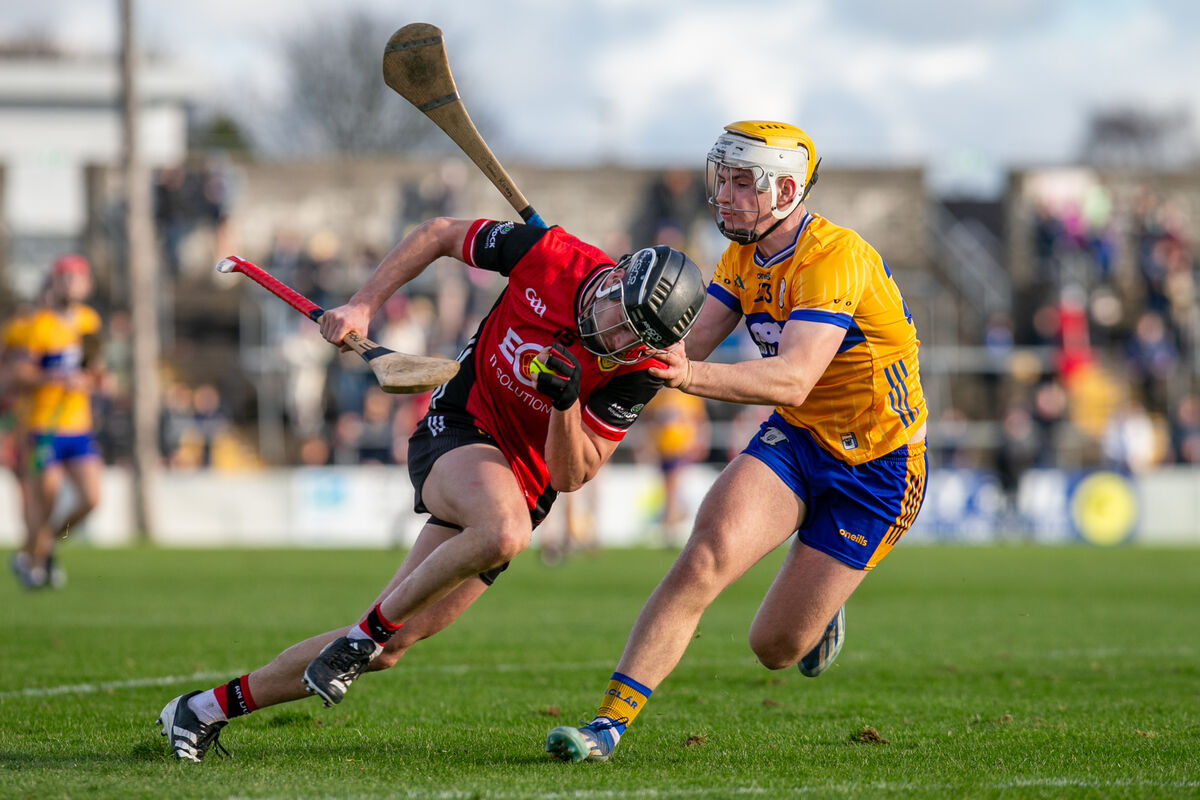
On Saturday at 12pm in Convoy in Donegal, Down played Donegal in the Ulster U20 hurling league. As soon as the match was over, Down senior manager Ronan Sheehan was on hand to bring three of the squad, including top scorer on the day Cathal Coleman, back across the northern part of the country to the Carrickdale hotel, just south of Newry. After meeting up with the rest of the squad, the whole group then headed south for Limerick city before making the short journey to Ennis yesterday.
It was a difficult afternoon for Down but it was always going to be a tough experience considering they were without three of their best players; John McManus, one of the top defenders in Ulster; Tom McGrattan, one of the best forwards in the province; Tim Prenter, one of Down’s outstanding forwards. Another excellent young talent, Finn Turpin, came on in the second half yesterday after an injury layoff.
Four of Down's starting team – Pearce Smyth, Ben Taggart, Shea Pucci and Ronan Beatty – are new to the team, with Taggart and Pucci still under 20. Taggart had some difficult moments on Shane Meehan, who sniped 0-3, but the young Ballygalget man is an excellent defender with searing pace who made some excellent plays.
It was a harsh learning experience for Taggart and his team-mates but Down are realistic too in what they need to do to try and stay in this division. In their last two games, they play Kildare in Ballycran and Antrim in Newry.
And Down aim to have some of their most important players back from injury by then.