Riddle of the sands as money talks for Taoiseach
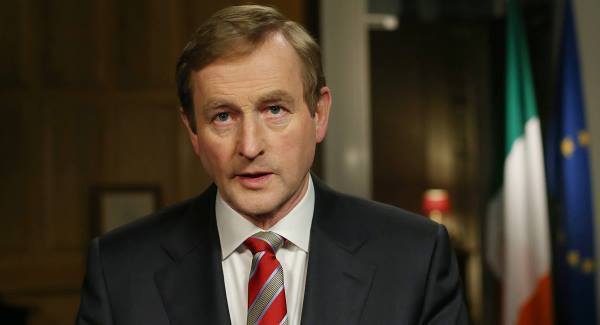
The Taoiseach used a five-day tour of Saudi Arabia, Qatar and the United Arab Emirates with Irish business leaders to make it clear such missions are about cash, not concern for the repressed.
Mr Kenny claims visits are the wrong “forum” in which to bring up the subjugation of Saudi women; the squalid conditions imposed on migrant workers in Qatar; or the treatment of dissidents in UAE — they can all be left to bodies like the UN to deal with.
Turning a blind eye to abuses as long as the oil-soaked hosts turn on the taps to investment seems to be the order of the day for post-bailout Ireland.
Amnesty International fears the new stance to decisively de-couple trade and human rights concerns on government-to-government visits represents the abandonment of a decades-old cornerstone of Irish foreign policy.
“That would be a betrayal of Ireland’s traditional approach to championing human rights internationally, and no Government is entitled to do that unilaterally,” Amnesty International Ireland’s executive director, Colm O’Gorman said.
“Ireland has always used trade and engagement to raise concerns about human rights. A move to outsource that responsibility to the EU and the UN is entirely unacceptable.
“Women were arrested last week in Saudi Arabia for committing the political crime of driving. International trade union organisations have stated that 12 migrant workers a week are dying in Qatar due to the conditions they endure.
“We recognise that jobs matter, but trade and raising human rights concerns are not incompatible,” Mr O’Gorman said.
But a cold, hard decision to take the money and run away from applying any bilateral pressure abroad appears to have been taken by a Coalition which has staked its survival on economic recovery at home.
Foreign Minister Eamon Gilmore, who always stresses the trade role of his remit on such occasions, explicitly — and somewhat crudely — expressed the traditional link between trade pushes and human rights agendas during a visit by China’s now leader Xi Jinping, in 2012.
“No, we didn’t raise specific cases any more than we raised specific trade investments,” Mr Gilmore said at the time as he defended himself from criticism of his timidity in the face of the world giant.
The Tánaiste added that if he had brought-up specific cases of abuse Mr Xi would simply have “ignored” them anyway.
And that appears to be the subtext of the new approach — why bother if it rocks the boat?
When asked about the moral dimension of the Persian Gulf mission, Jobs Minister Richard Bruton refused to even engage on such issues, stressing that was the job for the UN, and with 87 Irish businesses accompanying him and the Taoiseach, his focus was on squeezing the €25m worth of orders out of the region.
“When you go on a trade mission you are not engaged in a diplomatic effort to change the approach of policy. We know that if we want to build our economy we have to have pioneering companies like these that will go to new markets... this is an important opportunity to bring our businesses and put them before other businesses that are investing.
“There are other days and other ways in which you can pursue other issues,” he told Newstalk Breakfast.
That stance cut little ice with Mr O’Gorman who expressed concern the minister was afraid of even the mildest criticism of repression in the Middle East.
“It was extraordinary to hear Richard Bruton fail to answer on two separate occasions in that Newstalk interview what he feels about Saudi women not being allowed to drive — and he would not even say that on Irish radio, at home.”
The fact Ireland campaigned for its seat on the UN Human Rights Council, which Saudi Arabia was also recently elected to — much to the dismay of many — is more of a reason for Dublin to use its leverage on matters of repression around the world on government-to-government visits, not less, according to Mr O’Gorman.
But while the Executive may have abandoned bilateral human rights pressure, the legislature has not, and an cross-party parliamentary delegation to Iran has promised to push the trade agenda while not forgetting to raise that country’s horrific human rights record with its leaders.
Cabinet Minister Jan O’Sullivan, who used a visit to Malawi to pointedly condemn the homophobic platform of that country’s government, commented on Mr Bruton’s silence by stating: “You have to judge it on the basis of what you can say in various situations. You have to decide whether an intervention is appropriate and will be effective.”
So, it would seem we can be rightfully moralistic with impoverished African states that need us, but best not get too shouty with the big boys in the Middle East.
PRESSED on the issue of women’s rights, and the well-documented abuse of migrant workers, who are sometimes treated little better than slaves, Mr Kenny, brushed aside the concerns.
The Taoiseach stated he had met women lecturers in Saudi Arabia — before conceding they taught in segregated, women-only institutions — and merely expressed “expectations” foreign workers were treated properly in Qatar.
A shrewder, better briefed Taoiseach, might have tried to soften the harshness of the new attitude by pointing to the fact a women’s law firm had opened in Saudi Arabia recently and how encouraging that was, especially as women in Ireland were still being forced out of their public service jobs when they married as recently as the 1970s.
But there was no such attempt to try and humanise the hard-faced new tone.
Mr Kenny’s new Arabian Doctrine is as clear as it is shrill: Money talks — and that’s all we are listening to from now on.