Plan to open up public transport system still on the road to nowhere
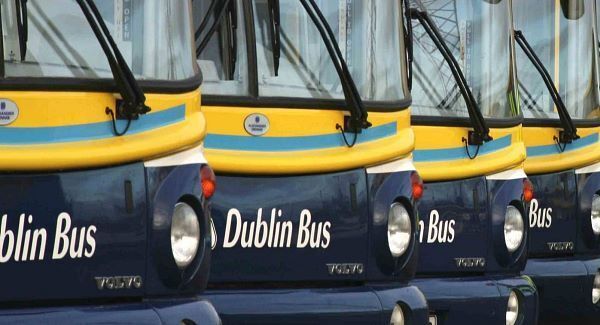
The Dublin Bus strike is a skirmish in a long war.

Plan to open up public transport system still on the road to nowhere

The readiness to throw Granny under the bus, take the bus pass out of her handbag, and take the cash instead tells you a lot about the power play in progress. Leo Varadkar came under a lot of pressure to step in, to do something…

COMING back on the bus from hikes with the Cub Scouts, down the mountains into Dublin, belting out… “O ye canna shove yer Granny aff a bus, O ye canna shove yer Granny”, was great bravado altogether. Thirty youngsters, covered in muck, full of vim and red lemonade losing the run of themselves.

Shoving Granny aff a bus is the Siptu theme song for the Dublin Bus strike. Striking until yesterday in opposition to cuts in payroll of €7.7m, recommended by the Labour Court, bus workers took the buses off the road and grounded Granny.

Unusually for the opponents of austerity, bus drivers have some very specific ideas on where some of the money can be found to fill in the black hole at Dublin Bus. Speaking to the Sunday Business Post Siptu’s organiser Paul Cullen was up front; if free travel recipients like Granny paid a levy on their trips, pain for his members could be reduced. That would stop Granny’s gallop.

Of course estimates of savings are very rough figures. The last survey of usage of the free travel schemes in relation to CIÉ took place in 1973. I was eight years of age. There were conductors on the buses then. There were still occasionally inspectors to be seen who demanded tickets be produced. Glory days of gadding about on the buses lay ahead.

A bit like Granny, the issue of age qualification loomed ominously. The days with the cubs were over and so too was eligibility for cheap ‘schoolboy’ bus tickets. It worked for a while, and then it worked less and then the caper had to stop entirely. It wasn’t credible coming home from town, glassy eyed and smelling of beer and pleading for a schoolboy fare. That stretched even the social solidarity of Dublin Bus. If you wanted to be a big fella, you had to pay the full fare.

There are a lot of big fellas trying to cadge a lift on the buses and pay only a schoolboy fare. Whatever this strike is about, the Labour Court recommendations are only the froth on top of the water. What is at stake is much deeper and it is much bigger.

The bus drivers and their clerical colleagues going into talks today are entitled to hire their labour for the best rate they can get. They are entitled to withhold it if they feel they can get a better deal. They have some grounds for thinking a better deal may be available. Last year, when push came to shove in the CIÉ group of companies, the Government backed down. Transport Minister Leo Varadkar delivered an additional and unbudgeted €36m in public subsidy to the public transport companies. In the previous December’s budget, he had announced an 8% reduction in the subsidy. By the following July, if not exactly the proverbial coach and four, certainly a fleet of buses had driven right through that target.

The minister has form. He has backed off before and CIÉ employees including Dublin Bus workers may feel justified in thinking he will again. That’s business in every company, public or private. You squeeze your suppliers. Government acting on behalf of taxpayers are the suppliers of public subsidy. This strike is about that squeeze.

And behind that issue is a much bigger one. It is about protecting a nearly intact monopoly. There has been a lot of talk but little action about liberalising the bus market. Some progress has been made on intercity routes. Almost none has been made in Dublin. There are two reasons why this is very important.

Firstly, allowing private companies to tender for bus routes or groups of them would significantly displace Dublin Bus in the capital and Bus Éireann around the country. Lower cost and more efficient operators would deliver services cost effectively. This would put further pressure on Dublin Bus to reduce their costs. Maintaining existing levels of public subsidy is not only necessary to protect CIÉ wages now, it is necessary to protect the strategic perimeter of its still nearly intact monopoly.

Secondly, and more importantly, the licensing of significant private sector competition would mean that in future, a strike would probably be pointless from the get-go. Strikes only work, if they have an effect. CIÉ companies going on strike have enormous effect because there is almost nothing available by way of alternative public transport. This is especially true of Dublin Bus and Irish Rail. A significant liberalisation of the bus market would be a major downward pressure on costs as well as castrating the industrial muscle of the public bus companies.

For trade unions this strike is about protecting their share of the labour market. The State-owned public transport nexus of CIÉ, the former Aer Rianta now Dublin Airport Authority, and formerly Aer Lingus, remain a largely intact citadel of trade union power.

Ryanair is the Trojan horse within the walls. A couple of coach companies are also-rans. They are determined to keep out any more. Have no doubt that protecting their hold on a state-owned public transport monopoly is a strategic imperative for the trade unions.

WE HAVE been through all of this twice before. Aer Lingus went to the wall to force Ryanair off the runways in the late 1980s. It was Séamus Brennan as minister who stepped in, and faced Aer Lingus down.

In her book Ryanair; How a Small Irish Airline Conquered Europe, Siobhán Creaton quotes Brennan saying: “I remember telling them that I was not the minister for Aer Lingus but the minister for transport and that was an entirely different concept.”

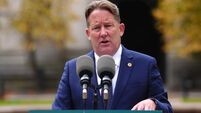
That’s the space Varadkar is in now. If he should remember Brennan’s success, he should remember his failure too. In 2002, he was back for a second turn as minister for transport. He determined to liberalise the Dublin bus market and have an operator other than Aer Rianta run the second terminal at Dublin Airport. Trade unions turned on him. The power of social partnership saw him off to become minister for social and family affairs. The public transport liberalisation agenda is undelivered still.

The Dublin Bus strike is a skirmish in a long war. Today’s talks are a continuation of that war by another means. The readiness to thrown Granny under the bus, take the bus pass out of her handbag, and take the cash instead tells you a lot about the power play in progress.

Leo Varadkar came under a lot of pressure to step in, to do something, to shimmy more public money under the door. In government, stepping back is often harder than stepping in. We will know soon enough if Leo is travelling on a schoolboy fare. If you want to be a big fella, you have to pay the full fare.

More in this section

Revoiced

Newsletter

Had a busy week? Sign up for some of the best reads from the week gone by. Selected just for you.

Cookie Policy Privacy Policy Brand Safety FAQ Help Contact Us Terms and Conditions

© Examiner Echo Group Limited