Dublin Zoo has animal magnetism
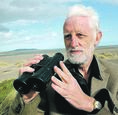
Margaret Sinanan, the 57th holder of the office since Dublin Zoo opened its gates on September 1, 1831, follows in the footsteps of Samuel Haughton and Robert Lloyd Praeger.
In this recession, when most such institutions are on hold, ‘the Zoo’ is going from strength to strength. Visitor numbers are increasing and Dublin Zoo is the most popular attraction in the country with a million admissions per year. It had 565 animals, of 102 species, in its collection on January 1 and 314 mammals and birds were born in 2010.
But zoos are no longer judged by the numbers of animals they show or how many visitors they attract. With habitats being destroyed worldwide and the survival of wild creatures threatened as never before, zoos play an important role in conservation. The breeding programmes of leading institutions focus on vulnerable species, raising their young and studying their biology.
Big cats, giraffes, and rhinos get media attention. Smaller creatures tend to be overlooked. The white-crowned mangabey born in Dublin in June is a case in point; males of the species are less than a metre in height. When these monkeys were named in 1781, it was thought, wrongly, that they came from the Mangabey region of Madagascar. The white-crowned, a sub-species of the sooty mangabey, is native to Senegal and Ghana. Although a forest dweller, it spends most of its time on the ground, seldom climbing beyond the under-storey. Habitat destruction and hunting for the bush-meat trade have decimated its population; only a few thousand remain.
Mangabeys are extraordinary. They have, it’s claimed, a unique mode of communication; they blink their white eyelids at each other, like the Aldis lamps of World War II naval ships, in a primitive form of digital signalling. They are capable of unusual behaviour; an intriguing report from Texas claims than an escaped pet mangabey joined a pack of wild dogs at a deserted farmhouse and became surrogate father to four puppies.
But mangabeys have their ‘dark side’. The species is host to SIV, the ‘simian’ or monkey form of HIV. It has been suggested that HIV developed in mangabeys and that it jumped from them to humans. If so, this species may prove to be a saviour. The mangabey’s immune system resists the virus. If scientists can discover how it does, they may be able to develop a cure for AIDS.
The match-makers of the zoo world are known as ‘stud-book holders’. Their task is to maximise genetic diversity and, through selective breeding, develop as healthy a gene pool as possible. Bloodlines are mapped using DNA profiling and prospective breeding partners are chosen accordingly. Zoo animals are international ‘sex tourists.’
The science of ‘reintroduction biology’ is in its infancy but it’s hoped that techniques will be developed to save most of the world’s endangered species. Zoos are establishing gene pools of endangered animals. Dublin has bred Sumatran tigers. There are now more of these cats in zoos than in the wild. The giraffes born during the last few years in Dublin belong to the rare Rothchild race of the species. A breeding colony of the critically-endangered Waldrapp ibis was established some years ago. Researchers here and in Austria hope to enhance the dwindling wild population with zoo-bred birds.
Dublin’s sister zoo, Fota Wildlife Park, has contributed to reintroduction projects. When the scimitar-horned oryx disappeared from its native North Africa, zoo-bred animals were sent to Tunisia, where a semi-wild herd has been established. European bison, also from Fota, joined a herd at the Komaneza Forest in Poland, enriching the gene pool of a species brought back from the brink of extinction. A white-tailed eagle, raised at Fota, is being released to the wild in Israel.
CONNECT WITH US TODAY



Be the first to know the latest news and updates