Flooding disaster - Effective action must be taken
Affected areas stretch from Monaghan to Cork and from Galway to Wexford. They include Clare, Waterford, Longford, Kerry, Tipperary, and Kilkenny.
In many places the flooding is the worst in living memory. In Cork, patients had to be moved from the first floor of Mercy Hospital which was inundated with flood waters. The flooding in the city was exacerbated overnight by the forced release of waters from Cork’s Iniscarra dam, and questions will have to be answered later about the amount of water released.
As a result of the release damage was done to Lee Road Water Treatment Plant, and much of the city is likely to be without drinking water for some days. It seems incongruous that in the midst of so much water, there is a shortage of clean drinking water.
In a recent audit, the Environmental Protection Agency warned that the 50-year-old pumping plant needed remedial action. The city council states that what happened had nothing to do with the condition of the equipment; the problem was the volume of water released from the dam. There were undoubtedly many considerations involved. If the Iniscarra dam had burst, the problems would undoubtedly have been much greater. This is not the time to be blaming anybody.
Ultimately, however, there will have to be an enquiry. Questions will have to be answered about how this crisis has been handled so that lessons can be learned.
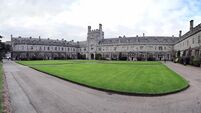
In the midst of the flooding University College Cork has closed for a week and this will have a further impact on that part of the local economy catering for students. Hospitality businesses will also have to close as they run out of clean water. This could have a devastating impact on the economy of the country’s second largest city.
Everybody affected throughout the country must be given the support they need. Hundreds of families have been evacuated, and scheduled bus and rail services have been cancelled. Many roads are impassable, thereby seriously affecting people commuting to and from work.
The first priority must be for life and limb. People should keep an eye out for elderly or sick neighbours, especially in the coming days.
The crisis is the result of recent heavy rains. Some places have already received more than double the average rainfall for November in the first two-thirds of the month. The ground is already saturated and further rains are forecast for the weekend and early next week. This will likely add to the flooding difficulties.
When the current crisis has passed and the floodwaters have subsided, it will be necessary to take a serious look at our infrastructure. Climatologists contend that recent weather patterns are going to become more frequent as a result of climate change.
In a 40-page report, Critical Infrastructure – Adaptation for Climate Change, the Irish Academy of Engineering (IAE) warned earlier this week that the Government must plan to prevent permanent flooding, because global warming could ultimately render parts of Dublin and Cork uninhabitable.
Many businesses will have stocked up in the hope of availing of the business opportunities in the run-up to Christmas. In areas normally subject to flooding, insurance will have become prohibitive and many of these business people will be facing ruin.
The IAE warns that the kind of flooding witnessed only once in a century could become as frequent as every five years. The Government must act, because the cost of such flooding could become catastrophic. This will ultimately lead to the price of insurance coverage becoming all the more prohibitive in vulnerable areas.
Changes must be made to ensure the delivery of safe and secure drinking water, and plans must be drawn up for electricity generation and transmission, transportation, telecommunication and public health services. There has been a lot of trendy talk about the impact of global warming, but insufficient practical attention has been given to adapting to climate change.
Our approach to global warming could be compared with trying to deal with our crime problems by attempting to eradicate sin. We need to get a grip on reality and concentrate on problems that we are capable of resolving, rather than just talking about trying to deal with the global problems that are beyond our resources and capability as a small nation.
Even if we eliminated our total contribution to the greenhouse gas problems in the morning, we would still need to take measures to cope with climate change and minimise flooding. There are places around the country that used to be plagued by winter flooding such as Mallow and Tralee, which have been largely spared as a result of flood prevention measures.
Effective action can be taken.

CONNECT WITH US TODAY



Be the first to know the latest news and updates