All parties are dying on their feet and need a smarter type of recruit
Looking at it from the other side, though, perhaps our political parties need to become clubs anxious to recruit just the sort of people who would not dream of joining.
If they are not already headed that way, they should be. If the current economic crisis tells us anything, it is that for their parliamentary candidates the political parties should be actively seeking men and women who can show a clean record of non-involvement.
As the parties’ mass memberships dwindle to a residue of the elderly, the bored, the sad, the lonely and the obsessive — not to mention the blatantly corrupt — the point is being approached when proof of previous enthusiasm for the political parties ought to count against an applicant for inclusion on the ticket. Whether the dynasties have served Ireland well is highly debatable, too.
I am neither joking nor directing this exclusively at Fianna Fáil. The problem is more urgent for them because their current desperate unpopularity has sharpened their dilemma, but all the mainstream parties — in the North as much as the South — are heading the same way.
When looking for prospective members of the Dáil and the Seanad, the Assembly and Westminster, any serious modern political party in Ireland should, with varying degrees of urgency, consider casting its net outside, and especially outside its own ranks.
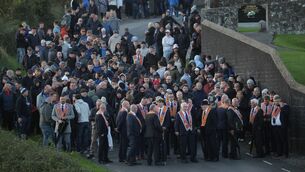
I have been attending party conferences and árd-fheiseanna up and down the island for years: Fianna Fáil, UUP, Fine Gael, Labour, the SDLP, the Workers’ Party even. I confess I haven’t had the stomach for the DUP, nor an invitation. The only time I have been to a Sinn Féin conference was to protest outside.
The point broadly holds, however. Both in their present appearance and in the way they are changing, all the main parties have much in common when viewed at their big occasions. They are getting older, they are getting smaller, and less and less can any party boast a representative sample of the population whose votes they aim to attract, not least in terms of the representation of women and ethnic minorities.
This would matter less if, though unrepresentative, party memberships contained a core of high calibre people well placed to play a useful role in government or opposition. They no longer do. Worthwhile young men and women have better ways of spending their spare time than hanging around in Gaelic or Orange halls on cold nights. Many of them are working every hour God sends to keep body and soul together.
The age of the mass membership political party is almost over. Fianna Fáil still likes to think of itself as ‘the Organisation’, a great national movement, but it is just a political party like any other these days. If there were any future for the political party, then it is times like this, when there are very real issues to discuss, that the party memberships would be soaring. Few suspect they are and, as one who knows, never believe a party apparatchik when he or she starts quoting membership figures: they are so much hot air.
The point is that being a member of any party is no longer cool and everything I hear from the various university campuses about recruitment bears that out.
This is not to disparage the good people who are members of political parties. I’ve had a party card since I was knee-high. Many of my best friends are in politics. Most are kindly, most are public-spirited, some live on Planet Earth; but far too many are of advanced years, and among the younger members the quotient of fanatics and geeks is climbing. An unhealthy number, sadly, are in parties not for unselfish reasons.
A diminished pool of talented people trying to get into parliament leads to a diminution in the appeal of those who do get there. More and more of the politicians a voter is likely to see on the benches of the various chambers in Dublin and Belfast look drab, dim or swivel-eyed; and a young person contemplating the move into politics is put off.
Can it really be worth the long haul upwards through her or his local cumann or branch, earning political air miles by taking minutes at ill-attended meetings, being laughed at by friends, standing in local elections where winning would be the worst outcome — all in the hope (should you clamber eventually on to the summit) of joining this pack?
Thus begins — has begun — a vicious circle of decline that has left all the parties manned (not ‘womanned’) all too often by politicians who know next to nothing about the outside world having been thrust to prominence, in many cases, when they are scarcely out of short trousers. If leafleting were a useful apprenticeship and honed talent for political life, the case for earning your spurs in this way would be arguable. But it does not hone; it filters out. It filters out the best.
Dimly, the parties recognise this. There is occasionally talk of widening the pool, actively recruiting more women, reaching out to communities that have been thinly represented until now. But nothing changes very much. The Dáil and the Assembly are, to coin a phrase, hideously white (and male and straight and Christian).
Actually, though, exotic initiatives are secondary. The debating chambers in Dublin and Belfast urgently need to recruit a bigger and better pool of the white middle-class heterosexual males and females who will be their principal reserve for the foreseeable future.
The key requirement should be this: regardless of race, religion, age, sexuality or gender, the desired recruit should appear conspicuously capable of doing something else. Better still, he or she should offer conspicuous proof of having already done something else. It follows that in most cases the desired recruit will be otherwise employed.
THE more energetically they have thrown themselves into getting a real life, the more meagre will be their record of work in the party cause. These are the people politics needs to attract. With any luck, they might have been moderately successful and won’t require paying quite as much as our present masters apparently do as well.
The only way to do this, though, is to have a candidates’ list, something most of the parties have resisted until now. Only then can they operate what is effectively a ‘fast track’ for favoured would-be candidates who have qualifications beyond being somebody’s son.
Not being an active member — or a member at all — should cease to be seen as an obstacle. The parties should openly advertise the fact that any talented, team-playing and articulate man or woman (from whatever walk of life) interested in representative politics and attracted to public service ideals will be welcome for interview for the HQ list — bonus political air miles awarded automatically.
A genetic connection to someone who did this or that in the War of Independence or whatever should count for nothing: merit should be all. A history of wanting to knock on strangers’ doors in any political cause should be a positive disqualification.
CONNECT WITH US TODAY



Be the first to know the latest news and updates