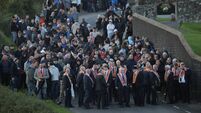
Omagh 10 years on - Atrocity made peace inevitable
By their barbarism they made it impossible for terrorists to continue their campaigns of bombing, indiscriminate killing and intimidation.
Their broad-daylight, weekend-family-time atrocity finally forced constitutional politicians of all sides to work together; to persist despite their deepest instincts. They had to make the recently signed Good Friday peace deal work by confronting enmities almost genetic in their depth, the very enmities that fuelled a litany of tragedies like Omagh.

After that outrage disengagement was not an option for democrats; politics had to deliver because the alternative was another Omagh.
After August 15, 1998, public opinion turned utterly, and hopefully for ever. The double-think, high-stool ambiguity that offered these anti-democratic murderers crumbs of comfort was no longer acceptable to anyone who cared for this country. So great was public outrage a decade ago that it led to the first denunciation of republican violence by a Sinn Féin member.
The myths of heroism had been replaced by the reality of mass murder. These people were seen for what they are: indiscriminate killers without a mandate, a deadly and despised minority. They had nothing to offer two wounded communities struggling against history’s bitterness, the scars of sectarianism and the loss of political and social power as they tried to midwife a functioning, decent, modern European society.
That struggle has paid spectacular dividends. The North is a place reborn, and only this week that achievement was expressed in the most tangible way. Employment figures showed that a record 790,000 people are at work there. At 4.1% the North’s unemployment rate is below the Republic’s 5%-plus, it is well below Britain’s 5.4% and a little more than half of the European Union rate for May of 6.8%.
Though there is a lot to celebrate about the relative peace of the last decade — and the prospect of the next one — the shadow of division persists and can be seen in the difficulties the bereaved families have in coming together to mark the occasion. There will be two events in Omagh this weekend.
Those responsible have not been convicted and there are damaging public clashes between senior police officers and those who oversee them over that failure.
Omagh has caused huge difficulties for the police on both sides of the Border. Indeed, there can be few reports into public affairs as damning as that published by former police ombudsman Nuala O’Loan, in December 2001, into the RUC investigation.
Because of this some victims’ families have opened a civil action against the men they believe to be guilty, believing that the chances of securing criminal convictions are all but gone.
In the Republic, the Court of Criminal Appeal held that Garda notes in relation to the conviction of Colm Murphy, the only man jailed over the bombing, had been falsified. A retrial was ordered.
In Belfast, the trial judge in the case against Seán Hoey denounced some of the police evidence before freeing the man who had been charged with the 29 murders. That led to PSNI chief constable Hugh Orde’s admission that a conviction is unlikely unless new evidence is uncovered.
Omagh remains an open wound on so many levels.
The organisation which carried out the attack is active. The 32-county investigation continues, though is operating under a range of oversight and quality-control obligations and the chances of a conviction are by now remote. But most of all the victims’ families remain divided.
All across these islands there are families hurting todaybecause a loved one died or was murdered; maybe they suffer a life-long incapacity because they were just in the wrong place at the wrong time during those awful decades of mayhem.
There are families grieving, too, for some of those jailed because they could not avoid the conflict and have not yet been able to find a place in an ever-more normalised society.
Today, we should all take a moment to remember all them; their pain, the absolute awfulness of those times, the waste, the hate and the dishonesty and the corruption. But as we remember them we should remember those who brought it all to an end and celebrate their victory. It may be of little consolation to their families but the 31 innocents murdered in Omagh gave all that was precious towards that victory: their deaths made the peace we enjoy today inevitable.