Having a wild time in the city
DESPITE being one of Ireland’s smallest counties and overrun by people, Dublin is remarkably well endowed when it comes to wildlife.

Having a wild time in the city

It has four estuaries with internationally important concentrations of birds. Rockabill, off Skerries, holds Europe’s largest colony of roseate terns, a species endangered worldwide, while tens of thousands of guillemots nest on Lambay. Two of Ireland’s six gannet colonies are on islands off the Dublin coast; the one at Ireland’s Eye is just 11km from the centre of the capital.

With such riches in the rural part of the county, the wildlife of the city tends to be overlooked. However, Dublin has one of the best documented natural histories of any city in the world.

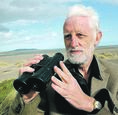
Now, Éanna Ní Lamhna has produced a vivid account of the urban flora and fauna. The president of An Taisce, Ní Lamhna is an environmental polymath, equally at home in the secret world of invertebrates as in the complexities of genetics or the minutiae of environmental law. There are few nooks and crannies of the natural world she has not studied. Wild Dublin, her fourth book, covers a prodigious range of subjects.

According to Ní Lamhna, the area enclosed by the M50, the modern equivalent of Dublin’s ancient walls, has plenty of open space; about 25% of the city’s area is ‘green’ and private gardens account for a further 20%. The Phoenix Park, with its seven-mile boundary wall, is one of the largest expanses of its kind in a major city, while Bull Island, and the mudflats at the Liffey mouth, are home to over 20,000 wintering birds. Irishtown Nature Park has more than 200 plant species.

The city’s list of animals is impressive; the country’s only reptile, the viviparous lizard is present and Dublin Port is one of the few locations where Ireland’s rarest mammal, the black rat, comes ashore from ships. At least 25 of Ireland’s 33 land mammals can be seen. There are 25 butterfly species and 14 dragon and damselflies. Even ‘hard Dublin’, the expanse of tar and concrete which covers the city centre, has intrepid creepy-crawlies, peregrine falcons and rooftop nesting gulls.

Nor does the city lack pests and nuisance species. Giant hogweed, a native of the Caucasus, was introduced as an ornamental plant by 19th century grandees. Its sap, if it touches the skin, causes blisters to appear with exposure to sunlight. Dublin’s Dodder and Tolka rivers are prone to flooding. Giant hogweed loves floods; they carry its seeds to new sites. Mink live along Dublin’s watercourses and grey squirrels have all but ousted their red cousins. There are just a few left in St Anne’s Park and in the hills at Killiney and Dalkey.

In the hands of a more conventional writer, such a book might be worthy but dull. Ní Lamhna, however, can breath vitality into the most unpromising material. Woodlice, for example, might seem somewhat challenged in the glamour department but she has found a colourful angle. One species, she tells us, is found only in graveyards and Protestant ones at that. This raises some intriguing questions: were Catholic cemeteries acceptable to it before the Reformation and how does a modern woodlouse know the denomination of a churchyard? The famous Dublin Bay prawn, she points out, is not found in the bay of its name, nor is it even a prawn. This small lobster lives in deep waters and the nearest ones are in the Irish Sea, north of Lambay. Cromwell, she claims, may have tethered his horse to a mulberry tree which still stands in the grounds of Rathmines Castle.

The text is complemented by marvellous photographs by Anthony Woods and illustrations by David Daly. The pictures range from aerial shots of the city and portraits of furry mammals to close-ups of insects and fungi. Words and pictures fuse seamlessly in this lively celebration of nature in Dublin.

Wild Dublin, Exploring Nature in the City, by Éanna Ní Lamhna and Anthony Woods, is published by O’Brien Press, €24.99.

More in this section

Revoiced

Newsletter

Had a busy week? Sign up for some of the best reads from the week gone by. Selected just for you.

Cookie Policy Privacy Policy Brand Safety FAQ Help Contact Us Terms and Conditions

© Examiner Echo Group Limited