What would we ever do without wood?
It was, therefore, appropriate that I should spend the Sunday afternoon at The Irish Natural Forestry Foundation’s (INFF) sustainable forestry project at Manch, near Enniskeane in West Cork.
The Manch Project, the foundation’s demonstration site set on 100 acres of forest belonging to the Conner family at Manch, was developed through a combination of Forest Service funding schemes for new and old woodlands.
Planted by Greenbelt, West Cork Leader provided early funding for the project development, while the Forest Service’s new Sustainable Forestry initiative is helping to establish Manch as an educational centre researching, demonstrating and promoting the financial and ecological rewards of low impact, high yield forest-friendly technology. Farmers and land owners may study the planting methods, ground clearing and management of a “working forest”.
Old trees and branches, long fallen, are drawn out by Shire horses, because machines compact the forest floor and impede drainage. Horses can pull away selected timber without damaging nearby growth. The added value of high quality timber covers the cost.
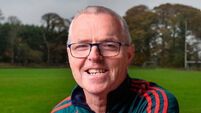
New tree cover has been extended to the salmon pools on the banks of the Bandon and Blackwater rivers, in the fertile fork of which the 320 acre estate lies. It is many years since I first drove through the gates and followed the long winding lane to Manch House. Last Sunday was an open day and I joined a party led by Ian Wright, the project co-ordinator, along well-drained paths through oaks and beeches, and clearings dappled with light. Sometimes, we stopped and he explained the goings on.
His commentary was fascinating and inspiring. Growing broadleaf trees, even in small groups on small holdings, clearly makes economic and ecological sense. I only wished I had a few acres to start planting. The sheer diversity of the 150,000 new trees planted at Manch was awe inspiring and we could inspect the saplings as we went. Thirty species, including maple, hornbeam, sweet chestnut, walnut, larch, Scots pine, rowan, whitebeam, yew, lime, oak and Wych elm have been planted. The result will not only be a valuable and sustainable forest but a thriving diversity of bugs, birds, fungi and forest flowers.
Mycorrhizas is a word I hadn’t heard before and still am not sure how to spell. They are fungus inoculated into the roots of saplings to help them gain nutrients from poor soil. It is hoped it will accelerate the growth of new trees where woodland has been clear felled. This is the first time this has been done in Ireland.
At each stopping place, Mr Wright told us a story. Some were hair-raising — for example, how nutrient-poor bogs were dosed with so much phosphate to make them grow sitka spruce that the run-off killed all life in the rivers nearby. Now, sitka plantations, an ecological disaster in many areas, wait to be clear-felled, and on the cleared land it will be 50 years before broad-leaved trees will grow to commercial size. But, there is an answer, we are told. Taking out patches of sitka, and planting the clearings with tight bunches of native deciduous trees will allow the natives, bit by bit, patch by patch, to establish. Eventually, the sitka will be gone and a natural forest, in various stages of maturity, take its place.
“Cad a dhéanfaimid feasta gan adhmad? ” (What will we do without wood?) laments the 18th century poem which many of us learned at school, “Tá deireadh na gcoillte ar lár,” (The end of the woods is at hand). The vision of the woods all gone, of a landscape denuded of trees, somehow rose before my childish inner eye and even then filled me with horror.
As a child, I knew birds-nested in fine, neglected forests of mixed trees around fine neglected houses where the owners, after the War of Independence, had fled.
As the Austin Clarke poem puts it, “The house of the planter is surrounded by trees...” Decades passed.
Labour to manage and coppice became unaffordable and fossil fuels — oil, coal and machine cut turf — replaced wood. Now it is time to turn to timber, a sustainable fuel, again.
It is heartening to see old woods, like those at Manch, renewed. The Conners, although estate owners, had no reason to flee; on the contrary, their Irish lineage is long and distinguished and their ancestors were amongst the Young Irelanders. They are to be applauded for doing what they can for Ireland.
* INFF is a registered charity supported by private donation. Ian Wright may be contacted at 028 21889.