House market warning - Buyers turn deaf ear to Central Bank
Echoing the moral of that traditional tale, borrowers persist in turning a deaf ear to gloomy message from the country’s watchdog bank about the risk that home owners could find themselves in a negative equity situation.
In its 2005 annual report, the Central Bank gives the toughest warning yet that there could be trouble ahead.
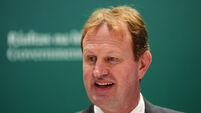
According to bank governor John Hurley, the risk of a “sharp correction” to the property market has increased significantly as a result of the upsurge in personal borrowing driven by the recent acceleration in the cost of buying a house.
Looking at the bright side, the bank predicts an economic growth rate of 5%. But it is unhappy about the 14% rise in house prices.
Despite three interest rate hikes by the European Central Bank, there is no sign they are having a dampening effect as far as Ireland’s housing market is concerned. Clearly, home buyers remain undeterred by the ominous warnings emanating from the bank.
This is hardly surprising given the contrary advice coming from one of Ireland’s biggest banks. In a decidedly up-beat report earlier this week, Bank of Ireland focused its spotlight on the country’s newfound wealth, estimating there are now 30,000 millionaires here.
Stressing that the property boom had triggered a 350% increase in wealth in a decade, it placed Ireland second only to Japan in the global wealth league. Predictably, the message from the commercial bank was that people could happily go on borrowing.
In stark contrast with such an upbeat theme, Mr Hurley warns that a gap may now be emerging between actual house prices and the price warranted by fundamentals such as demographics, employment and income. In other words, house prices are out of sync with economic reality.
However, on a softer note, he suggests conditions “need not necessarily lead to a sharp correction provided the property market eased gradually over time. That could happen if there was a broad stabilisation of prices and continuing improvements in the fundamentals”.
Pointing to a jump of 30% in residential mortgage lending, he echoes last year’s warning that the debt-income ratio in Ireland’s household sector’s was very high by international standards.
Focusing on another worrying aspect of the country’s economic performance, he reiterates that the construction sector also accounts for an exceptionally high ratio by international standards.
With 87,200 more people at work in 2005, and unemployment averaging 4.3%, the economy is burgeoning. But productivity rates are so modest as to warrant a call for a “major effort” to improve output and growth across the economy.
Compared with other developed economies, Ireland is far more dependent on oil. This creates price volatility and the domino effect of higher energy prices plus increased costs in the services sector is driving up inflationary pressure.
As a result, a “significant gap” has emerged this year between the rate of inflation in Ireland and other euro countries.
The bad news for home buyers is that European interest rates are expected to be jacked up again next month. Ominously, just like the boy who cried wolf, the Central Bank will be proved right some day.
Hopefully, when the property bubble bursts, borrowers will have a soft landing rather than a crash.

CONNECT WITH US TODAY



Be the first to know the latest news and updates