By any standard, we’ve been going downhill for more than 30 years

JACK STRAW, the British Foreign Secretary, complained this week that the British invest too much faith in selecting judicial figures to chair inquiries.

He was referring especially to the Bloody Sunday inquiry, which has been "costing scores and scores of millions of pounds".

"I've been partly responsible for the establishment of such inquiries and I think I can therefore say with some confidence that I don't believe they are necessarily a satisfactory basis," he said.

Few people here would agree with his sentiments in relation to the Bloody Sunday inquiry because there is a realisation of how the events of that day destroyed whatever

little fate that many nationalists had of getting justice by constitutional means.

Bloody Sunday and the way in which the events were covered up by the Widgery Tribunal probably did more for IRA recruiting than anything else that happened in Northern Ireland and now, more than three decades later, the Saville Inquiry is trying to get at the truth in order to rectify the damage that has been done.

For Jack Straw, and many others, this may seem like a mere historical exercise, but it is still a live issue and an open wound for a great many people in Northern Ireland.

Many in this State have been expressing reservations similar to Straw's about the cost and progress of the whole plethora of tribunals here.

They have exposed a frightening degree of corruption, suggesting that the planning system has been hopelessly compromised not just in Dublin, but also around the country.

If somebody wishes to build a summer house, it is actually easier for an Irish person to have it built in Spain or Portugal, where they have the bonus of better weather.

Thus, while we have been trying to build up our tourist industry, we have actually been encouraging, if not forcing, Irish people to holiday abroad, notwithstanding the implications that this has for our own economy, especially if foreign tourists dry up because of international tensions or a disease such as SARS.

Some people are arguing that the tribunals are costing too much and making too little progress.

After more than five years we are still waiting to hear about the elusive £50,000 that Tom Gilmartin said he gave to P Flynn for Fianna Fáil.

All we have are the accusations. We have a better idea about the money that Charlie Haughey, Ray Burke and Liam Lawlor collected, but so far there has been little sanction for such activities.

In the early 1990s, the Beef Tribunal cost a small fortune and achieved little, other than making a few lawyers extremely wealthy.

Another inquiry would be needed to analyse what Mr Justice Liam Hamilton was really saying in his verbose report, which stands as a monument to judicial obfuscation.

The people who do not wish to be investigated have been able to exploit those fears by adopting obstructionist tactics, such as delaying things by running to the High Court and then the Supreme Court.

The McCracken Tribunal had a fairly limited brief to investigate the payments made by Ben Dunne. It restored the faith of a lot of people in judicial tribunals.

The judge outlined what happened in some detail. He could not say any activity was criminal, because that is the prerogative of a court, but he left no doubt as to his personal opinion when he suggested that files should be sent to the

Director of Public Prosecutions. But, almost six years later, nobody has yet been prosecuted.

Charges were filed against Charles Haughey, but even then people were saying that he would drag them out so that he would never spend a day in the dock. Many people argue that the DIRT

inquiry in the Dáil was a cheaper and more efficient way of investigating issues of public corruption.

That seemed to achieve a good deal, but then it was not really dealing with politicians. It centred on banks, civil servants and business people, only to have its findings somewhat compromised by the disclosure that Denis Foley, the deputy chairman of the investigating committee, was one of the worst evaders of DIRT.

The real danger of having a committee of politicians examining such issues is that some of them will get carried away and exploit matters to promote their own political profiles, as happened in the United States during the 1950s.

The Americans have had a number of highly successful Congressional investigations, but the name of the infamous Joe McCarthy still haunts the process.

Parliamentary hearings should be designed to allow legislators to consider changes needed in the law to cope with problems of corruption, not investigate the corruption itself. That should be a matter for the police.

When US Vice-President Spiro Agnew was accused of taking financial kickbacksin 1973, he was ousted within a matter of months. The whole thing was handled by Federal Bureau of Investigation.

Ever since the late 1960s, when George Colley complained about "low standards in high places", Fianna Fáil has bumbled from one scandal to another, never cleaning up any of them.

What we have been hearing about corrupt practices in the building industry is not that different from what was suspected about TACA, the Fianna Fáil fundraising organisation around the time that Colley uttered his controversial remarks.

In the aftermath of the Arms Trial the Dáil had the Public Accounts Committee investigate the way that public money was used to purchase the weapons involved in the Arms Crisis.

That investigation was a sham and many of our problems stem from it.

The controversy surrounding aspects of the Arms Crisis surfaced again 10 years later when Vincent Browne published the Berry Papers in Magill and it was back in the headlines again a couple of years ago with the disclosure that a crucial statement of one witness had been altered in the book of evidence for the trial.

There was no proper investigation either into the telephone tapping scandal of 1982, with the result that the State ended up paying damages to three different journalists, and the whole affair was resurrected in 1992 to oust Charles Haughey from power.

Thus the two biggest political scandals of the past half-century were left unresolved, poisoning people's faith in the political system.

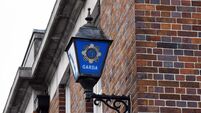
All of the political parties have played politics with the Department of Justice and the Garda Síochána. Two Garda Commissioners were ousted.

In 1997, Fianna Fáil promised zero tolerance, but shamelessly reneged on that after gaining power.

The gardaí should be investigating crime and corruption, but they have become demoralised and neutered by political interference.

The force is in an unholy and ludicrous mess the subject of two separate tribunals. The nightly re-enactments of the testimony on Vincent Browne's programme on RTÉ are utterly farcical.

All the while corruption has been allowed to spiral. We now have a situation with armed gangs terrorising areas of our cities, which is like a throwback to the gangster era of the 1920s in the United States.

The danger now is that the ultimate cost will be a demoralised electorate which, in turn, poses a serious threat to our democratic system.

x

More in this section

Revoiced

Newsletter

Had a busy week? Sign up for some of the best reads from the week gone by. Selected just for you.

Cookie Policy Privacy Policy Brand Safety FAQ Help Contact Us Terms and Conditions

© Examiner Echo Group Limited