Irish Examiner view: State is missing an opportunity in windfarm development
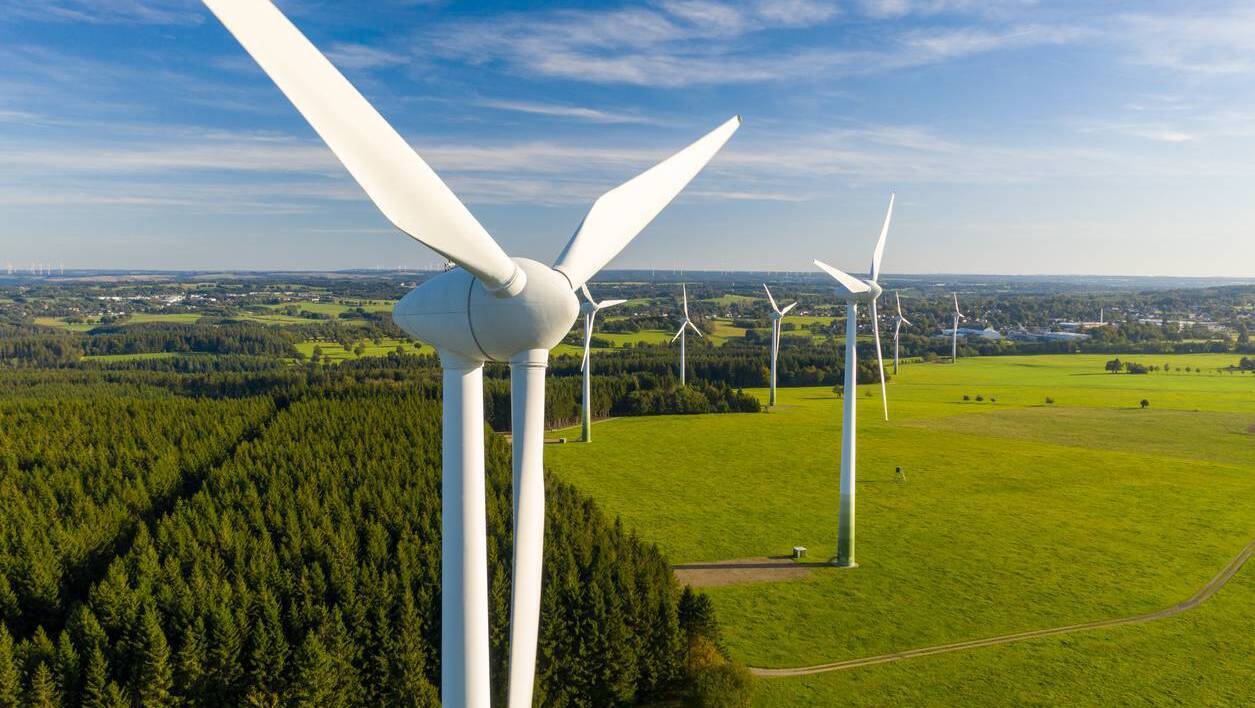
The fact the Government awarded contracts to mostly foreign-based companies for the supply of a combined total of 3,100MW to three million Irish households at a cost of billions to the exchequer is also a concern as the potential profits will go abroad.
As we here in Ireland grapple with the necessary adjustments to allow us cope with climate change, it is worth considering if the current Government model aimed at ensuring local communities benefit from windfarms could actually undermine those objectives.
As is pointed out by Neil Michael in today’s newspaper, while it might appear Government's plans will deliver more renewable energy, there is a concern it could fail the wider test of a just transition if local communities or the Irish State do not receive a sufficient share of the benefits.
Although the administration is under justifiable pressure to meet legally binding climate targets and facing the threat of potentially massive EU fines for failing to do so, the way it is going about achieving its targets may be counterproductive.
A report by environmental consultancy MKO noted while an 80% success rate at each stage of a successful wind farm project should be achievable with the right Government supports, it might be “optimistic based on recent and current observation”.
And the fact the Government awarded contracts to mostly foreign-based companies for the supply of a combined total of 3,100MW to three million Irish households at a cost of billions to the exchequer is also a concern as the potential profits will go abroad.
That Ireland is prepared to allow external agents drive these developments rather than doing so ourselves seems counterproductive. This is an area where the State had an opportunity to be a big player — to the point where our expertise could be sold abroad in due course — but it seems we have swerved that possibility.
The combination of all these factors — undermining stated objectives and a failure to develop Irish engineering and expertise with one eye on exporting that valuable experience into the future — may cost us dearly in times to come.
The massive success of companies such as ESB International in selling our expertise abroad, appears to have been ignored in this instance.
Although it might presently be fighting off what Canadian prime minister Mark Carney called “an attack on Canada” after 50% tariffs were imposed by Donald Trump at the weekend, the country is also staring down the barrel of an existential crisis which could threaten its very being.
In October, the oil-rich western province of Alberta will vote in a referendum on seceding from Canada. This is being seen as the country’s ‘Brexit moment’, particularly as there’s no guarantee it will fail.
Indeed, much like Britain, where Eurocentric prime minister David Cameron announced the fateful Brexit vote, the Albertan premier, Danielle Smith, in May announced the referendum to leave Canada would take place.
Like Cameron was against Brexit, Smith is opposed to Albertan secession, even though separatist sympathies have long existed in the province where there is considerable opposition to the federal government in Ottawa and its liberalist attitudes.
But Smith has been accused of opening a Pandora’s box. It is an accusation she denies, saying: “You don’t quell a movement like that by suppressing it.”
The vote on October 19, unlike the Brexit poll, will not be definitive. Rather, Albertans will vote on whether or not to have a definitive, binding, referendum on the matter at some point in the future.
However, as we saw with the UK, the whole matter is becoming bitter and divisive and may cause Carney a lot more headaches than Trump’s tariffs.
It is astonishing sometimes to think global news cycles can become preoccupied overnight with a person or persons who had heretofore been completely anonymous in the wide world.
So it has been in the past seven days for Natalie Harp, a previously unknown staffer in Donald Trump’s White House.
Her name sprang into the headlines across America and the rest of a world seemingly infatuated by the bizarre goings-on in the Oval Office when the Democratic senator from Georgia, Jon Ossof, proclaimed the US president only wants to “build his ballroom and travel with Natalie on their apparently defenceless flying palace gifted by the Emir of Qatar”.
Ossof’s spiel was pretty unremarkable by the standards of some of the president’s critics, but it generated an extraordinary backlash from Trump and his associates in the White House.
It also created a social media frenzy, with many users speculating about the nature of the relationship between Trump and his media handlers. On top of that, it projected Harp into national and international infamy.
The 35-year-old aide had previously come to national attention in the US as a cancer survivor and enthusiastic Trump supporter who, at his invitation, spoke at the Republican national convention in Washington.
Since 2024, she has been a constant presence at the president’s side and last month when Trump controversially switched aircraft in Turkey after an alleged Iranian death threat, Harp was one of a small number of trusted aides he took with him.
The assault on Ossof was led by the White House communications director Stephen Chung who, in the course of describing him as "Jon Jackoff", said instead of “denigrating hard-working people serving their country, Jon should look deep into his soul and ask himself why he’s a miserable person who hates this country”.
Even more extraordinary came from the anonymous White House Response X account which attacked a CNN reporter who had asked Trump to comment on Ossof’s remarks, labelling her a “disgraceful, humiliating embarrassment to her alleged profession”.
It is hard to be shocked by this behaviour, what with attacks on media personnel now a daily occurrence from Trump and his senior aides.
Oftentimes though, it is reasonable to conclude such attacks are merely a form of defence in an increasingly chaotic White House.


CONNECT WITH US TODAY



Be the first to know the latest news and updates