Wind energy: Less than 2% of Ireland suitable for wind farms
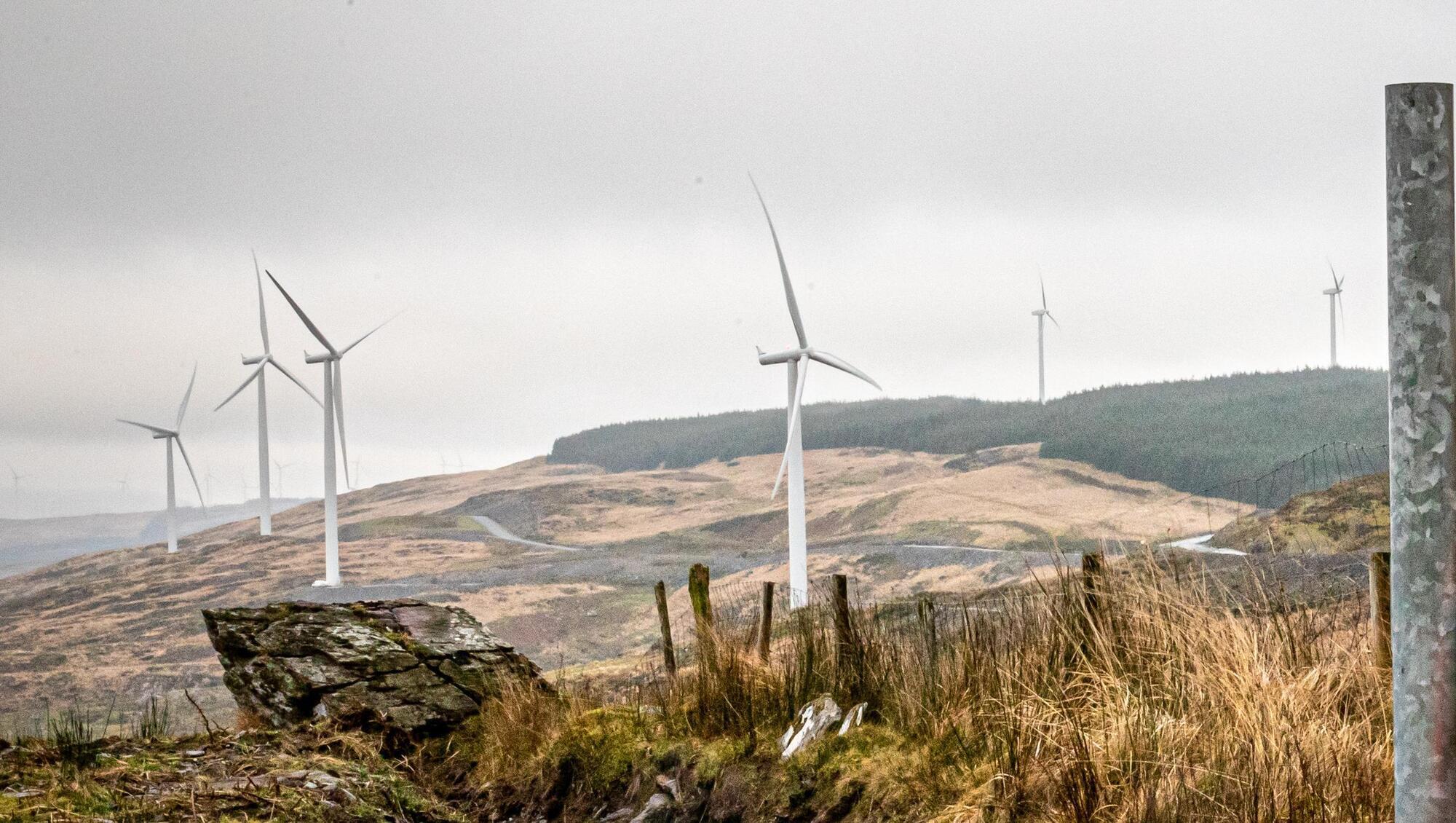
A life ring near a deep drainage ditch on the ESB’s 38-turbine Grousemount Wind Farm, near Kilgarvan, Co Kerry and Coolea, Co Cork. File picture: Neil Michael
With wind farms frequently making headlines, either through new developments or local objections, it might appear that Ireland is going to be overrun with turbines.
The pressure to expand renewable energy is significant, with the Government under increasing pressure to meet legally binding climate targets and avoid potentially huge EU penalties for falling short.
Yet despite the scale of planned expansion, there is still potential for enough additional wind energy capacity to power up to 6m homes across the island. The land identified as suitable for such development amounts to just 1.86% of Ireland's mainland area.
This is according to a Wind Energy Ireland-funded report from leading Galway-based planning and environment consultancy MKO.
It is among the most detailed research thus far on the availability of land for wind turbines.
CLIMATE & SUSTAINABILITY HUB
This article is part of the in print and online here in the 'Irish Examiner' today, Monday.
While it is a low percentage, the area identified as potentially suitable for wind farms is still considerable before planning, environmental, and other constraints are taken into account.
The report concluded that 1,302sq km of land could be available for development, equivalent to more than 320,000 acres out of the island's total land area of almost 21m acres.
The information is contained in the April 2025 report — a detailed analysis of the potential for more onshore wind energy in Ireland.
The research is based on a total of 292 existing and operational wind farms and their related 2,488 turbines, such as those on the ESB’s Grousemount wind farm on the Cork/Kerry border.
Read More
It also looked at the 44 permitted wind farms and their 417 related turbines as well as a total of 29 proposed wind farms currently still in the planning process and their 285 proposed turbines.
Combined, the report examined datasets relating to 365 wind farms and 3,190 wind turbines.
It noted that various conditions must exist for a wind farm to succeed and withstand what it calls “project attrition”.
These factors include landowner consent, site feasibility, planning permission, and judicial review.
The report noted that even where a proposed wind farm secures planning permission, the development may still face a judicial review challenge and must ultimately withstand any such proceedings.
Other factors include securing a connection to the electricity grid at a commercially viable cost.
MKO noted that while an 80% success rate at each stage in the development of a successful wind farm project should be achievable with the right government policy supports, it may be “optimistic based on recent and current observation”.
These include the fact that a large proportion of land is owned by the State and is not available for wind farm development due to other requirements for that land.
Another factor is the “highly fragmented ownership structure of privately owned, viable lands not already developed as wind farm projects, including large areas of commonage”.
It also points to the fact that there was only a 59% success rate for wind farm cases that ended up having to be decided by An Bord Pleanála between January 2022 and February 2025.
The report concludes that “there is potential to deliver significantly more onshore wind energy beyond the Government’s current 9GW target”.
It states: “That target for onshore wind energy could be significantly increased to provide a clear signal to regulators, the wind energy industry, and all stakeholders that significantly more onshore wind energy will be required to decarbonise the economy, and is required to combat climate change.”
CLIMATE & SUSTAINABILITY HUB
CONNECT WITH US TODAY



Be the first to know the latest news and updates